How to Clean Dentures: Care, Storage, and Mistakes
Dr. Muhammad Rahim, DMDOctober 12, 20269 min read
Knowing how to clean dentures properly makes a real difference in how long they last and how comfortable they feel. Yet plenty of everyday habits quietly damage them.
This guide covers the right daily routine, proper storage, and the mistakes that wear dentures down faster than they should. Care like this is part of the denture services at Peterborough Family Dental & Implant Center, one of many dental services the practice offers.
Most of the habits that damage dentures happen without anyone realizing it, simply from following intuition rather than the actual guidelines. A few small changes to a daily routine can make a meaningful difference over the life of a denture.
Denture Feeling Loose or Uncomfortable?
A checkup can confirm whether it's a fit issue or simply time for a routine adjustment.
Americans are missing at least one tooth, and many of them rely on dentures
Source: American College of Prosthodontists
How to Clean Dentures the Right Way
Clean dentures by rinsing them after eating and brushing them daily with a denture brush and cleanser. Then soak them in a denture-cleaning solution, not regular toothpaste or hot water. Each step protects the material differently.
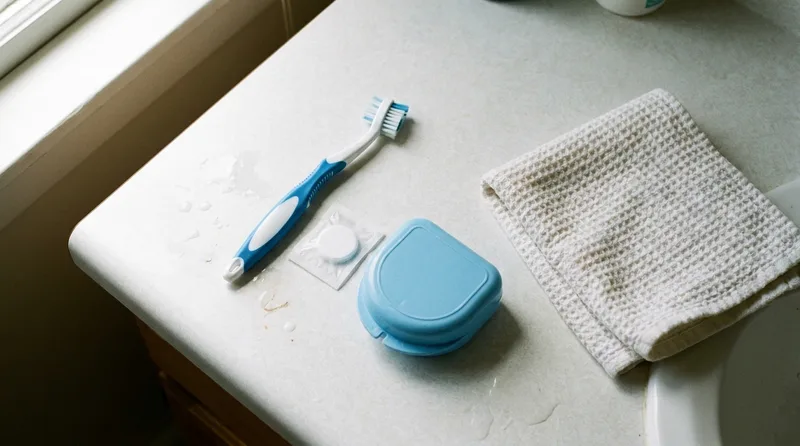
A denture brush and dedicated cleaner do the job that regular toothpaste cannot.
Rinsing after meals clears loose food particles before they have a chance to stick. Daily brushing with a soft denture brush and a denture cleanser removes plaque without scratching the surface. Regular toothpaste can't say the same. Its abrasives leave tiny scratches over time.
Soaking overnight in a denture solution keeps the material moist, since dentures that dry out can lose their shape and no longer fit properly. Skipping any single step in this routine, even occasionally, tends to accelerate wear over months and years.
Dentist · Peterborough Family Dental & Implant Center
Peterborough, NH dentist providing gentle general, cosmetic, restorative, and implant dentistry for the whole family.
Was this article helpful?
Frequently asked questions
Rinse dentures after eating, brush them daily with a denture-specific brush and cleanser, and soak them overnight in a denture-cleaning solution rather than regular toothpaste or hot water each day.
No, regular toothpaste is often too abrasive for denture material and can cause tiny scratches over time. A denture-specific cleanser is designed to clean effectively without damaging the surface at all.
Store dentures in water or a denture-soaking solution, never dry, since letting them dry out can cause subtle warping that affects fit. A dedicated case also protects them from damage.
Denture stomatitis is an inflammation of the tissue underneath a denture, caused by bacteria and yeast buildup from improper cleaning. It's preventable with a consistent daily cleaning routine and regular checkups.
No, cracked or broken dentures should not be repaired with household glue, since these adhesives can be toxic if ingested and rarely restore proper fit. A dental repair is the safer option.
Dentures should be checked roughly once a year, even without noticeable problems, since gum and jaw tissue change shape gradually and can affect fit over time without you realizing it.
Dentures should be checked by a dentist roughly once a year, even without noticeable problems.
Your nightly routine in 5 steps
Rinse the denture under running water after each meal.
Brush gently with a soft denture brush and a denture-specific cleanser.
Rinse thoroughly before it goes back in your mouth.
Soak overnight in water or a denture-cleaning solution.
Rinse again in the morning before you put it in.
Quick habit, fewer cracks
Clean your denture over a folded towel or a sink half-filled with water. If it slips, it lands softly. Dentures are more fragile than they look, and this one habit prevents a surprising number of breaks.
What Are the Most Common Denture Cleaning Mistakes?
The most common denture cleaning mistakes include using regular toothpaste, cleaning with hot water, skipping daily brushing, and using harsh household cleaners. Each one can damage the material or shorten a denture's life. Often there's no warning sign until the damage is done.
Using regular toothpaste, which is often too abrasive for denture material
Cleaning or soaking in hot water, which can warp the denture's shape
Skipping daily brushing and relying on soaking alone
Using bleach or harsh household cleaners, which can damage the material and irritate gums
Letting dentures dry out completely between wears
Most of these mistakes come from reasonable assumptions, like thinking toothpaste is toothpaste, rather than any lack of care on the wearer's part. According to MouthHealthy, the ADA's patient education site, denture-specific cleaning products are recommended precisely because regular toothpaste is often too abrasive for the material.
Switching products is a simple, low-cost fix. Most patients notice the difference within a few weeks.
What to Use and What to Avoid
Item
Use It?
Why
Denture brush and denture cleaner
Yes
Designed not to scratch the acrylic
Regular toothpaste
No
Abrasive, creates scratches that trap bacteria
Hot or boiling water
No
Can warp the fit permanently
Household bleach
No
Damages the material and can lighten the pink base
Plain water for overnight storage
Yes
Keeps the denture from drying and distorting
What Products Should You Use to Clean Dentures?
Use a soft denture brush, a denture cleanser or mild dish soap, and a soaking solution. Skip regular toothpaste, whitening products, and abrasive household cleaners. The right products protect the material from scratches and discoloration.
Denture brushes have a shape and bristle stiffness built to clean without scratching. A standard toothbrush can be too stiff in the wrong spots. Denture-specific cleansers are formulated without the abrasive ingredients found in regular toothpaste, which over time can create tiny scratches where bacteria collect more easily.
Mild dish soap is a reasonable backup if a proper cleanser isn't available, though it shouldn't replace a dedicated product long-term. Most drugstores stock denture products priced close to regular toothpaste. Switching costs almost nothing.
Avoid whitening toothpaste entirely. Its whitening agents are made for natural enamel and can dull denture material. Checking the label before buying a new tube of toothpaste is a simple habit that prevents this common mistake.
How Should You Store Dentures When Not Wearing Them?
Store dentures in water or a denture-soaking solution, never dry, to prevent the material from losing its shape. A dedicated denture case also protects them from being knocked or dropped.
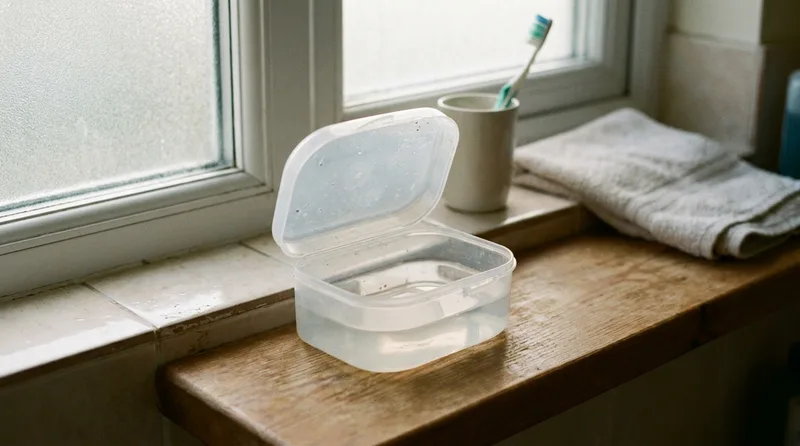
Storing dentures in plain water prevents the acrylic from drying and warping.
Dentures are designed to stay slightly moist. Even a few hours of drying can cause subtle warping that changes the fit. Keeping them in plain water overnight is acceptable, though a denture-cleaning solution adds an antibacterial benefit on top of that moisture.
A labeled, dedicated case matters more than it seems. Dentures left on a counter or wrapped in a tissue get misplaced or thrown away surprisingly often.
If you have both an upper and lower denture, storing them together in the same case, submerged, keeps both properly moist overnight. In a shared household, a label also prevents mix-ups with someone else's denture or retainer.
Related: Weighing dentures against implants? This guide explains how years of denture wear affect your implant options. Implants after wearing dentures →
How Often Should Dentures Be Cleaned and Checked?
Clean dentures at least once a day, ideally after meals too. Have a dentist check them about once a year, even when nothing feels wrong. Regular checkups catch fit changes before they cause discomfort, similar to how regular checkups work for natural teeth.
Your jaw and gums keep changing shape slowly over the years. So a denture that fit perfectly at first can drift without you noticing.
Regular dental visits catch roughly 80% of oral health issues before they become serious, according to the ADA. Denture fit changes are exactly that kind of issue. An annual check lets Dr. Rahim or Dr. Ainslie assess fit, look for wear, and spot changes in the gum tissue underneath that you wouldn't notice yourself.
Waiting until a denture feels obviously wrong usually means a bigger adjustment.
Wear a partial denture? Your remaining natural teeth need protecting too. Americans who visit a dentist regularly are 60% less likely to lose teeth, according to the Journal of Dental Research. And the CDC reports that 42% of adults 30 and older have some form of gum disease, which can loosen the teeth a partial clasps onto.
A gradual change is much easier to correct than one that's gone unaddressed for years.
Bringing your denture to routine dental visits, even ones focused on other things, is a simple habit that keeps this maintenance on schedule. A fit check takes only a few minutes. There's rarely a good reason to skip it.
What Happens If You Don't Clean Dentures Properly?
Poor denture hygiene can lead to bad breath, gum irritation, and denture stomatitis. That's an inflammation of the tissue under the denture, caused by bacteria and yeast buildup. These issues are preventable with a consistent routine, and none of them are things you simply have to live with.
What causes it? A 2024 systematic review in the Journal of Fungi points mainly to Candida yeast, poor denture hygiene, and wearing dentures around the clock. All three are things a good routine addresses.
The American College of Prosthodontists' evidence-based denture care guidelines recommend daily cleaning with a nonabrasive cleanser, overnight soaking, and taking dentures out while you sleep. They also recommend a dental check at least once a year.
Buildup on a poorly cleaned denture doesn't stay on the denture. It spreads to the gums underneath. The result can be ongoing irritation or infection that needs treatment, not just a better routine.
Taking dentures out overnight lets the gums rest. That habit prevents a lot of this on its own.
Gums that stay irritated, or a bad taste that won't fade? Mention it at your next checkup so stomatitis can be ruled out early. Left unaddressed, this kind of irritation tends to get more uncomfortable rather than resolve on its own.
⚠ Book a visit if you notice
Red, swollen, or sore gums under the denture that last more than a few days.
A bad taste or odor that brushing and soaking don't fix.
A denture that rocks, clicks, or needs more adhesive than before.
Any crack, chip, or missing tooth on the denture.
Can You Repair a Cracked or Broken Denture Yourself?
No, don't repair a cracked or broken denture at home with glue or household adhesives. These can be toxic if swallowed, and they rarely restore a proper fit. A dental repair is the safer, more reliable option, even if it means going without the denture for a short stretch.
Store-bought kits and glues aren't made for denture materials. Using them can make a professional repair harder. Sometimes the denture has to be remade entirely.
A cracked denture can also change how it fits, which affects both comfort and function even if the crack itself seems minor. What looks like a simple hairline crack can sometimes indicate a larger structural issue that only a professional exam can properly assess.
A quick evaluation is generally faster and less stressful than trying to diagnose the problem yourself at home.
If a denture cracks or breaks, call for a same-week repair rather than attempting a temporary fix at home. Going without a denture for a few days is far preferable to making a crack worse with an at-home attempt.
How to clean dentures properly comes down to a few habits. Brush gently every day with the right products, store them wet overnight, and keep up routine checkups. Most damage happens gradually, from small habits repeated over months, rather than any single mistake.
Peterborough Family Dental & Implant Center is happy to walk through your specific denture care routine at your next visit, whether you've worn dentures for years or just received your first set.
Does your routine need a refresh, or does the fit feel off? Mention it at your next visit. There's never any judgment for asking basic care questions.


 Dr. Muhammad Rahim, DMDOctober 12, 20269 min read