Back to all articlesoral-surgery Dr. Muhammad Rahim, DMDNovember 23, 202611 min read
What to Eat After a Tooth Extraction: A 7-Day Soft Food Menu
Dr. Muhammad Rahim, DMDNovember 23, 202611 min read
Loading blog post
Dr. Muhammad Rahim, DMDNovember 23, 202611 min readCall and you'll reach a real person on our team: no phone tree, no hold music. We'd genuinely love to help.
(603) 924-3664Rather write to us? Contact us
Knowing what to eat after tooth extraction takes a lot of the worry out of recovery. The right foods protect the blood clot, keep you fed, and stop you from reaching for something crunchy by accident. At Peterborough Family Dental & Implant Center in Peterborough, NH, we provide gentle extractions and oral surgery, and food is one of the first questions patients ask.
This guide gives you a simple 7-day soft food menu, a shopping list, the drinks and foods to skip, and a sense of when you can return to normal meals.
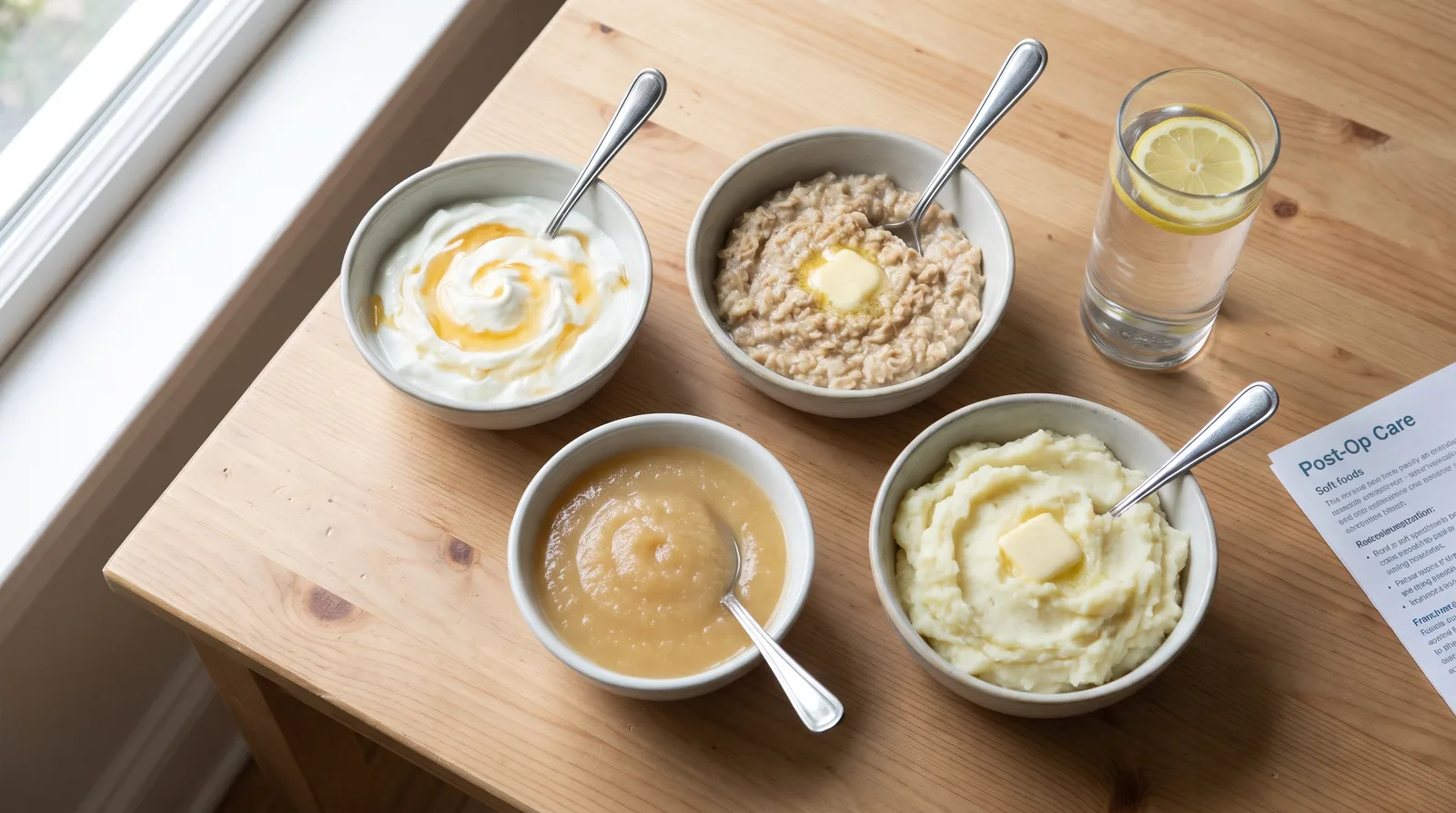
For the first day or two, eat soft, cool, or lukewarm foods and chew on the opposite side. Yogurt, soup that isn't hot, mashed potatoes, scrambled eggs, smoothies eaten with a spoon, and applesauce all work well. Avoid crunchy, hard, spicy, or very hot foods near the extraction site, and drink water.
Most people move back toward their normal diet over about a week, adding firmer foods as chewing feels comfortable. Staying fed matters for healing, so don't skip meals just because chewing is awkward. Protein and fluids help your body repair the site. If you're unsure about a food, choose the softer option and ask us. Keep your portions small and your meals regular, and if your extraction was a wisdom tooth or involved several teeth, expect to need soft foods a little longer.
Your own written aftercare sheet always comes first. Timing varies from dentist to dentist, and surgical extractions, such as an impacted wisdom tooth, can take longer to heal than simple ones.
What you eat matters because the blood clot in the socket is the foundation for healing, and the wrong food or drink can dislodge it. The Mayo Clinic's guide to dry socket says the clot protects the bone and nerve endings underneath, and that losing it leads to dry socket. Soft foods, no straws, and gentle chewing protect it.
Mayo Clinic suggests soft foods such as yogurt or applesauce on the first day, and avoiding alcoholic, caffeinated, carbonated, or hot drinks, plus avoiding straws. The ADA's guide to extractions also says to avoid drinking through a straw for the first 24 hours and to follow the diet your dentist suggests.
At our office, we ask patients to skip straws, smoking, and spitting for at least 72 hours, so follow the instructions you were given. Our guide to dry socket explains the warning signs, and our guide to tooth extraction aftercare covers the rest of the steps.
Stock your kitchen before the appointment so soft options are ready when you get home and you aren't tempted to grab something crunchy. A short shopping list covers almost everything on the menu below. Doing this beforehand matters, because you won't feel like cooking afterward.
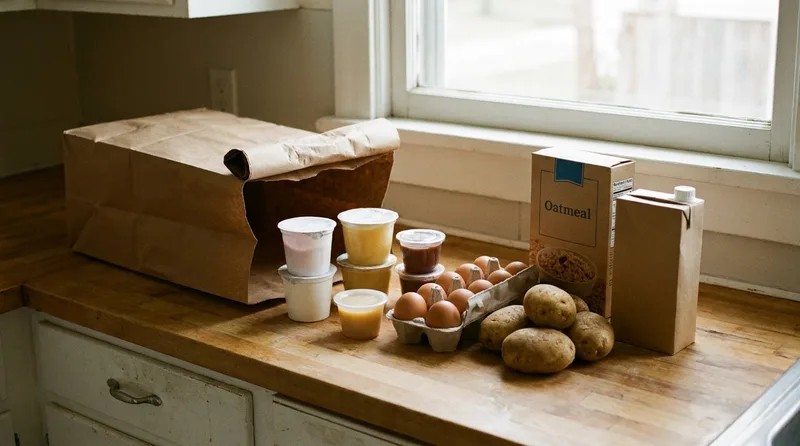
Don't forget the supplies that aren't food: gauze, a cold pack, and a small cup for sipping water, so everything you need is within reach of your resting spot. Cook or buy ahead and portion foods into single servings, so reheating to lukewarm is quick. If you're having sedation, you'll need a ride anyway, so ask a friend or family member to help with shopping too. If you're nervous about the day, ask us what to expect. Our comfort and sedation page explains your options, and having the kitchen sorted means one less thing to think about.
Planning an extraction?
Request an appointment at our Peterborough office. We'll walk you through the plan and your aftercare before the day.
Request an Appointment →Wait until the numbness has worn off before eating, then start with soft, cool, or lukewarm foods. Numb lips and cheeks are easy to bite without noticing, and hot food is easy to misjudge. Yogurt, applesauce, and pudding are gentle first foods. Chew on the side away from the extraction.
Our guide to how long dental numbing lasts explains how long numbness typically lasts, which is often two to three hours for the lip and tongue after routine work. Plan your first meal around that, and sip water in the meantime.
Day 1 is the most important day for the clot, so keep things calm: rest, keep your head raised, and avoid rinsing or spitting. Keep portions small, eat slowly, and use a spoon. If you feel full quickly or find eating tiring, eat smaller meals more often instead of skipping them. Fluids matter as much as food, so keep drinking water through the day.
If you're planning what to eat after tooth extraction, a simple soft food menu moves from the gentlest foods on day 1 to slightly firmer ones by the end of the week, as long as chewing feels comfortable. Every food below comes from the soft options our aftercare guidance recommends. Treat it as a template, not a rule.

The menu keeps protein and fluids in every day, because they help your body repair the site, and each meal is deliberately simple, so you can prepare it ahead and reheat it gently to lukewarm.
| Day | Breakfast | Lunch | Dinner |
|---|---|---|---|
| Day 1 (after the numbness fades) | Yogurt or applesauce, eaten with a spoon | Lukewarm soup that isn't hot, or cottage cheese | Mashed potatoes and scrambled eggs |
| Day 2 | Oatmeal, cooled to lukewarm | Pudding and yogurt | Soft pasta with a smooth sauce, chewed on the other side |
| Day 3 | Scrambled eggs | Mashed potatoes and lukewarm soup | Soft pasta and cottage cheese |
| Day 4 | Oatmeal with applesauce | Scrambled eggs and mashed potatoes | Soft pasta, lukewarm soup |
| Day 5 | Yogurt and soft oatmeal | Cottage cheese and applesauce | Soft pasta and eggs |
| Days 6 to 7 | Oatmeal or eggs, adding firmer foods only if chewing feels comfortable | Soup and soft sandwiches only if comfortable | Soft pasta and tender foods, still chewed away from the site |
Swap freely. If you don't like cottage cheese, use more yogurt or pudding. The point is soft, lukewarm, and easy to chew away from the site. If you have a surgical extraction, such as an impacted wisdom tooth, expect to stay on soft foods longer. Follow the pace your body sets, and don't rush firmer foods. If something feels uncomfortable to chew, go back a step.
Water is best. Avoid straws, carbonated drinks, and alcohol for at least the first few days, because suction and fizz can disturb the clot. Mayo Clinic also lists caffeinated and hot drinks to avoid. A cool or lukewarm drink, sipped from a cup, is the gentlest choice.
Hydration helps healing, so don't cut back on fluids just because you're avoiding the straw. A cup, small sips, and a water bottle by your resting spot keep you drinking. Room-temperature water is gentle on a tender mouth, and sipping slowly gives it a rest between sips. Smoothies are fine if you eat them with a spoon, not a straw. Keep them thin enough to eat comfortably and cool enough not to irritate the site.
Skip chips, nuts, popcorn, crusty bread, seeds, and anything you have to bite hard. Avoid crunchy, hard, spicy, or very hot foods near the extraction site. Popcorn deserves a special warning, because the hulls can lodge in the socket and irritate it, so it's worth waiting until the gum has closed.
If you're craving something crunchy, wait a few more days. The gum closing over the site is the signal that it's time, and your dentist can confirm at your follow-up. These foods aren't chosen to punish you. Each can press on the site, scatter fragments into the socket, or demand hard chewing before the tissue is ready. Those foods are not forbidden forever. They're simply a bad idea until the gum has closed over the site, so you can bring them back gradually.
Chew on the opposite side, take small bites, and keep the area clean without disturbing the clot. After the first 24 hours, rinse gently with warm salt water after meals by letting it roll around your mouth and fall out, not by spitting forcefully. Skip alcohol-based mouthwashes for the first several days.
Food trapped near the socket feeds bacteria, and a clean mouth gives the site a good chance to heal on schedule. Mayo Clinic suggests warm salt water several times a day for a week after the first 24 hours, so check which your dentist prefers.
Most people move back toward their normal diet over about a week, adding firmer foods as chewing feels comfortable. For many, the gum tissue closes over the site by weeks two to four, and you can gradually return to your usual diet. Surgical extractions can take longer.

Warning signs matter more than the calendar. Soreness that worsens after day three, fever, or bleeding that won't stop are reasons to call your dentist. An ache that gets worse instead of better can be dry socket, and our guide to dry socket explains what to look for.
If you're nervous about the extraction itself, you're far from alone. BMC Oral Health (2024) reports that 36% of Americans have dental anxiety and 12% have extreme dental fear, and the Journal of Dental Anesthesia reports that sedation dentistry has helped 75% of fearful patients keep up with regular visits. Our tips for nervous dental patients offer more ways to feel at ease, and our guide to choosing an oral surgeon or dentist explains who should remove a tooth.
Questions about your aftercare?
Send us a note or call, and we'll answer anything about eating and healing after an extraction.
Contact Our Office →Stock your kitchen, read your aftercare sheet, and follow the menu at your own pace. Once you've healed, talk to your dentist about replacing the tooth. Most extracted teeth, other than wisdom teeth, should be replaced to prevent shifting and bone loss.
The American College of Prosthodontists estimates that 120 million Americans are missing at least one tooth, and the Journal of Oral and Maxillofacial Surgery reports implant success rates of 95-98% over 10 years. Our comparison of an implant and a bridge and guide to crown vs implant explain the options, and our dental implants pages cover each type.
Regular visits make surprises less likely. The CDC reports that 42% of adults aged 30 and older have some form of periodontal disease, the Journal of Dental Research reports that people who see a dentist regularly are 60% less likely to lose teeth, and the ADA notes that regular visits can catch 80% of oral health issues before they become serious. Our guide on how often to see the dentist explains how often to come in. Our tooth extractions and post-operative instructions pages cover the process.
We welcome patients from Peterborough, Jaffrey, Dublin, Hancock, and across the Monadnock region, with early-morning hours from 7 AM Monday through Thursday. Bring your questions to Dr. Muhammad Rahim, Dr. Jasper Ainslie, or Dr. Nabeel Almaaz, and see our Meet Our Doctors page.
Results may vary. Please consult with your dentist at Peterborough Family Dental for personalized treatment recommendations.
Recover with a plan
Request an appointment at Peterborough Family Dental & Implant Center and we'll walk you through every step, including what to eat.
Request an Appointment →Not sure what you're feeling is normal?
Call (603) 924-3664 →
Dr. Muhammad Rahim, DMD
Dentist · Peterborough Family Dental & Implant Center
Peterborough, NH dentist providing gentle general, cosmetic, restorative, and implant dentistry for the whole family.
Was this article helpful?
For the first day or two, eat soft, cool, or lukewarm foods and chew on the opposite side. Yogurt, soup that isn't hot, mashed potatoes, scrambled eggs, smoothies eaten with a spoon, and applesauce all work well. Avoid crunchy, hard, spicy, or very hot foods near the site.
Our Peterborough team is happy to answer questions and get you on the calendar.