Back to all articlesgeneral-dentistry Dr. Muhammad Rahim, DMDNovember 23, 202610 min read
Do Dentists Still Use Novocaine? What They Use Instead
Dr. Muhammad Rahim, DMDNovember 23, 202610 min read
Loading blog post
Dr. Muhammad Rahim, DMDNovember 23, 202610 min readCall and you'll reach a real person on our team: no phone tree, no hold music. We'd genuinely love to help.
(603) 924-3664Rather write to us? Contact us
If you grew up hearing "Novocaine" at the dentist, it's natural to ask: do dentists still use Novocaine? The short answer is rarely. Most dentists today use newer numbing medicines, though many people still use the old name for any dental numbing. At Peterborough Family Dental & Implant Center in Peterborough, NH, we provide gentle, comfortable dental care, and numbing that works is a big part of that.
This guide explains what Novocaine was, why dentistry moved on, what dentists use now, and what to tell your dentist before your next visit.
Rarely. Novocaine was the brand name of an older numbing medicine, and today most dentists use newer ones such as lidocaine, mepivacaine, articaine, or bupivacaine. People still say "Novocaine" the way they say "Kleenex," as a name for any dental numbing. A review of local anaesthesia in dentistry notes that ester-type anesthetics are rare in dentistry.
That matters because the name you remember may not match what's in your dentist's syringe. If you want to know which numbing medicine you'll receive, ask. It's a normal question, and a good dentist is glad to answer it.
Naming the medicine helps in two ways. People who remember an old experience with "Novocaine" sometimes worry it will happen again, and people ask for it by name because it's the only one they know. Knowing what's actually being used lets you and your dentist talk about the right thing. Whatever the name, the goal is the same: numb the area so treatment is comfortable, then let the numbness fade after your visit.
Novocaine is a brand name for procaine, an older ester-type anesthetic. Dentistry moved toward amide anesthetics, and lidocaine in particular. A review of articaine and other dental anesthetics notes that since lidocaine entered the clinic in 1948, it has become the most common local dental anesthetic in most countries, and that it's the gold standard new anesthetics are compared with.
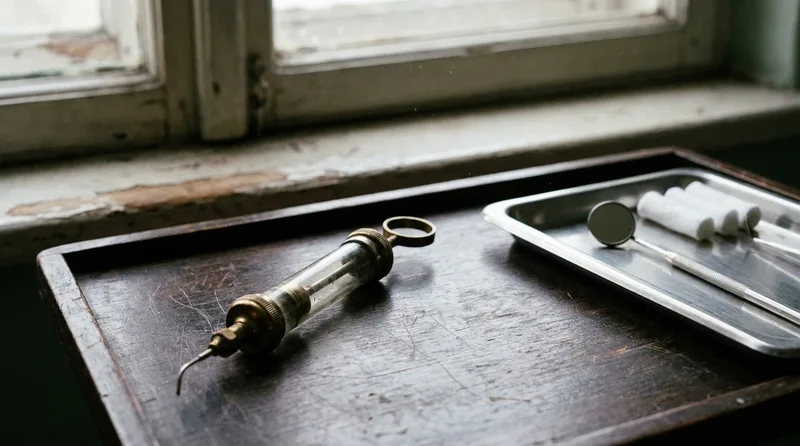
The review of local anaesthesia in dentistry explains that modern local anesthetics are grouped by their chemical structure: amide or ester. The majority of commonly used dental anesthetics are amides: lidocaine, mepivacaine, bupivacaine, and prilocaine, with articaine as an amide that also has an ester linkage.
The change didn't happen overnight. Numbing medicines kept being refined for different onset times, durations, and patient needs, which is why there are several choices today instead of one. Ester-types still have a place in topical numbing gels, where they're used more commonly. The injected numbing most people picture is a different group.
Dentists today choose among a handful of amide anesthetics, most often lidocaine. The right one depends on the procedure, how long it will take, and your health. Each has a different strength and duration, and many are combined with a small amount of a vasoconstrictor such as adrenaline.
| Numbing medicine | What to know |
|---|---|
| Lidocaine | The most common dental anesthetic in most countries since it entered the clinic in 1948, and the standard that new ones are compared with. A small amount of adrenaline is usually added. |
| Mepivacaine | An amide anesthetic of intermediate strength. It can be used without a vasoconstrictor, which makes it a preferred choice for some older patients or those with heart conditions. |
| Articaine | An amide with a thiophene ring that makes it more potent. One review reports shorter soft tissue numbness than bupivacaine. |
| Bupivacaine | A long-acting anesthetic. The long effect can help with longer procedures, but prolonged numbness of the lip and tongue is uncomfortable for many people. |
| Prilocaine | Another amide anesthetic in the group of commonly used dental local anesthetics. |
Notice that none of these descriptions says one is simply better. Each has a different strength, duration, and use, which is why dentists choose among them. A short procedure and a long one, or a child and an older adult, may call for different choices. That's also why the answer to "what do you use?" can change from visit to visit. These descriptions come from the two reviews cited above. Which medicine you receive is your dentist's clinical decision, so ask at your visit. Don't be surprised if you hear a different name than a friend or relative did, since different cases call for different choices. Our dental fillings page explains how we handle numbing for fillings.
Wondering what you'll be given?
Request an appointment at our Peterborough office and ask us anything about numbing before we begin. We'll explain what we're using and why.
Request an Appointment →Adrenaline, also called epinephrine, is a vasoconstrictor added to many numbing medicines to make them last longer. It narrows the blood vessels at the site, so the medicine is absorbed more slowly. The review of local anaesthesia in dentistry explains that a vasoconstrictor such as epinephrine or levonordefrin increases the duration of action.
Some people need numbing without it. The review of articaine and other dental anesthetics notes that mepivacaine without adrenaline can be a preferred choice for older patients or patients with cardiovascular disease, because it doesn't contain a vasoconstrictor. That's why your health history matters: the choice isn't only about numbing, it's also about what's right for you.
Ask whether your numbing contains adrenaline, and why. It also affects how long numbness lasts afterward. Medicine with a vasoconstrictor generally lasts longer, which is why a plain version may wear off sooner. Our guide to how long dental numbing lasts covers the timing in detail.
Dental numbing medicines are widely used and have a long track record. A review notes that lidocaine has been proven safe and effective, and that one review found articaine's safety was not statistically different from lidocaine's. Still, every medicine has risks, so your dentist should know your history before choosing one.
Reactions to dental numbing medicine are uncommon, but it's worth knowing the signs of a problem, such as hives, swelling, or trouble breathing, which need urgent care. Tell the team right away if anything feels wrong during treatment. The ADA's guide to anesthesia and sedation describes the main types of anesthesia dentists use, and says to talk with your dentist about any concerns you have. That's the right instinct. Ask what you'll receive, what to expect, and what would make you call afterward.
If you're pregnant, our guide to dental care during pregnancy explains what the ADA says about numbing medicine, and we'll plan around it.
Duration depends on the medicine, whether it contains a vasoconstrictor, and the area treated. A 2008 JADA study on recovery from dental numbing found a median recovery of 155 minutes for the lower lip and 125 minutes for the tongue in the group without a reversal agent.
Cheek and lip numbness can make it easy to bite the inside of your mouth without noticing. Wait until feeling returns before eating, and take small sips of anything warm. Children need extra watching because they may chew on a numb lip. Those are medians, so half of people took longer. Numbness in the lower jaw tends to last longer than in the upper jaw. Plan around the longer window, avoid chewing until feeling returns, and be careful with hot drinks.
Our guide to how long dental numbing lasts explains how to speed things up and when to call, and our guide to numbing gel and cream explains the short-acting gel used before the injection.
Tell your dentist about allergies, medications, medical conditions, and any past reaction to numbing medicine. These details help them choose the right medicine and decide whether it should include a vasoconstrictor. A few minutes of honest answers makes your care safer and more comfortable.

If you've ever had a reaction to numbing medicine, tell us the name if you remember it, or describe what happened. Even "my face swelled" is useful. For children, the same applies, and the CDC reports that 20% of children ages 5 to 11 have at least one untreated decayed tooth, so comfortable numbing matters for building trust. Our guide to cavities in baby teeth covers what to expect.
Do dentists still use Novocaine? Not usually, which is the first of several common myths. Others are that longer numbness is always better, that you shouldn't ask what's in the syringe, and that gel numbs everything. Each is easy to clear up with a few honest questions to your dentist.
The common thread is that numbing is a choice made for you, not a one-size-fits-all step. The more your dentist knows, the better the choice.
We use topical numbing gel before the injection, then thorough local anesthetic so you feel pressure rather than discomfort from the work itself. We also build in warm blankets, headphones, breaks, and, if you'd like, nitrous oxide or oral sedation. We don't provide general anesthesia or IV sedation.
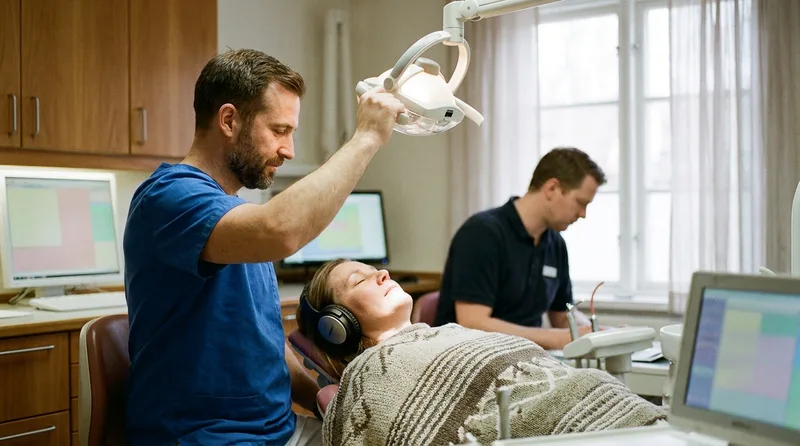
For many nervous patients, knowing each step ahead of time takes much of the worry away, so we explain before we begin. BMC Oral Health (2024) reports that 36% of Americans have dental anxiety and 12% have extreme dental fear, and the Journal of Dental Anesthesia reports that sedation dentistry has helped 75% of fearful patients keep up with regular visits. Our comfort and sedation page has the details.
For more ways to feel at ease, see our tips for nervous dental patients. If it's been years since your last visit, our guide for patients who haven't been to the dentist in years explains what to expect.
Nervous about numbing?
Send us a note or call, and we'll talk through exactly what to expect.
Contact Our Office →Next time you wonder whether dentists still use Novocaine, ask which numbing medicine you'll receive and how long to expect the numbness. Then plan your day around the longer window. A real person from our team replies to online requests the same business day, and you can call before you book if you'd like to talk it through.
Regular visits make everything easier. The CDC reports that 42% of adults aged 30 and older have some form of periodontal disease, the Journal of Dental Research reports that people who see a dentist regularly are 60% less likely to lose teeth, and the ADA notes that regular visits can catch 80% of oral health issues before they become serious. Our guide on how often to see the dentist explains how often to come in.
We welcome patients from Peterborough, Jaffrey, Dublin, Hancock, and across the Monadnock region, with early-morning hours from 7 AM Monday through Thursday. Bring your questions to Dr. Muhammad Rahim, Dr. Jasper Ainslie, or Dr. Nabeel Almaaz, and see our Meet Our Doctors page.
Results may vary. Please consult with your dentist at Peterborough Family Dental for personalized treatment recommendations.
Make your next visit comfortable
Request an appointment at Peterborough Family Dental & Implant Center and tell us what would help you feel at ease.
Request an Appointment →Prefer to talk to someone first?
Call (603) 924-3664 →
Dr. Muhammad Rahim, DMD
Dentist · Peterborough Family Dental & Implant Center
Peterborough, NH dentist providing gentle general, cosmetic, restorative, and implant dentistry for the whole family.
Was this article helpful?
Rarely. Novocaine was a brand name for an older ester-type anesthetic, and a review notes ester types are rare in dentistry today. Most dentists use amide anesthetics such as lidocaine, mepivacaine, articaine, or bupivacaine, though many people still say Novocaine for any dental numbing.
Our Peterborough team is happy to answer questions and get you on the calendar.