Back to all articlesRestorative Dentistry Dr. Muhammad Rahim, DMDNovember 23, 202611 min read

Getting Used to New Dentures: Your First Few Weeks
Dr. Muhammad Rahim, DMDNovember 23, 202611 min read
Loading blog post
Dr. Muhammad Rahim, DMDNovember 23, 202611 min readCall and you'll reach a real person on our team: no phone tree, no hold music. We'd genuinely love to help.
(603) 924-3664Rather write to us? Contact us
Getting used to new dentures takes a few weeks, and almost everyone feels a little awkward at first. They may seem bulky, sit differently from your natural teeth, or make certain words and foods feel strange. That's normal, and it improves. At Peterborough Family Dental & Implant Center in Peterborough, NH, we provide family, restorative, implant, and denture care, and we plan follow-up visits so your dentures are adjusted as you settle in.
This guide explains what's normal in the first weeks, how fittings and follow-ups work, how to eat and speak, how to handle sore spots, and when to call.
New dentures may feel awkward for a few weeks until you become accustomed to them. The ADA's guide to dentures says they may feel loose while the muscles of your cheeks and tongue learn to keep them in place. Most of our patients adjust within 2 to 4 weeks, with follow-up visits to adjust the fit.
That timeline is a general guide, not a deadline. Some people adapt in days, others take longer, and a lower denture usually takes more getting used to than an upper one. If you've had immediate dentures placed the same day as extractions, expect adjustments as your gums heal.
Adjustment is as much about your muscles as your mouth. Your tongue, lips, and cheeks have to learn where the denture sits and how to work around it, which takes repetition. The key is patience in the first weeks, combined with honest communication with your dentist about what feels off.
Normal in the first weeks means an awkward feeling, a loose sensation while your muscles learn, minor soreness or irritation, and sometimes extra saliva. The ADA says these problems should go away as your mouth becomes accustomed to the dentures. If any problem persists, particularly irritation or soreness, contact your dentist.
| What you notice | Usually normal | Reason to call your dentist |
|---|---|---|
| An awkward or loose feeling | Common for a few weeks while the muscles of your cheeks and tongue learn to keep the denture in place | It isn't improving, or the denture keeps slipping or shifting |
| Minor soreness or irritation | Not unusual early on and expected to fade as your mouth adjusts | It persists, or one spot stays sore |
| Extra saliva | Can temporarily increase while your mouth adjusts | It doesn't settle as you get used to the dentures |
| Eating and speaking feeling different | Common at first as your muscles and tongue adapt | Eating or speaking stays difficult after the first few weeks |
Keep a short note of anything that bothers you, including when and where, to bring to your follow-up. Specific details help us fix problems faster than "it feels off." Anything that feels sharp, raw, or worsening is worth a call, not a wait. A small adjustment now can prevent a bigger problem later.
At the final fitting we check the fit, bite, and appearance, and make adjustments. Then we schedule follow-up visits, because the ADA notes that follow-up appointments are generally needed after a denture is inserted so the fit can be checked and adjusted. Think of the fitting as the start of the process, not the end.

Bring questions to every visit, and bring the dentures if you have a problem between visits. We'd rather see you early than have you struggle at home. With immediate dentures, the ADA notes you may need to have the denture relined or remade after your jaw has healed, so plan for those visits too. Our dentures page explains each type.
Ready to talk about dentures?
Request a free consultation at our Peterborough office. We'll explain the options and the process in plain language.
Request an Appointment →Start with soft foods cut into small pieces, then gradually reintroduce firmer foods as you gain confidence. There's a learning curve, but well-fitted dentures let you enjoy a wide range of meals. Don't rush it, and don't give up on foods you love. Most of them come back as you adjust.
A familiar soft meal can make the first dinner with new dentures much less stressful. Eating is also practice, because each meal trains your muscles. If a particular food causes discomfort or lifts the denture every time, mention it at your follow-up so we can check the fit. That's much better than avoiding foods you enjoy.
Speaking may feel slightly different at first, but your tongue and muscles adapt quickly. Practice helps, and so does patience. Reading aloud and repeating words that feel tricky are common suggestions, and your dentist can tell you what to try. If certain sounds stay difficult after the first few weeks, tell us.
Getting used to new dentures includes getting used to speaking, so practice in private first. Reading aloud from a book or newspaper for a few minutes a day lets your tongue and lips work with the new shape without the pressure of a conversation. If your dentist suggests specific exercises, follow those. Whistling or lisping sounds are often a sign that something needs a small adjustment, so they're worth mentioning even if they seem minor. The goal is natural, comfortable speech, not putting up with a problem.
Many people find the speech adjustment is over before the eating adjustment, but everyone is different. Give yourself time.
Minor soreness is not unusual in the early days, but a persistent sore spot needs attention. The ADA says that if any problem persists, particularly irritation or soreness, you should consult your dentist. A small adjustment usually fixes it quickly, and follow-up visits exist for exactly this reason.
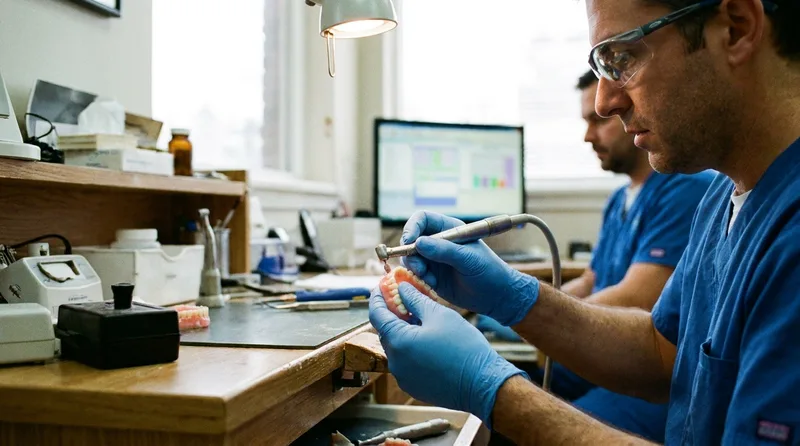
Sore spots often happen where the denture presses on a bony ridge or rubs a tender area, and they're usually easy to relieve. Describe where it is and when it bothers you, and we'll know where to look. Leave the adjusting to your dentist. Trying to alter a denture at home can damage it or make the fit worse. Mark the spot, note when it bothers you, and tell us. Bringing the denture in sooner than your scheduled visit is perfectly fine.
Keeping your mouth clean helps too, since irritated tissue heals better when it's kept clean, and our guide to cleaning dentures explains how.
We recommend removing dentures at night to give your gums a rest and allow saliva to naturally clean your mouth. Soak the denture in a cleaning solution overnight to keep it fresh. The ADA adds that when you're not wearing your dentures, you should keep them in a safe place covered in water, so they don't warp.
Dentures need a rest for a reason. Your gums are under pressure all day, and a night without the denture gives them time to recover, while saliva helps keep your mouth clean. Keep the cleaning solution in a container you can find easily so soaking becomes automatic. Some people sleep in new dentures for the first day or two if their dentist advises it, especially with immediate dentures, so follow the instructions you were given.
Check your own sheet, because the plan can differ for immediate dentures and for patients with specific needs.
Even with full dentures, you still need good oral hygiene. The ADA suggests brushing your gums, tongue, and roof of your mouth each morning with a soft-bristled brush before inserting your dentures, then brushing the dentures daily with a soft brush and a non-abrasive cleanser. Never use regular toothpaste, which can scratch the surface.

Our guide to cleaning dentures covers products and mistakes in detail, and our guide to loose dentures explains what to do if the fit changes. If you'd like a firmer fit, ask about implant-supported dentures, which snap onto a small number of implants. Our comparison of implants and dentures and guide to All-on-4 and implant-supported dentures explain the options.
Call if sore spots persist, the denture won't stay in, it stops fitting well, or it cracks or becomes damaged. The ADA says to contact your dentist if dentures stop fitting well or become damaged, and to keep regular checkups. Relining is typically needed every 2 to 3 years.
If you're ever unsure, call. We'd much rather check a denture that turns out to be fine than have you put up with a problem.
Missing teeth are common. The American College of Prosthodontists estimates that 120 million Americans are missing at least one tooth, and the Journal of Oral and Maxillofacial Surgery reports implant success rates of 95-98% over 10 years. If you'd like to compare options, our comparison of a partial denture and a bridge may help.
Dentures not feeling right?
Send us a note or call, and we'll arrange a time to check the fit.
Contact Our Office →While you're getting used to new dentures, plan for the follow-up visits and tell us how you're doing. If you've had dentures for a while and they've changed, book a fit check. A real person from our team replies to online requests the same business day, and a free consultation comes with a clear written plan.
BMC Oral Health (2024) reports that 36% of Americans have dental anxiety and 12% have extreme dental fear, and the Journal of Dental Anesthesia reports that sedation dentistry has helped 75% of fearful patients keep up with regular visits. Our comfort and sedation page and tips for nervous dental patients explain how we keep visits comfortable, and our guide for patients who haven't been to the dentist in years is for anyone returning after a long gap.
Regular visits matter, with or without natural teeth, and NIDCR's guide to gum disease explains why healthy gums matter under dentures too. The CDC reports that 42% of adults aged 30 and older have some form of periodontal disease, the Journal of Dental Research reports that people who see a dentist regularly are 60% less likely to lose teeth, and the ADA notes that regular visits can catch 80% of oral health issues before they become serious. Our guide on how often to see the dentist explains how often to come in. We accept most insurance, offer a free benefits check, and have financing options.
We welcome patients from Peterborough, Jaffrey, Dublin, Hancock, and across the Monadnock region, with early-morning hours from 7 AM Monday through Thursday. Bring your questions to Dr. Muhammad Rahim, Dr. Jasper Ainslie, or Dr. Nabeel Almaaz, and see our Meet Our Doctors page.
Results may vary. Please consult with your dentist at Peterborough Family Dental for personalized treatment recommendations.
Get comfortable with your dentures
Request an appointment at Peterborough Family Dental & Implant Center and we'll check your fit and answer every question.
Request an Appointment →Prefer to talk to someone first?
Call (603) 924-3664 →
Dr. Muhammad Rahim, DMD
Dentist · Peterborough Family Dental & Implant Center
Peterborough, NH dentist providing gentle general, cosmetic, restorative, and implant dentistry for the whole family.
Was this article helpful?
Most patients adjust within 2 to 4 weeks. Eating and speaking may feel slightly different at first, but your muscles and tongue adapt quickly. We schedule follow-up appointments to make adjustments as you settle in, and a lower denture often takes longer to adapt to.
Our Peterborough team is happy to answer questions and get you on the calendar.