
Back to all articlesRestorative Dentistry Dr. Muhammad Rahim, DMDOctober 6, 202611 min read
How Often Should Dentures Be Replaced? Signs It's Time
Dr. Muhammad Rahim, DMDOctober 6, 202611 min read
Loading blog post
Dr. Muhammad Rahim, DMDOctober 6, 202611 min readCall and you'll reach a real person on our team: no phone tree, no hold music. We'd genuinely love to help.
(603) 924-3664Rather write to us? Contact us
How often should dentures be replaced? For most people, every five to seven years, though the right answer depends on how your mouth changes over time. Your dentures may look fine on the outside. The problem is usually what's happening underneath them.
Your gums and jawbone slowly reshape after teeth are lost, while your dentures stay exactly the same. Little by little, the fit drifts. Maybe you're using more adhesive than you used to, or a sore spot keeps coming back. Those are often the first hints that it's time to talk about new dentures or at least an adjustment.
This guide covers how long dentures typically last, the signs it's time for a new set, when a reline can buy you more time, and how to make your next pair last as long as possible.
Denture lifespan at a glance
Typical lifespan
About 5-7 years for complete dentures
Relines
Often needed every year or two as gums change
Checkups
Once a year, even with no natural teeth
Top warning sign
A fit that's getting looser or less comfortable
Dentures not fitting like they used to?
Our Peterborough, NH team can check the fit, look for worn areas, and tell you honestly whether an adjustment, reline, or new set makes the most sense.
Request an Appointment →Complete dentures usually need replacing about every five to seven years. Over that time, your gums and jawbone change shape and the denture teeth wear down, so even a well-cared-for set gradually stops fitting and biting the way it should. Partial dentures vary more, depending on your remaining teeth.
That five-to-seven-year range is the general guidance from WebMD's guide to dentures, which also notes that dentures need to be relined, rebased, or remade over time because of normal wear and natural changes in the face, jaw, and gums. Some people go longer. Others need a new set sooner. The calendar matters less than the fit.
The typical life of a set of dentures
A general pattern. Your dentist will judge your dentures by fit and condition, not age alone.
Immediate dentures are a special case. They're placed the same day teeth are extracted, and because the gums shrink a lot during healing, they usually need relining within the first several months and are often replaced sooner.
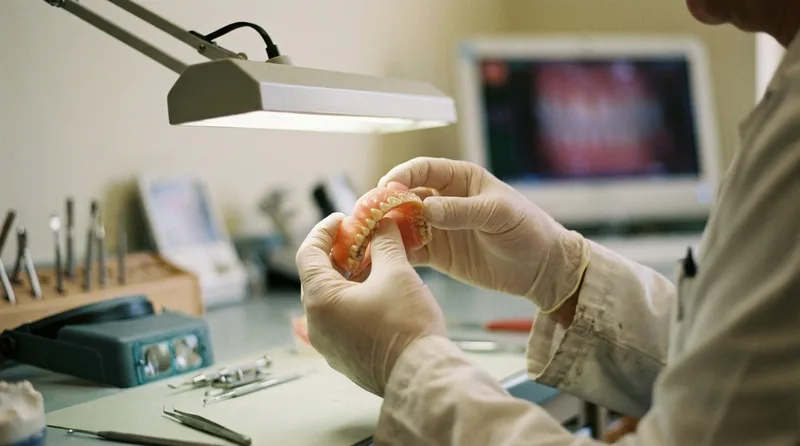
Dentures wear out for two main reasons: your mouth changes, and the materials age. After teeth are lost, the jawbone and gums gradually shrink, so the denture base no longer matches the ridge beneath it. Meanwhile, the denture teeth flatten from daily chewing and the base can stain, crack, or weaken.
Your mouth
Shrinking gums and bone
The ridge your denture rests on slowly gets smaller, which loosens the fit.
The teeth
Flattening from chewing
Worn teeth chew less efficiently and can make your bite close too far.
The base
Stains, odor, and small cracks
Acrylic picks up stains and buildup over the years and can weaken.
Your face
Changes in lip and chin support
As teeth wear and the ridge shrinks, the lower face can look shorter.
Notice that only half of those reasons have anything to do with the denture itself. That's why perfect cleaning habits can't make a set last forever. Your mouth keeps changing even when the denture doesn't.
And the change is gradual, so it's easy to miss. Many people adapt to a looser fit or a worn bite without realizing how much has shifted until they try a new set.
The clearest signs your dentures need replacing are a loose or slipping fit, sore spots that keep returning, trouble chewing, visible cracks or chipped teeth, and teeth that look worn flat. Needing more and more adhesive to keep them in place is another common early warning sign.
Is it time to have your dentures checked?
Check each one that applies to you.
Checked two or more? It's a good time for a fit evaluation.
Some signs are easy to brush off. Cracks at the corners of your mouth, for example, can be linked to a bite that's closing too far as teeth wear down. Speech changes, like a new whistle on “s” sounds, can also point to a shifting fit.
If you’re adjusting your life around your dentures, it’s probably time to adjust the dentures instead.
Yes, a reline or repair can often extend the life of your dentures. A reline reshapes the fitting surface to match your gums again, and a repair fixes cracks or broken teeth. But when the teeth are badly worn or the base is weak, replacing the denture usually works better.
| Option | What it does | When it makes sense |
|---|---|---|
| Adjustment | Smooths small pressure spots | A new sore spot on otherwise good dentures |
| Reline | Adds new material to the fitting surface | Fit is looser, but teeth and base are in good shape |
| Rebase | Replaces the entire pink base, keeps the teeth | Base is worn or stained, teeth are still good |
| Repair | Fixes a crack or replaces a broken tooth | A single break on a denture that otherwise fits |
| Replacement | A brand-new set made from new impressions | Worn teeth, repeated breaks, or poor fit after relines |
Repair, reline, or replace?
↓
Please skip the at-home reline kits. They can change your bite and irritate your gums, and they make a professional reline harder later.
Wearing old, poorly fitting dentures can lead to recurring sore spots, gum irritation, fungal infections, and trouble chewing. A loose denture can also put uneven pressure on the gums, which may speed up shrinkage of the ridge underneath and make the next set harder to fit well.

20-67%
of removable denture wearers worldwide have denture stomatitis
Source: J. of Fungi systematic review, 2024
80%
of oral health issues can be caught early with regular dental visits
Source: ADA
5-7 yrs
typical lifespan of complete dentures
Source: WebMD
Denture stomatitis, an irritation of the tissue under the denture often linked to yeast, is very common. A 2024 systematic review of denture stomatitis found it affects 20-67% of removable denture wearers, and named ill-fitting dentures, wearing dentures continuously, and buildup from poor hygiene among the main causes.
Myth
“If my dentures don’t bother me, they’re fine.”
Fact
Fit can drift slowly enough that you don’t notice. An exam can spot tissue irritation and bone changes before they turn into discomfort.
There's also the daily life side. When chewing gets harder, people quietly switch to softer foods, and nutrition can slip. Research in the International Journal of Prosthodontics found that older adults reported better quality of life after their old dentures were replaced with new ones.
Partial dentures can last as long as full dentures, and sometimes longer, but their lifespan depends heavily on your remaining natural teeth. If a tooth that holds a clasp needs treatment or is lost, the partial may need modification or replacement, regardless of how old it is.
Complete (full) dentures
Partial dentures
With a partial, protecting your natural teeth protects the denture. Clean around the clasps carefully, because plaque tends to collect there, and keep up with regular cleanings so decay and gum disease don't undermine the teeth holding everything in place.
You can make dentures last longer by cleaning them daily with a non-abrasive cleaner, taking them out at night, storing them moist, handling them over a soft surface, and seeing your dentist yearly. These habits protect both the denture materials and the gum tissue underneath, which keeps the fit comfortable for longer.
A simple daily denture routine
Rinse after meals
Remove food bits before they harden on the denture.
Brush gently every day
Use a soft denture brush and a non-abrasive denture cleaner, not regular toothpaste.
Clean your mouth too
Gently brush your gums, tongue, and palate to keep tissue healthy.
Take them out at night
Giving your gums a break lowers the risk of irritation and infection.
Soak them overnight
Keep dentures moist in water or a soaking solution so they don't dry out or warp.
Do
Avoid
These habits line up with evidence-based guidelines from the American College of Prosthodontists, developed with the ADA, which stress daily cleaning, not wearing dentures around the clock, and regular professional checkups.
Most denture wearers should see a dentist at least once a year, even with no natural teeth left. A yearly visit lets your dentist check the fit, look for worn areas, examine your gums and palate, and screen for oral cancer, which matters whether you have teeth or not.

It's one of the most common gaps in care. Many people assume that without natural teeth, there's nothing left to check. But your gums, tongue, and jaw still need attention, and the ADA notes that regular visits can catch 80% of oral health issues before they become serious.
A yearly visit also turns replacement into a planned decision instead of an emergency after a denture breaks the night before a family event.
It may be time if your dentures are loose, uncomfortable, or worn, or if they're more than five years old. So how often should dentures be replaced? Usually every five to seven years, but your fit and comfort are the better guide, and a quick exam can tell you for sure.
Some long-time denture wearers also want to know about moving from dentures to implants for a more secure fit. That's worth raising at your visit, especially if a loose fit is the main frustration.
Related: Comparing all your choices before deciding on a new set? Our main guide covers dentures alongside bridges and other options. other ways to replace missing teeth →
At Peterborough Family Dental & Implant Center, Dr. Muhammad Rahim and Dr. Jasper Ainslie help denture wearers from Peterborough, Jaffrey, Dublin, Hancock, and across the Monadnock region get back to a comfortable fit. Every new denture starts with precise impressions and a try-in, so you can approve the look and feel before it's finished.
Results may vary. Please consult with your dentist at Peterborough Family Dental for personalized treatment recommendations.
Find Out If Your Dentures Need Replacing
Schedule a fit check at our Peterborough, NH office. We'll look at your dentures and gums and give you clear, no-pressure options.
Request an Appointment →Prefer to talk it through first? Our front desk opens at 7 AM.
Call (603) 924-3664 →
Dr. Muhammad Rahim, DMD
Dentist · Peterborough Family Dental & Implant Center
Peterborough, NH dentist providing gentle general, cosmetic, restorative, and implant dentistry for the whole family.
Was this article helpful?
Even comfortable dentures should be checked yearly and usually replaced every five to seven years. Fit can loosen so gradually that you don't notice, and worn teeth can change your bite. A quick exam shows whether your current set is still doing its job well.
Our Peterborough team is happy to answer questions and get you on the calendar.


