
Back to all articlesPediatric Dentistry Dr. Muhammad Rahim, DMDOctober 7, 202613 min read
Children's Dental Care by Age: From Baby Teeth to Teens
Dr. Muhammad Rahim, DMDOctober 7, 202613 min read
Loading blog post
Dr. Muhammad Rahim, DMDOctober 7, 202613 min readCall and you'll reach a real person on our team: no phone tree, no hold music. We'd genuinely love to help.
(603) 924-3664Rather write to us? Contact us
Children's dental care by age means matching your child's routine to their stage: gum care and a first visit for babies, cavity prevention for toddlers, sealants for school-age kids, and sports protection for teens. The habits that work at 2 won't cover a 14-year-old who plays hockey.
This guide walks through each stage in order, from birth to 18. You'll get one short section per topic, plus a pointer to a deeper guide when you want the details. Our team provides children's dentistry in Peterborough for every one of these stages, and you can browse all of our dental services for the rest of the family too.
Why start early? According to the ADA, tooth decay is the most common chronic disease in children, and it's five times more common than asthma. Most of it is preventable. The trick is knowing what to focus on at each age.
Not sure what your child needs right now?
Dr. Muhammad Rahim and Dr. Jasper Ainslie see kids of every age at our Peterborough, NH office, with short, friendly visits paced to your child.
Request an Appointment →Children's dental care by age follows a predictable path: gum care and a first visit for babies, cavity prevention for toddlers, sealants and bite checks for school-age kids, then sports protection and wisdom tooth monitoring for teens. Checkups every six months tie every stage together.
At a glance: what each stage needs
Babies, 0 to 2
Clean gums, a rice-grain smear of fluoride toothpaste, and a first visit by age 1.
Toddlers, 2 to 5
Parent-led brushing, a pea-sized dab at 3, and fewer sweet sips between meals.
School age, 6 to 12
Sealants on new molars, space and bite checks, and an orthodontic look by 7.
Teens, 13 to 18
Mouthguards, braces care, smart drink choices, and wisdom tooth tracking.
Think of it as a relay. Each stage hands the next one a mouth that's either in good shape or already behind. Kids aren't on an exact schedule, so treat the ages below as typical ranges rather than deadlines.
Tooth milestones timeline
First baby tooth breaks through, usually in the lower front.
First dental visit, as recommended by the ADA.
Most of the 20 baby teeth are in.
First permanent molars arrive and front baby teeth start to wiggle.
First orthodontic check, as advised by the American Association of Orthodontists.
Second permanent molars come in.
Wisdom teeth usually show up, if they come in at all.
If your child is a few months ahead or behind these milestones, that's usually normal. Mention it at the next checkup if you're unsure.
Babies need clean gums before teeth arrive, gentle twice-daily brushing with a rice-grain smear of fluoride toothpaste once the first tooth appears, and a first dental visit by their first birthday. Most first teeth break through around 6 months, usually in the lower front.

Even before teeth show up, wipe your baby's gums with a soft, damp cloth after feedings. Once a tooth appears, switch to a tiny soft brush. The ADA guide to baby teeth recommends a smear of fluoride toothpaste about the size of a grain of rice.
A simple routine for this stage:
That first appointment is short and mostly about building trust. We count teeth, check the gums, and answer your questions about feeding, teething, and fluoride. Our guide to your child's first dental visit covers what happens and how to prepare.
One more thing to watch for. If nursing is a struggle or your baby has trouble latching, a tight band of tissue under the tongue could be part of the story. Read about tongue tie in babies, and mention it at the visit so we can take a look and refer you to a specialist if needed.
Toddlers and preschoolers need a parent brushing for them twice a day, a pea-sized dab of fluoride toothpaste starting at age 3, fewer sweet drinks between meals, and checkups every six months. This is also when the first cavities often appear, so early visits really pay off.
Related: How often kids, teens, and adults should be seen depends on risk. How often should you go to the dentist →
Kids this age want to do it themselves. Let them have a turn, then finish the job. Toddlers miss the back teeth and the gumline almost every time, and that's exactly where plaque builds up.
National data shows why this stage counts. In the CDC's National Health and Nutrition Examination Survey for 2015 to 2016, 8.8% of children ages 2 to 5 had at least one untreated cavity.
Myth
Baby teeth don't matter much because they fall out anyway.
Fact
Baby teeth help kids chew, speak clearly, and hold space for adult teeth. The ADA calls them nature's braces, and some back baby teeth stay until age 10 to 12.
Families on town water often ask whether Peterborough water is fluoridated, and families on private wells should ask too. The answer changes whether your child needs extra fluoride from the dentist.
And if we do find a cavity? Many parents wonder why it matters on a tooth that will fall out. Our guide to cavities in baby teeth explains the options, from small kid-sized fillings to keeping an eye on very early spots.
School-age kids start trading baby teeth for permanent ones around age 6, so care shifts to protecting new molars with sealants, watching how the bite develops, and holding space when a baby tooth is lost early. An orthodontic check by age 7 belongs here as well.
Share of US children with at least one untreated cavity, by age
Ages 2 to 5 8.8%
Ages 6 to 11 15.3%
Ages 12 to 19 13.4%
Source: CDC, NCHS Data Brief No. 307, NHANES 2015 to 2016
The chart tells the story. According to the CDC National Center for Health Statistics, untreated decay peaks in the 6 to 11 age group at 15.3%. New permanent molars come in with deep grooves, and kids this age are often brushing on their own for the first time.

That's why sealants matter so much here. The CDC reports that sealants can reduce the risk of cavities in school-age children by nearly 80%. Learn more about dental sealants for school-age kids, including when they're placed and how long they last.
Two other things happen in these years:
Most kids still need a parent to check their brushing and flossing in the early school years. A quick look at the back molars before bed is enough.
Teens need the same twice-daily brushing and six-month checkups, plus protection against new risks: contact sports, sugary and acidic drinks, braces that trap plaque, and wisdom teeth arriving in the late teens. They're also taking over their own care, which takes some gentle coaching.
Decay doesn't disappear with age. The same CDC survey found that 13.4% of youth ages 12 to 19 had untreated cavities, often from sports drinks, energy drinks, and constant snacking during busy days.
Sports are the big one for many Monadnock region families. A 2019 meta-analysis by Knapik and colleagues in Sports Medicine found that athletes who skipped a mouthguard had about 2.3 times the risk of mouth and face injuries compared with those who wore one. Compare the options in our guide to mouthguards for young athletes.
If a permanent tooth is knocked out
Pick it up by the crown, not the root, rinse it gently, and try to place it back in the socket or keep it in milk. According to the ADA, a knocked-out tooth can often be saved if it's reimplanted within 30 minutes, so call us right away at (603) 924-3664.
Wisdom teeth are the other teen milestone. They usually come in between 17 and 21, and routine X-rays in the mid-teens show whether there's room. Our guide to when wisdom teeth should come out covers the signs and timing.
Related: Parents often ask whether dental X-rays are safe for kids. Dental x-ray safety for children and adults →
Teens with braces need extra cleaning time around brackets and wires, and anyone tempted by vaping should know it dries the mouth and irritates the gums. We talk to teens directly, like the young adults they are.
Four habits protect kids' teeth at every age: brushing twice a day with fluoride toothpaste, cleaning between teeth once they touch, limiting sugary snacks and drinks between meals, and seeing the dentist every six months for a cleaning, an exam, and fluoride varnish when it's recommended.
37%
fewer decayed surfaces in baby teeth with fluoride varnish
Source: Cochrane Review, 2013
~80%
lower cavity risk in school-age kids with sealants
Source: CDC
2.3x
higher risk of mouth injuries in athletes without mouthguards
Source: Sports Medicine, 2019
Professional fluoride is backed by solid research. A 2013 Cochrane Review by Marinho and colleagues pooled 22 trials and found fluoride varnish was linked to 37% fewer decayed tooth surfaces in baby teeth and 43% fewer in permanent teeth. Applying it takes seconds.
The focus shifts as kids grow, though. Here's where each tool fits in children's dental care by age:
| Prevention tool | 0 to 2 | 2 to 5 | 6 to 12 | 13 to 18 |
|---|---|---|---|---|
| Fluoride toothpaste | ●●● | ●●● | ●●● | ●●● |
| Fluoride varnish | ●●● | ●●● | ●●● | ●●● |
| Dental sealants | ●●● | ●●● | ●●● | ●●● |
| Bite and orthodontic checks |
Three dots means it's a main focus at that age. One dot means it's rarely needed yet. Your child's own risk, such as past cavities or a sports schedule, can move things up or down.
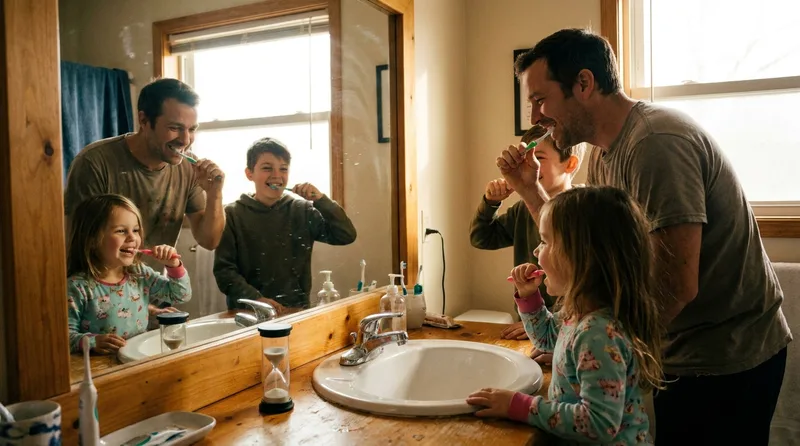
Diet matters as much as brushing. Our guide to foods that damage your teeth covers the sticky and acidic snacks to watch for.
Daily habits checklist for parents
Tick off what your family already does.
Peterborough Family Dental accepts most dental insurance, and many plans include routine preventive visits for children. For families without coverage, our VIP membership bundles a year of routine care into one simple rate, with member savings on other treatment and no deductibles or annual maximums.
The family membership plan isn't insurance. It's a yearly savings plan between your family and our team, and benefits start the day you join. Here's how the two compare for a child:
| Child membership plan | Traditional insurance | |
|---|---|---|
| Who it's for | Kids 16 and under without dental insurance | Families with coverage through work or a private plan |
| Included care | 2 cleanings, 2 exams, routine X-rays, 2 fluoride treatments, and 1 emergency exam a year | Depends on your plan |
| Other treatment | 15% off most treatment | Coverage varies after deductibles |
| Annual maximum | None | Usually capped |
| Waiting period | None, use it the day you join | Often applies to some services |
Each additional family member you enroll saves on the monthly rate, and CareCredit financing is available for larger treatment. Our front desk can walk you through current pricing and help you choose.
We keep kids' visits short, gentle, and paced to your child. Every tool is explained and shown first, parents are welcome in the room, and nitrous oxide is available for children who need extra help relaxing. Nothing starts until your child feels settled and ready.
We use a tell-show-do approach: tell your child what's coming, show the tool, then do it. Most preventive visits take about half an hour. For the small number of children who need treatment under general anesthesia, we refer to a pediatric specialist and help coordinate care.
"A child who likes the dentist at six becomes an adult who never avoids the dentist at thirty-six."
The Peterborough Family Dental team
Does my child need a visit soon?
Has it been more than six months since the last checkup?
Yes: Book a routine visit.
No ↓
Do you see a white spot, brown spot, or chipped tooth?
Yes: Call us so we can check it early.
No ↓
Is your child 1 or older and has never been to the dentist?
Yes: Schedule a first visit now. It's never too late.
No ↓
None of these? Keep up the daily habits and stick to the six-month rhythm.
Families come to us from Peterborough, Jaffrey, Dublin, Hancock, and across the Monadnock region. Parents, grandparents, and kids can all book back-to-back visits with one familiar team.
If there's one thing to take from this guide, it's that the first visit sets the tone for the rest. A child who starts by age 1 and keeps a steady six-month rhythm gives our team the chance to catch small problems while they're still small, at every age that follows.
Results may vary. Please consult with your dentist at Peterborough Family Dental for personalized treatment recommendations.
Give your child a great start
Book your child's next checkup, or bring the whole family in back-to-back. Call (603) 924-3664 or request a time online.
Book Your Child's Visit →
Dr. Muhammad Rahim, DMD
Dentist · Peterborough Family Dental & Implant Center
Peterborough, NH dentist providing gentle general, cosmetic, restorative, and implant dentistry for the whole family.
Was this article helpful?
Yes, braces add extra cleaning work at any age. Plaque collects around brackets and wires, so kids should brush after meals, use a floss threader or water flosser, and skip sticky or hard foods like caramel and ice. Regular checkups continue during orthodontic treatment.
Our Peterborough team is happy to answer questions and get you on the calendar.
| ●●● |
| ●●● |
| ●●● |
| ●●● |
| Sports mouthguard | ●●● | ●●● | ●●● | ●●● |
| Wisdom tooth monitoring | ●●● | ●●● | ●●● | ●●● |


