
Back to all articlesPediatric Dentistry Dr. Muhammad Rahim, DMDOctober 11, 20269 min read
When Should Wisdom Teeth Be Removed? A Guide for Teens
Dr. Muhammad Rahim, DMDOctober 11, 20269 min read
Loading blog post
Dr. Muhammad Rahim, DMDOctober 11, 20269 min readCall and you'll reach a real person on our team: no phone tree, no hold music. We'd genuinely love to help.
(603) 924-3664Rather write to us? Contact us
The short answer to when should wisdom teeth be removed is simple: when they cause problems, or when X-rays show they're likely to. There's no single birthday when they have to come out, and many healthy ones can stay. For most families, the real decision happens somewhere between the late teens and early twenties.
This guide covers when wisdom teeth usually arrive, the signs that mean it's time, when watching and waiting makes more sense, and why age plays a part in the decision. You can also browse all of our dental services for the rest of your family.
Wondering about your teen's wisdom teeth?
Dr. Muhammad Rahim and Dr. Jasper Ainslie can check how they're developing with a 3D scan and give you an honest answer about whether anything needs to happen.
Request an Appointment →Wisdom teeth should be removed when they cause pain, infection, decay, gum disease, cysts, or damage to nearby teeth, or when imaging shows those problems are likely. The American Dental Association (ADA) lists these as the main reasons. Teeth that come in straight, fit, and stay cleanable can usually stay.
So the answer isn't a date on the calendar. It's a combination of three things: how the teeth are positioned, whether they're causing trouble now, and how likely they are to cause trouble later. Your dentist weighs all three, usually with X-rays, before recommending anything.
That said, timing still matters. Many dentists like to evaluate wisdom teeth in the mid to late teens, before the roots are fully formed. If removal does turn out to be the right call, doing it while your teen is younger often means an easier procedure and a smoother recovery.
Here's a quick way to think about it:
Wisdom teeth, or third molars, usually come in between ages 17 and 21, according to the ADA. They're the last teeth to arrive, often after braces are done. Because there's frequently little room left at the back of the jaw, they're also the teeth most likely to get stuck, or impacted.
How common is that? A 2016 meta-analysis in the Journal of Dental Research by Carter and Worthington pooled 49 studies covering more than 83,000 people. It found about 24% of people ages 17 and older had at least one impacted wisdom tooth. The odds of impaction were about 58% higher in the lower jaw than the upper. Among people with impaction, about 43% had just one impacted wisdom tooth, while only about 9% had all four.
Wisdom teeth timeline
The crowns of the wisdom teeth start forming deep in the jaw.
Routine X-rays start to show their position and whether there's likely to be room.
Wisdom teeth usually try to come in, according to the ADA.
Roots are typically fully formed, and any teeth that stay are monitored at checkups.
An impacted tooth isn't automatically a problem. Some sit quietly for decades. But it does mean your dentist will want to keep a closer eye on it.
The most common signs are pain or pressure at the back of the jaw, swollen or bleeding gums behind the last molars, food getting trapped around a partly erupted tooth, a bad taste, and jaw stiffness. Any of these is worth a dental visit, because they often point to infection or decay starting.
Partly erupted wisdom teeth are the usual troublemakers. The ADA explains that when a tooth only breaks partway through the gum, it leaves an opening where bacteria can get in and cause infection, swelling, and stiffness. It's also hard to floss between a tilted wisdom tooth and the molar in front of it.
Signs to mention at your next visit
Check any your teen has noticed.
One or more checks is a good reason to book an exam.
Some problems don't cause symptoms at all. The ADA notes an impacted tooth can form a cyst that damages nearby roots or the bone that supports the teeth. That's why X-rays matter, even when your teen feels fine.
Swelling with fever, or swelling that makes it hard to swallow or open the mouth, needs prompt care. Call your dentist the same day.
Not always. If wisdom teeth are healthy and cause no problems, there's no strong evidence they must come out. A 2020 Cochrane Review found too little evidence to say whether symptom-free, disease-free impacted wisdom teeth should be removed or kept, and it recommended regular checkups for teeth that stay.
This is a real shift from the old habit of removing every wisdom tooth "just in case." The 2020 Cochrane Review on impacted wisdom teeth, led by Hossein Ghaeminia, found only low to very low certainty evidence either way. The authors suggested patient values and clinical judgment should guide a shared decision.
And the numbers show why the question matters. A 2007 article in the American Journal of Public Health estimated that about 10 million wisdom teeth are removed from roughly 5 million people in the US each year. Every one of those is a surgical procedure with recovery time.
Myth
Everyone needs their wisdom teeth out, so it's best to remove them all early.
Fact
Healthy, well-positioned wisdom teeth can often stay. The ADA says teeth that aren't removed should keep being monitored, because problems can still develop later.
Keeping wisdom teeth isn't a "set it and forget it" choice, though. Teeth that stay should be checked at regular visits, and your teen needs to brush and floss carefully around them. The same 2020 review noted that retained impacted teeth may raise the long-term risk of gum disease around the neighboring molar.
Age matters because removal tends to be simpler in the late teens and early twenties, when roots are still forming and the bone is less dense. The 2020 Cochrane Review noted that removal in older people carries a higher risk of complications, pain, and discomfort after surgery, which is why timing is part of the decision.

That doesn't mean every teen should have surgery early. It means that if X-rays suggest a tooth is likely to cause problems, there's an advantage to acting before the roots are long and fully set. If the tooth looks fine, waiting and watching is still a perfectly reasonable plan.
| Factor | Late teens to early 20s | Later adulthood |
|---|---|---|
| Root development | Often still forming | Fully formed and longer |
| Surrounding bone | Softer, more flexible | Denser |
| Typical recovery | Usually quicker | Often slower, with more discomfort |
| Complication risk | Lower | Higher, per the 2020 Cochrane Review |
Picture two patients. A 17-year-old whose X-ray shows a lower wisdom tooth tipped sideways into the molar in front of it, and a 30-year-old with the same tooth who's never had a problem. The teen's dentist may suggest planning removal now. For the adult, watching it is often the better choice.
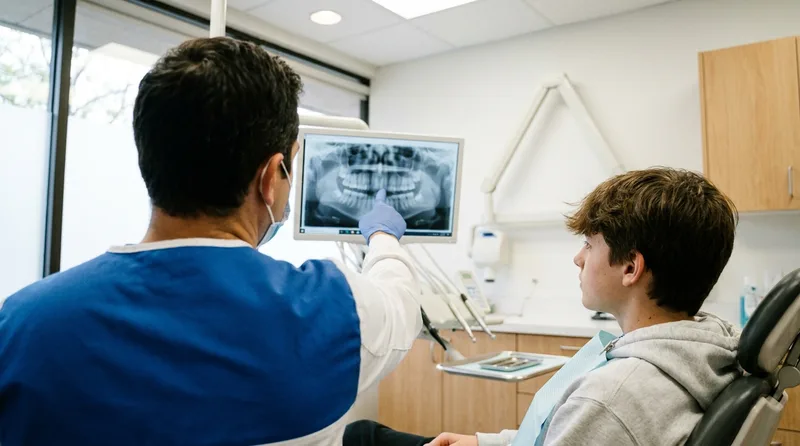
Wisdom teeth are evaluated with an exam and imaging. The ADA says dental X-rays can reveal problems you can't see during an exam, including impacted teeth, and that children and teens may need X-rays more often because their teeth and jaws are still developing. A 3D scan adds detail when a tooth sits near a nerve.
An evaluation usually follows these steps:
Ask to see the images. A good evaluation shows you exactly where each tooth sits, so you understand the recommendation instead of just taking it on faith.
Wisdom teeth removal is an outpatient procedure. The area is numbed, the tooth is removed, sometimes in sections if it's impacted, and the gum is closed if needed. Straightforward teeth take a short visit, while deeply impacted teeth or those near a nerve are often handled by an oral surgeon.
Comfort options vary by office. Local anesthetic is standard, and many practices also offer nitrous oxide (laughing gas) or a mild oral sedative for nervous patients. Deeper IV sedation is usually provided by oral surgery offices.
Before the visit, ask a few practical questions so there are no surprises:
Recovery is usually a few days of swelling and soreness, with soft foods and careful cleaning. Your dentist will give you written aftercare instructions covering how to protect the healing site and when to call.
We evaluate wisdom teeth with a 3D cone-beam scan, so we can see exactly how each tooth sits next to nerves, sinuses, and neighboring roots. If a tooth can stay, we tell you. If it should come out, we explain whether it's a straightforward removal we handle here or a case for an oral surgeon.
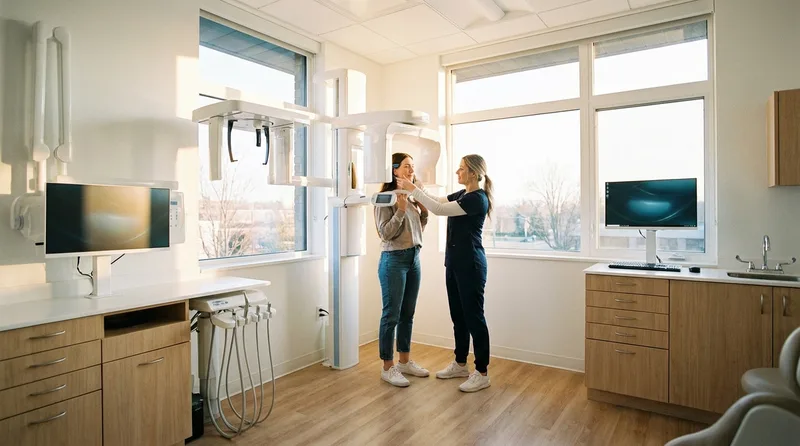
Our wisdom teeth removal service covers straightforward teeth in our office, with thorough numbing plus nitrous oxide or minimal oral sedation if your teen is nervous. For complex impactions, we coordinate with trusted oral surgeons, send your imaging ahead, and stay involved before and after.
Wisdom teeth are one milestone in a bigger picture. Our guide to dental care through the teen years covers what comes before and after, from sealants to sports protection.
So when should wisdom teeth be removed? When the evidence in your teen's own mouth says so. Get them checked in the mid to late teens, ask to see the images, and make the call together with your dentist.
Results may vary. Please consult with your dentist at Peterborough Family Dental for personalized treatment recommendations.
Get an honest look at your teen's wisdom teeth
A 3D scan and a clear conversation, so you know exactly where things stand. Call (603) 924-3664 or request a visit online.
Book a Consultation →
Dr. Muhammad Rahim, DMD
Dentist · Peterborough Family Dental & Implant Center
Peterborough, NH dentist providing gentle general, cosmetic, restorative, and implant dentistry for the whole family.
Was this article helpful?
There's no single best age, but if removal is needed, the late teens to early twenties is often easiest. Roots are still forming and healing tends to be quicker. An evaluation in the mid teens helps decide whether removal will be needed at all.
Our Peterborough team is happy to answer questions and get you on the calendar.


