Receding Gums Treatment: Causes, Options, and Prevention
Dr. Muhammad Rahim, DMDSeptember 3, 202611 min read
Receding gums treatment works best when it starts early, but receding gums develop gradually enough that many people do not notice until the change is significant.
A tooth that looks longer than it used to, sensitivity to cold or brushing that was not there before, or a visible notch at the gumline are all signs that the gum tissue has pulled back and the root surface is being exposed.
Understanding receding gums treatment options, what causes the recession in the first place, and what can be done to stop it is the starting point for protecting the teeth and gum tissue you still have.
At Peterborough Family Dental in Peterborough, NH, Dr. Muhammad Rahim, DMD, evaluates gum recession as part of every comprehensive dental examination and advises patients on the treatment and prevention strategies appropriate for their specific situation.
This is one of the dental services offered at Peterborough Family Dental & Implant Center in Peterborough, NH.
What Is Gum Recession?
Gum recession is the gradual pulling back of the gingival tissue that surrounds the tooth root, exposing more root surface than is normal. The exposed root is covered by cementum rather than enamel, making it more vulnerable to sensitivity, decay, and further damage.
Gum recession is the process by which the gingival tissue that surrounds and protects the tooth root gradually pulls back, exposing more of the tooth's root surface than is normal. The root surface is covered by cementum rather than the harder enamel that covers the crown, making it more vulnerable to both sensitivity and decay than the enamel-covered portion of the tooth.
Recession is typically measured in millimeters by the distance between the cemento-enamel junction, the natural boundary between the crown and root, and the current position of the gum margin. Even a few millimeters of recession can produce significant sensitivity and cosmetic change, and deeper recession exposes more of the vulnerable root surface to the oral environment, bacterial plaque, and the mechanical forces of brushing and chewing.
According to the American Dental Association's MouthHealthy resource on gum disease, gum recession is a common consequence of periodontal disease as well as other factors, and it affects a significant proportion of adults, increasing in prevalence and severity with age.
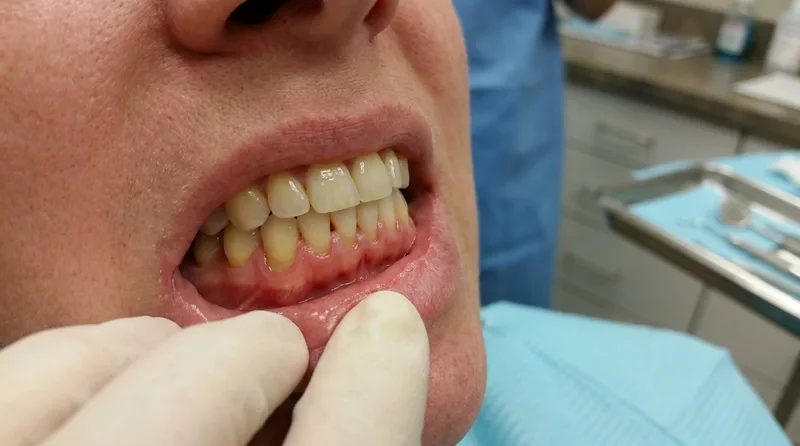
Gum recession exposes the root surface, which is more vulnerable to sensitivity and decay than the enamel-covered crown.
Dr. Muhammad Rahim, DMD
Dentist · Peterborough Family Dental & Implant Center
Peterborough, NH dentist providing gentle general, cosmetic, restorative, and implant dentistry for the whole family.
Was this article helpful?
Frequently asked questions
No. Gum tissue that has receded does not regenerate on its own. Treatment addresses the underlying cause to stop further recession. Surgical gum grafting can restore lost tissue in appropriate cases.
The main causes are periodontal disease, aggressive brushing, naturally thin gum tissue, tooth position outside the bony arch, tobacco use, and oral piercings that chronically contact gum tissue.
Treatment depends on severity and cause. Mild cases: remove the cause and monitor. Disease-related: scaling and root planing. Moderate to severe: composite bonding to cover roots or gum graft surgery to restore lost tissue.
Teeth that appear longer, new sensitivity at the gumline, a visible notch or yellow exposed area at the gumline, and bleeding or discomfort when brushing near the gumline.
Yes. Left untreated, recession exposes more root surface, increasing sensitivity and decay risk, and can compromise the tooth's structural support. Early detection allows conservative treatment before surgical intervention is needed.
Soft-bristled brush with correct technique, prompt treatment of gum disease, regular dental exams with periodontal monitoring, a night guard for bruxism, and quitting tobacco.
Gum recession does not have a single cause. It is typically the result of one or more contributing factors, and identifying which factors are driving the recession in a specific patient determines the most effective approach to treatment and prevention.
The main causes of gum recession:
Periodontal disease: The most significant cause of recession in adults. Bacterial infection below the gumline destroys the attachment fibers and bone that support the gum tissue, causing it to detach and recede. Recession from periodontal disease is often generalized across multiple teeth and is accompanied by bone loss visible on X-ray.
Aggressive tooth brushing: Brushing with too much force, using a medium or hard-bristled brush, or using a horizontal scrubbing technique rather than the correct angled technique causes gradual mechanical abrasion of the gum tissue and enamel at the gumline. This type of recession tends to appear on the labial surfaces of the teeth that receive the most brushing pressure, often the upper premolars and canines.
Thin gum tissue (thin biotype): Some patients have naturally thin, delicate gum tissue with limited attached gingiva. This anatomical characteristic makes the gum tissue more susceptible to recession from mechanical trauma, orthodontic movement, and inflammation than patients with a thicker, more robust gum tissue biotype.
Tooth position and bite forces: Teeth that are positioned outside the normal arch, particularly those that have erupted or shifted labially (toward the lip), have less supporting bone and gum tissue on the outer surface. Bite forces that concentrate disproportionately on specific teeth can also contribute to attachment loss and recession.
Orthodontic treatment: Moving teeth orthodontically, particularly moving them labially or buccally outside the bony envelope, can precipitate or accelerate recession in susceptible patients. This is a recognized risk of certain orthodontic movements, particularly in patients with a thin gum tissue biotype.
Oral piercings: Tongue and lip piercings that contact gum tissue chronically can cause localized recession at the site of repeated mechanical contact.
Tobacco use: Smoking and smokeless tobacco are associated with gum recession through multiple mechanisms including reduced blood flow to the gingival tissue, compromised immune response to bacterial plaque, and direct chemical irritation.
Aggressive horizontal brushing with too much pressure is one of the most preventable causes of gum recession.
What Are the Symptoms of Gum Recession?
Gum recession often develops slowly enough that patients adapt to early signs without recognizing them as a clinical problem. Knowing what to look for helps catch recession before it becomes advanced.
Common symptoms include:
Teeth that look longer: If your teeth appear to have grown or if there is more tooth visible than there used to be, the gum tissue has receded rather than the tooth actually lengthening.
Tooth sensitivity: Exposed root surfaces respond to temperature changes, sweet foods, cold air, and the touch of a toothbrush in ways that enamel-covered surfaces do not. New sensitivity concentrated at the gumline is one of the earliest noticeable signs of recession.
A visible notch at the gumline: A physical groove or concavity where the tooth meets the gum is visible recession. The darker yellow color of the exposed root surface is often visible at the same location.
Sensitivity when brushing at the gumline: Pain or discomfort specifically when the brush contacts the gumline during brushing is a common early sign that the root surface is exposed.
Bleeding gums: While not caused by recession itself, inflammation of the gum tissue from plaque accumulation at a receded margin frequently produces bleeding with brushing or flossing.
Common Causes of Recession
Cause
How It Damages the Gum
Can It Be Changed?
Aggressive brushing
Physically wears the margin away
Yes, with technique and a soft brush
Gum disease
Inflammation destroys attachment
Yes, treatable but not reversible
Grinding
Repeated flexing stresses the neck of the tooth
Yes, often with a nightguard
Genetics and thin tissue
Less tissue to begin with
No, but it can be protected
How Is Gum Recession Diagnosed?
Gum recession is diagnosed at a clinical dental examination using a periodontal probe to measure the position of the gum margin relative to the cemento-enamel junction. This measurement, taken at multiple points around each tooth, produces a complete picture of where recession is present, how deep it is, and how much attached gingiva remains at each site.
X-rays are also part of the assessment because they show the level of supporting bone around the tooth root. Recession from periodontal disease is accompanied by bone loss; recession from mechanical trauma alone is not. This distinction matters because the treatment approach differs significantly depending on whether bone loss is present.
Published research has found that gum recession affects approximately 50% of adults aged 18 to 64 in the United States, and the prevalence increases to over 70% in adults aged 65 and older, according to published epidemiological data on periodontal conditions. Early identification through regular dental examinations is the most reliable way to catch recession before it reaches the degree that requires surgical intervention.
Can Receding Gums Grow Back?
Gum tissue that has receded does not regenerate on its own. Once the margin has pulled back and the root is exposed, it will not return without clinical intervention. Treatment stops further recession; surgical grafting restores what has already been lost in appropriate cases.
Gum tissue that has receded does not regenerate on its own. Once the gum margin has pulled back and the root surface is exposed, the tissue will not spontaneously return to its original position without clinical intervention. This is one of the most important reasons to address the contributing causes of recession early, before the recession itself becomes advanced enough to require surgical correction.
What can be done is stopping further recession through treating the underlying causes, and in appropriate cases, restoring lost gum tissue through surgical grafting. The distinction between arresting recession and reversing it is important for setting accurate patient expectations. Addressing the cause prevents more tissue from being lost; a graft procedure restores what has already been lost.
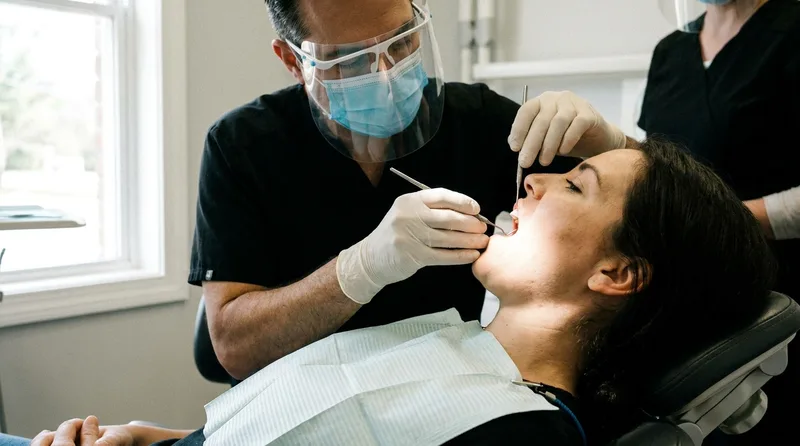
Recession is measured with a periodontal probe at multiple points around each tooth during a comprehensive periodontal evaluation.
How Common the Underlying Problem Is
According to the CDC, 42% of adults aged 30 and older have some form of periodontal disease, which is the single most common driver of recession. According to the ADA, regular dental visits catch 80% of oral health issues before they become serious, and recession is one of the clearest examples, since it is visible long before it is felt.
What Receding Gums Treatment Options Exist?
Receding gums treatment depends on the severity of the recession, the underlying cause, and the clinical condition of the tooth and surrounding tissue. The treatment ladder ranges from non-surgical interventions for early recession to surgical grafting for more advanced cases.
Treatment options include:
Cause removal and monitoring: When recession is mild and the contributing factors can be identified and addressed, the first step is removing the cause. Switching to a soft-bristled brush and correcting brushing technique, treating periodontal disease, or managing a bite discrepancy stops further recession. The existing recession is then monitored to confirm it has stabilized.
Scaling and root planing: When recession is associated with periodontal disease and bacterial deposits below the gumline, deep cleaning that removes the calculus and smooths the root surface addresses the infection driving the recession. Dr. Rahim performs scaling and root planing for periodontal disease-related recession, one of the treatments covered in our periodontal care resources.
Composite bonding: For recession that is causing sensitivity or cosmetic concern but does not warrant surgical grafting, tooth-colored composite resin applied to the exposed root surface covers the sensitive dentin and restores a more natural appearance without surgery.
Gum graft surgery: For moderate to severe recession, particularly when there is inadequate attached gingiva remaining or the recession is compromising the tooth's long-term stability, a gum graft surgically repositions tissue to cover the exposed root. The most common type, a connective tissue graft, takes donor tissue from the palate and places it at the recession site. Dr. Rahim performs gum grafts at Peterborough Family Dental for appropriate cases.
Pinhole surgical technique: A minimally invasive alternative to traditional gum grafts in which the existing gum tissue is gently stretched over the receded root surface through a small access hole rather than a large incision. Recovery is faster than with traditional grafting, and the cosmetic result is comparable in suitable cases.
According to the American Dental Association, the goal of receding gums treatment is to address the underlying cause, stop further loss of gum tissue and bone, and restore the patient's ability to effectively clean and maintain the affected teeth.
How Can Gum Recession Be Prevented?
Prevention centers on the modifiable risk factors. Correct brushing technique with a soft-bristled brush, prompt treatment of gum disease, regular periodontal monitoring at dental visits, managing bruxism with a night guard, and quitting tobacco are the most impactful steps.
Prevention of gum recession centers on addressing its modifiable risk factors. The most impactful preventive actions are:
Correct brushing technique: Use a soft-bristled brush and the modified Bass technique, angling the bristles at 45 degrees toward the gumline and using gentle circular motions rather than horizontal scrubbing. Brushing harder does not clean better; it causes mechanical abrasion of the gum tissue over time.
Treating periodontal disease promptly: Gum disease is the leading cause of recession in adults. Early treatment of gingivitis before it progresses to periodontitis prevents the bone and attachment loss that drives the most significant cases of recession.
Regular dental examinations: Recession that is caught early, when only one or two millimeters have been lost, is far more manageable than recession identified after five or six millimeters of root surface are exposed. Routine periodontal probing at each dental visit is the surveillance tool that catches early recession.
Addressing teeth grinding and clenching: Parafunctional habits including bruxism increase the mechanical forces on the teeth and gum tissue. A custom night guard reduces these forces during sleep and can slow recession in susceptible patients.
Quitting tobacco: Tobacco use in any form accelerates gum disease and recession. Cessation is one of the most significant single changes a tobacco user can make for their periodontal health.
Noticing your teeth look longer or feel more sensitive?
Book a periodontal evaluation at Peterborough Family Dental. Dr. Rahim will measure recession at every site, identify the contributing causes, and give you a clear treatment plan to stop further loss.


 Dr. Muhammad Rahim, DMDSeptember 3, 202611 min read