
Back to all articlesRestorative Dentistry Dr. Muhammad Rahim, DMDNovember 16, 202611 min read
Crown vs Implant for a Damaged Tooth: Save or Replace?
Dr. Muhammad Rahim, DMDNovember 16, 202611 min read
Loading blog post
Dr. Muhammad Rahim, DMDNovember 16, 202611 min readCall and you'll reach a real person on our team: no phone tree, no hold music. We'd genuinely love to help.
(603) 924-3664Rather write to us? Contact us
When a tooth is badly damaged, the question isn't really crown vs implant. It's whether your tooth can be saved or has to be replaced. A crown protects a tooth you're keeping, while an implant stands in for one you can't. At Peterborough Family Dental & Implant Center in Peterborough, NH, we provide restorative and implant dentistry, which means our advice isn't tilted toward either path. We'll tell you honestly which one your tooth calls for.
Most people expect the answer to be about cost or convenience. It's actually about what's left of the tooth and how healthy the root is. The same damage can mean a crown for one person and an implant for another.
This guide explains the difference, how dentists decide, what each option involves, and what to ask before you choose.
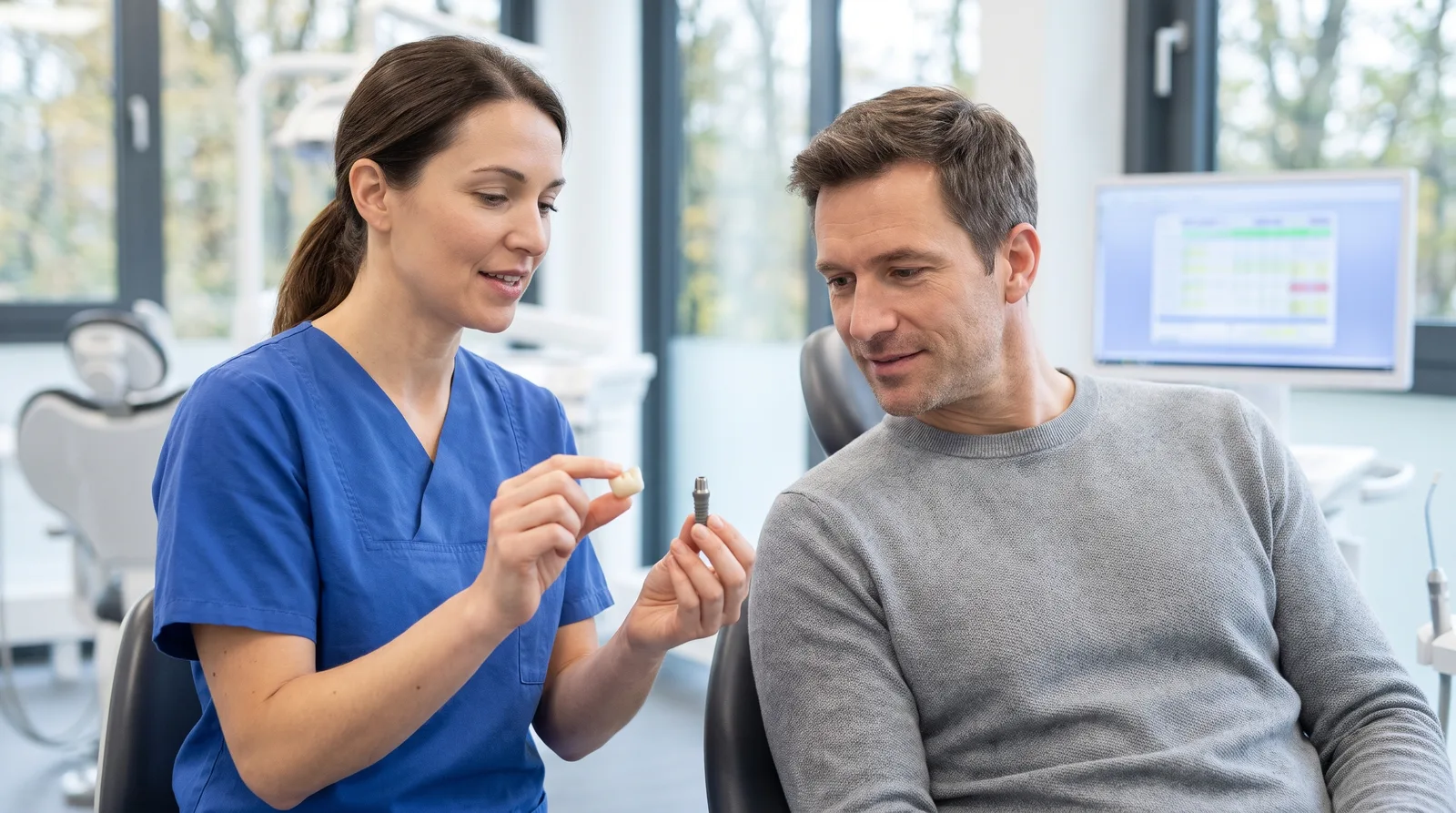
A crown is a cap that covers a damaged tooth you're keeping, while an implant is a titanium post placed in the jaw to replace a tooth that has been removed. An implant also gets a crown on top, which is why the two are often confused. One protects a natural tooth, and the other replaces it.
The American Dental Association's guide to crowns explains that a crown can strengthen a tooth with a large filling when there isn't enough tooth remaining to hold the filling, protect a weak tooth from breaking, or restore one that's already broken. It also notes that a crown is used to cover a dental implant.
The ADA's guide to implants describes implants as posts surgically placed in the jaw that function as an anchor for replacement teeth, and says that for a single tooth implant, your dentist customizes a new tooth, called a crown. So the real choice is between keeping your own root or replacing it.
A damaged tooth can usually be saved with a crown when enough healthy tooth remains above the gumline and the root is sound. Cracked teeth, teeth with large decay or failing fillings, and teeth weakened by root canal treatment are common candidates. Keeping your natural tooth is usually the first choice when it's possible.
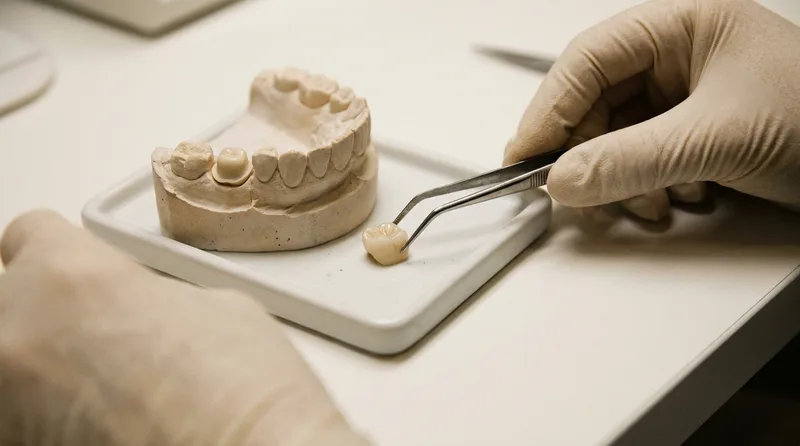
Our dental crown service offers same-day CEREC crowns, so you can often leave with your finished crown in one visit, with no temporary crown. Our guide to same day crowns explains how that works, and our guide to crown materials covers zirconia, e.max, and porcelain-fused-to-metal options. If the nerve is involved, root canal treatment may come first, and our guide to what a root canal feels like explains what to expect.
Replacement is usually the better choice when the tooth is split, the root is fractured, decay extends below the gumline or bone, or an infection keeps coming back. In those cases a crown can't give the tooth a stable foundation. Removing the tooth and placing an implant restores chewing without relying on a failing root.
It's not a failure when this happens. Our tooth extraction service and immediate implants can sometimes replace the tooth on the same day it's removed, and our single-tooth implant page explains how a replacement works. Our guide to extraction aftercare covers healing, and our step-by-step guide to the implant procedure walks through what comes next.
A crown keeps your own tooth and is often finished in one visit, while an implant replaces the tooth and takes months because the bone needs time to bond to the post. A crown suits a tooth with enough structure and a sound root. An implant suits a tooth that can't be saved. The table shows how they compare.
| Feature | Crown on your own tooth | Dental implant |
|---|---|---|
| What it does | Caps and protects your own damaged tooth | Replaces the tooth with a titanium post and a crown |
| Keeps your natural tooth | Yes, the root and remaining tooth stay | No, the damaged tooth is removed first |
| Time | Often one visit with a same-day crown | Months, since the bone needs time to bond to the post |
| Procedure | Tooth is reshaped and capped | Tooth removal if needed, then surgical placement of the post |
| Suits | Enough healthy tooth and a sound root remain | The tooth is split, the root is damaged, or decay is too deep |
| Can the tooth still decay? | Yes, the natural tooth underneath can | No, but gum health still matters |
| Insurance | Most plans cover a portion when needed | Coverage varies widely by plan |
One point surprises people. An implant can't decay, but the gums around it need the same care as your natural teeth. Likewise, a crowned tooth can still develop decay under the crown if it isn't cleaned well, which is why checkups matter either way.
Not sure whether your tooth can be saved?
Book a free consultation at our Peterborough office and we'll examine your tooth and show you both options.
Request an Appointment →Dentists decide with an exam, X-rays, a look at the gums and bite, and sometimes 3D imaging. They check how much healthy tooth remains, how deep any crack or decay goes, and whether the root and surrounding bone are sound. No single test decides it, so an exam is the right first step.
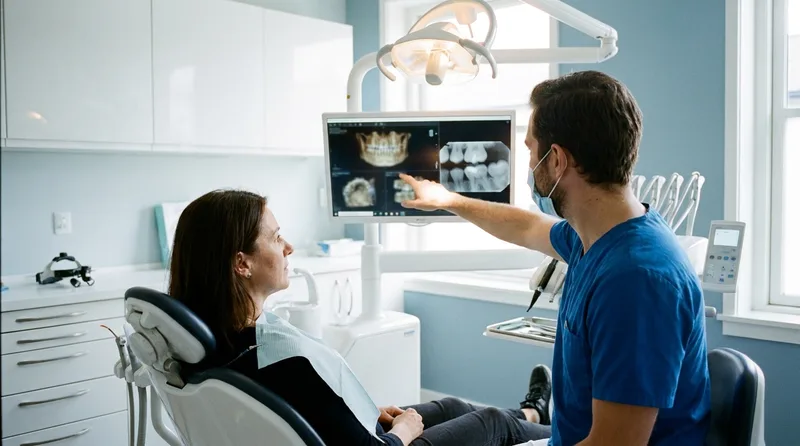
Healthline's medically reviewed guide to cracked teeth adds that X-rays don't always reveal a crack, so your description matters. Our guide to cracked tooth symptoms explains the pattern, and our guide to the stages of tooth decay shows how decay moves toward the nerve.
A crown involves reshaping the tooth, taking a digital impression, and fitting the crown, often in one visit. An implant involves three phases, according to the ADA: surgically placing the implant, waiting for the bone to heal around it, and then attaching the artificial tooth. Some patients can have implants and replacement teeth placed in one visit.
The ADA adds that you may be given a temporary tooth while the final one is made. Our step-by-step guide to the implant procedure covers what to expect at each stage.
A crown usually costs less and takes less time, and most dental plans cover a portion of it when it's needed to restore a damaged tooth. An implant costs more up front, takes longer, and coverage varies widely. We give you a written quote for both so you can compare fairly.
We're in-network with Delta Dental Premier and verify your benefits in writing. Our guide to implant insurance coverage and our guide to implant cost explain what to expect. If you've received a plan elsewhere, we offer a free second opinion and match the price on comparable care.
Want to see both options for your tooth?
Send us a note and we'll explain how a written plan compares a crown and an implant for you.
Contact Our Office →Often, yes. In the crown vs implant decision, trying a crown first, with root canal treatment if needed, is usually reasonable when it has a good chance of keeping your natural tooth, because an implant remains an option later. The exception is a tooth too damaged to give a crown a stable foundation.
Ask your dentist two questions. How likely is the crown to work for this tooth, and what happens if it doesn't? An honest answer includes the risks of each path. Saving a tooth that can't be saved can mean paying twice and risking infection along the way.
Waiting is the one option that rarely helps. The National Institute of Dental and Craniofacial Research explains that untreated decay can lead to infection and an abscess, and our guide to tooth abscess symptoms lists the warning signs. A tooth that could have been saved with a crown can become one that needs removal.
Gum health, jawbone, general health, smoking, and grinding all play a role. The ADA notes that your health is more of a factor than your age for implants, that chronic illnesses such as diabetes may interfere with healing, and that tobacco can slow healing. These factors shape the order of treatment more often than they rule anyone out.

Implants are well supported by research. The Journal of Oral and Maxillofacial Surgery reports implant success rates of 95-98% over 10 years, and the American Academy of Implant Dentistry reports that implant-supported teeth can restore up to 90% of natural chewing power. Our comparison of a dental implant and a bridge explains how an implant compares with other replacement options, and our guide to signs of implant failure covers what to watch for afterward.
Don't wait on a damaged tooth. Book a consultation so your dentist can examine it, take X-rays, and settle the crown vs implant question honestly. You'll see the options side by side with a written quote, and there's no pressure to decide that day.
Nerves are normal. BMC Oral Health (2024) reports that 36% of Americans have dental anxiety and 12% have extreme dental fear, and the Journal of Dental Anesthesia reports that sedation dentistry has helped 75% of fearful patients keep up with regular visits. We offer nitrous oxide and oral sedation. Regular care helps too, since the Journal of Dental Research reports that people who see a dentist regularly are 60% less likely to lose teeth, and the ADA notes that regular visits can catch 80% of oral health issues before they become serious.
We welcome patients from Peterborough, Jaffrey, Dublin, Hancock, and across the Monadnock region, with early-morning hours from 7 AM Monday through Thursday. Bring your questions to Dr. Muhammad Rahim or Dr. Jasper Ainslie. If you request a time online, a real person from our team replies the same business day to confirm your visit.
Results may vary. Please consult with your dentist at Peterborough Family Dental for personalized treatment recommendations.
Find out whether your tooth can be saved
Request a free consultation at Peterborough Family Dental & Implant Center and get an honest recommendation and a written quote.
Request an Appointment →Prefer to talk to someone first?
Call (603) 924-3664 →
Dr. Muhammad Rahim, DMD
Dentist · Peterborough Family Dental & Implant Center
Peterborough, NH dentist providing gentle general, cosmetic, restorative, and implant dentistry for the whole family.
Was this article helpful?
Neither is better for every tooth. A crown saves a damaged tooth that has enough healthy structure and a sound root, while an implant replaces a tooth that can't be saved. Your exam and X-rays show which applies.
Our Peterborough team is happy to answer questions and get you on the calendar.


