
Back to all articlesoral-surgery Dr. Muhammad Rahim, DMDNovember 19, 202611 min read
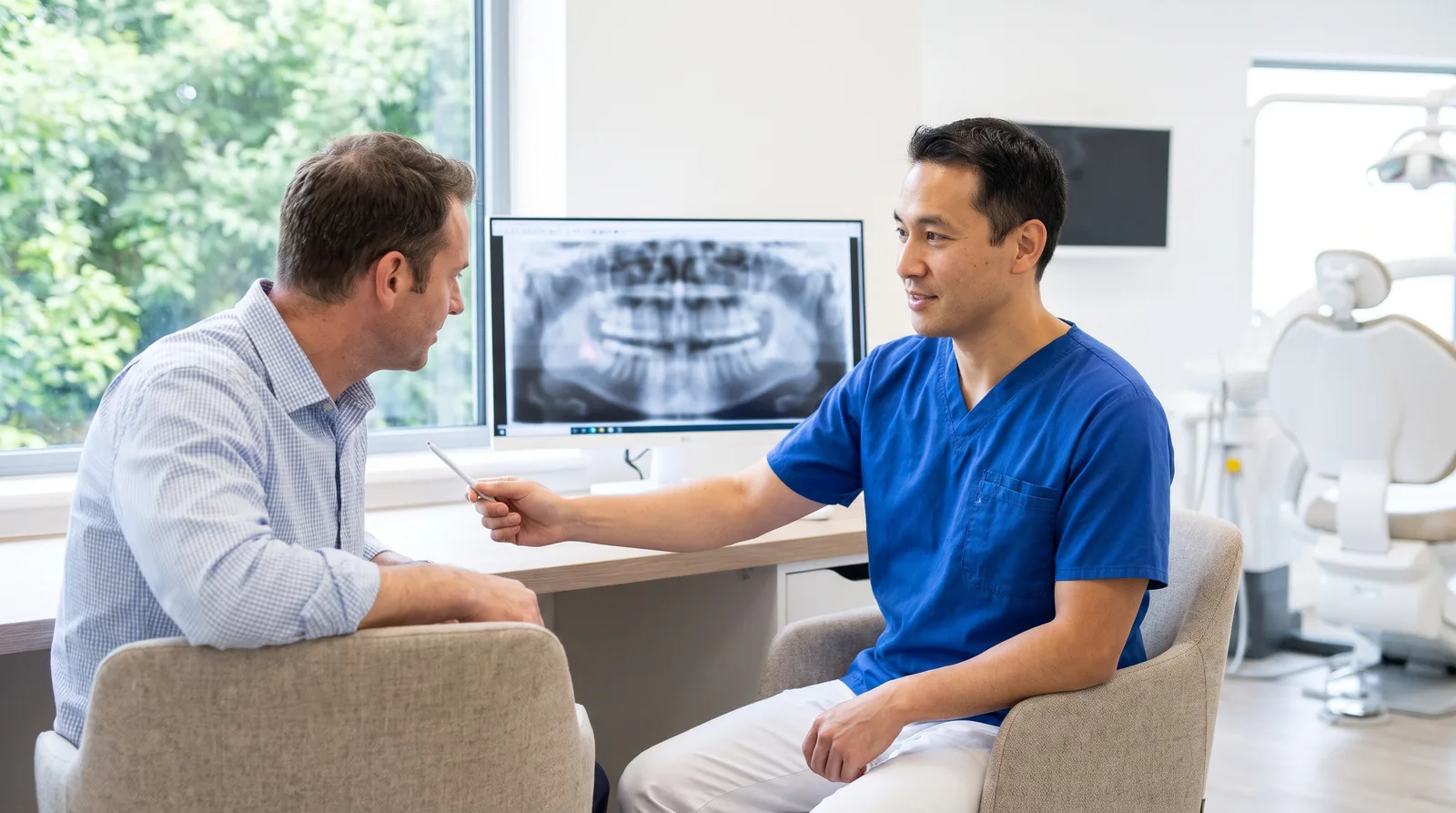
Oral Surgeon or Dentist for Tooth Removal? How to Decide
Dr. Muhammad Rahim, DMDNovember 19, 202611 min read
Loading blog post
Dr. Muhammad Rahim, DMDNovember 19, 202611 min readCall and you'll reach a real person on our team: no phone tree, no hold music. We'd genuinely love to help.
(603) 924-3664Rather write to us? Contact us
If you've been told a tooth needs to come out, one of the first questions is who should take it out: an oral surgeon or dentist. The honest answer is that it depends on the tooth, not on a rule. At Peterborough Family Dental & Implant Center in Peterborough, NH, we provide gentle extractions and oral surgery, and we'll tell you plainly which cases we handle here and which are better handled by a specialist.
This guide explains what a general dentist can remove, when an oral surgeon is the better choice, how to find out which one you need, and what to expect either way.
For many tooth removals, a general dentist is all you need. Straightforward extractions and many wisdom teeth are handled in a regular dental office. An oral surgeon is often the better choice for deeply impacted teeth, teeth near nerves, or cases that call for deeper sedation. A scan and an honest conversation tell you which applies.
The ADA's guide to extractions describes an extraction as removing a tooth, usually because of disease, trauma, or crowding, and says your dentist will first numb the area. That's the same starting point whether the procedure happens in a dental office or a surgeon's.
Neither choice is better in general. An oral surgeon or dentist is simply the right tool for a different kind of case, and the right one fits your tooth, your health, and your comfort needs. The important thing is that the decision is based on your tooth, not on habit. A good office looks at the evidence first, and tells you what it finds.
A general dentist can handle simple extractions, where the tooth is fully visible above the gumline, as well as many surgical extractions and many wisdom teeth. At our office, that includes straightforward, accessible teeth removed with thorough numbing and comfort options. Our tooth extractions page explains how the process works.
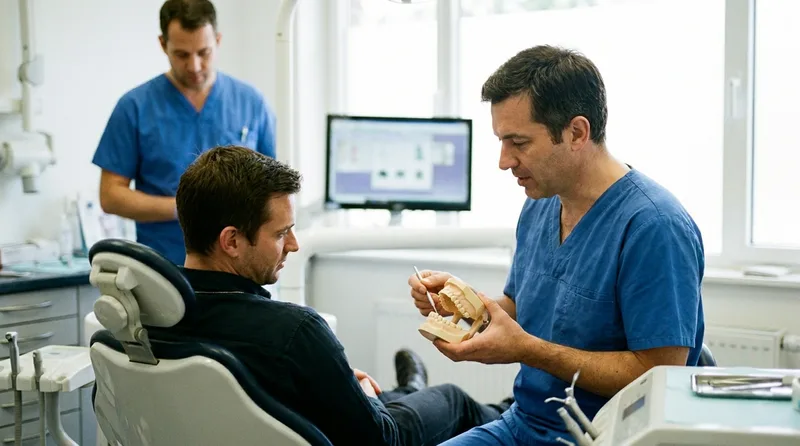
A simple extraction means loosening the tooth and lifting it free. A surgical extraction is needed for a broken tooth at the gumline, a tooth with curved roots, or an impacted tooth, and it may involve a small incision in the gum and sometimes removing a small amount of bone. We tell you which type applies before you commit.
All of this takes place with the team you already know, in a building with free parking. Our oral surgery pages list what we offer.
An oral surgeon is often the better choice for deeply impacted wisdom teeth, for teeth close to nerves, and for cases that need deeper sedation than nitrous oxide or minimal oral sedation. We don't offer IV sedation, and we won't pretend otherwise. When a case truly needs it, we coordinate with trusted oral surgeons.
| What to compare | General dentist | Oral surgeon |
|---|---|---|
| Typical cases | Straightforward, accessible teeth, simple extractions, and many surgical extractions and wisdom teeth | Deeply impacted teeth, teeth close to nerves, and other complex cases |
| Comfort and sedation | Thorough numbing, nitrous oxide, and minimal oral sedation, with you awake throughout | Deeper sedation, such as IV sedation, is often offered by oral surgeons |
| Imaging | X-rays and a 3D cone-beam scan to see how each tooth sits near nerves and sinuses | Your scan is shared, so nothing is repeated unnecessarily |
| Who manages your care | The same team before and after, and the same office for follow-up | The surgeon handles the procedure, and your dentist stays in charge of your overall care |
Medical history matters too. Tell us about your health conditions and every medicine you take, because they can affect how a procedure is planned. If a case would be better matched to a specialist's setting, we'll say so. That isn't a reflection of your tooth or of us. It's how responsible care is matched to the case. The ADA's guide to wisdom teeth explains why some wisdom teeth are riskier. An impacted tooth can form a cyst, which can damage the roots of nearby teeth or destroy the bone that supports your teeth. That's one reason imaging matters before any decision is made.
Not sure which one you need?
Book an evaluation at our Peterborough office. We'll look at your tooth with a 3D scan and give you an honest answer in writing.
Request an Appointment →An exam, X-rays, and a 3D scan tell you. We take a 3D cone-beam scan so we can see exactly how each tooth sits relative to nerves, sinuses, and neighboring roots. Then we give you an honest plan in writing: whether the tooth can stay, whether we can remove it here, or whether a specialist is the better fit.
Whether you choose an oral surgeon or dentist, ask questions at every step: How difficult is this tooth? What could go wrong? What sedation will I have? Who will care for me afterward? A good answer is specific to your scan, and a clear answer to each of them is a good sign.
Not every wisdom tooth needs to come out. Wisdom teeth that come in fully, line up well, and stay cleanable can often be left alone and monitored. The ADA says wisdom teeth usually appear between ages 17 and 21, and may need removal when there's discomfort, infection, cysts, tumors, damage to neighboring teeth, gum disease, or decay.
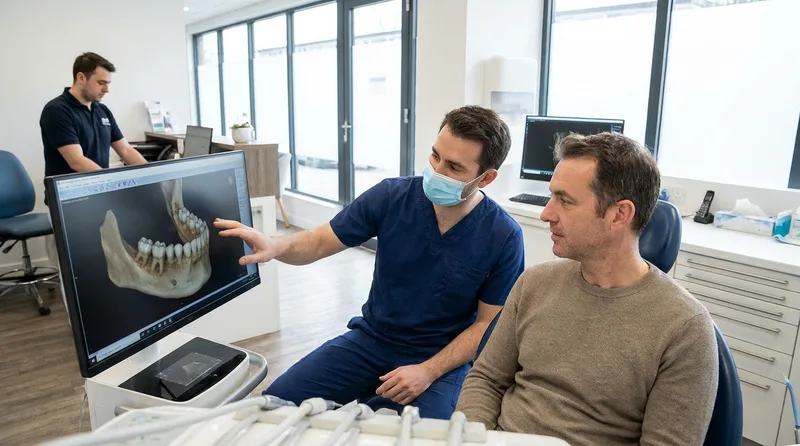
The ADA adds that wisdom teeth that aren't removed should still be monitored, because the potential for problems later remains, and that your dentist will examine your mouth and take an X-ray before any decision. We only recommend removal when a tooth is causing problems or is likely to, and we show you the imaging behind the recommendation.
If you're a teen or young adult and your wisdom teeth are just starting to show, a monitoring plan is a perfectly reasonable place to start. Our guide to when wisdom teeth should be removed explains the signs, and our wisdom teeth removal page walks through what to expect.
At our office, you can have thorough numbing, nitrous oxide, and, for appropriate patients, a minimal oral sedative, all while staying awake and responsive. Nitrous oxide takes effect in minutes and wears off in minutes. Oral sedation requires a ride home. We don't provide IV sedation or general anesthesia in-house.
BMC Oral Health (2024) reports that 36% of Americans have dental anxiety and 12% have extreme dental fear, and the Journal of Dental Anesthesia reports that sedation dentistry has helped 75% of fearful patients keep up with regular visits. If you'd like deeper sedation, tell us. That's a good reason to talk about a specialist referral.
Our comfort and sedation page has the details, and our tips for nervous dental patients offer more ways to feel at ease. If it's been a long time since your last visit, our guide for patients who haven't been to the dentist in years explains what to expect.
When we recommend a specialist, we coordinate the referral, send your 3D imaging ahead, and stay in charge of your overall care. You're not left to figure it out alone. We tell you why we're recommending it, who we're sending you to, and what happens before and after the procedure.
Ask who will be with you during the procedure, how long recovery usually takes, and what to do if you have a question afterward. Our team stays reachable through your recovery, and you'll have a phone number to call. Being upfront about what we do well, and what someone else does better, is part of caring for a family. Referring isn't a failure of a general practice. It's how good care works.
Have questions about a tooth that needs to come out?
Send us a note or call, and we'll talk through your options before you decide anything.
Contact Our Office →You leave with written aftercare instructions, and the same guidance lives on our website. Protect the blood clot, manage swelling, eat soft foods, and call us if something seems off. Follow the sheet you were given, because timing varies from dentist to dentist, and a specialist's sheet may differ from ours.
Our guide to tooth extraction aftercare, post-operative instructions, and guide to dry socket cover the steps and the warning signs. The ADA adds that you can brush and floss your other teeth as usual, but shouldn't clean the teeth next to the extraction site.
Most extracted teeth, other than wisdom teeth, should be replaced. The American College of Prosthodontists estimates that 120 million Americans are missing at least one tooth, and the Journal of Oral and Maxillofacial Surgery reports implant success rates of 95-98% over 10 years. Our comparison of an implant and a bridge and guide to crown vs implant explain the options, and our dental implants and dentures pages cover each type.
Coverage depends on your plan and the type of removal, so we check your benefits for free and put your plan and costs in writing before treatment begins. We're in-network with Delta Dental Premier and accept most insurance. If you've been quoted elsewhere, we offer a free second opinion.
Because coverage varies, the most reliable step is a written estimate. Bring your insurance card to your evaluation, and we'll help you read what's covered before you decide anything. Our guide to getting a dental second opinion explains what to bring, which is useful if you've been told you need surgery and want another look.
Book an evaluation to settle the oral surgeon or dentist question for your own tooth, and bring your questions. A short visit with a 3D scan tells you whether your tooth can stay, whether we can remove it here, or whether a specialist is the better fit.
There's no pressure either way. A real person from our team replies to online requests the same business day.
Regular visits make surprises less likely. The CDC reports that 42% of adults aged 30 and older have some form of periodontal disease, the Journal of Dental Research reports that people who see a dentist regularly are 60% less likely to lose teeth, and the ADA notes that regular visits can catch 80% of oral health issues before they become serious. Our guide on how often to see the dentist explains how often to come in.
We welcome patients from Peterborough, Jaffrey, Dublin, Hancock, and across the Monadnock region, with early-morning hours from 7 AM Monday through Thursday. Bring your questions to Dr. Muhammad Rahim, Dr. Jasper Ainslie, or Dr. Nabeel Almaaz, and see our Meet Our Doctors page to learn more about each of them.
Results may vary. Please consult with your dentist at Peterborough Family Dental for personalized treatment recommendations.
Find out which one your tooth needs
Book an evaluation at Peterborough Family Dental & Implant Center and get an honest recommendation in writing.
Request an Appointment →Prefer to talk to someone first?
Call (603) 924-3664 →
Dr. Muhammad Rahim, DMD
Dentist · Peterborough Family Dental & Implant Center
Peterborough, NH dentist providing gentle general, cosmetic, restorative, and implant dentistry for the whole family.
Was this article helpful?
It depends on the tooth. A general dentist can handle simple extractions and many wisdom teeth. An oral surgeon is often better for deeply impacted teeth, teeth near nerves, or cases needing deeper sedation. A scan and an exam tell you which applies.
Our Peterborough team is happy to answer questions and get you on the calendar.