
Back to all articlesgeneral-dentistry Dr. Muhammad Rahim, DMDNovember 17, 202610 min read

Haven't Been to the Dentist in Years? What Really Happens
Dr. Muhammad Rahim, DMDNovember 17, 202610 min read
Loading blog post
Dr. Muhammad Rahim, DMDNovember 17, 202610 min readCall and you'll reach a real person on our team: no phone tree, no hold music. We'd genuinely love to help.
(603) 924-3664Rather write to us? Contact us
If you haven't been to the dentist in years, you're in very good company, and nobody here is going to scold you for it. Life gets busy, nerves get in the way, and one missed checkup quietly turns into several. At Peterborough Family Dental & Implant Center in Peterborough, NH, we provide preventive, restorative, and cosmetic dental care, and welcoming people back after a long gap is something we do every week.
The hardest part is usually the phone call, not the visit. Once you're in the chair, the experience is far calmer than most people imagine.
This guide explains what really happens at a first visit back, what your dentist might find, how to stay comfortable, and how to get started without feeling overwhelmed.
Yes, it's completely okay, and it's more common than you think. Many adults put off the dentist for years because of nerves, cost, time, or embarrassment. A good office welcomes you without judgment, focuses on your next step, and builds a plan around your goals and your budget rather than lecturing you about the past.
Many people also worry that the dentist will be shocked by what they find. In reality, dental teams see long gaps all the time, and it rarely changes how welcome you are.
Nerves play a big part. BMC Oral Health (2024) reports that 36% of Americans have dental anxiety and 12% have extreme dental fear, so if the thought of a visit makes your stomach tighten, you're in a very large club.
The most important thing is simply to come back. Whatever has changed in your mouth since your last visit, it's easier to deal with now than after another year of waiting.
People put off the dentist for many reasons: fear or a bad past experience, worry about cost, a busy life, embarrassment about the state of their teeth, or a life event that took priority. Almost all of these are understandable, and almost all of them have a workable answer.
Whichever one describes you, say so when you call. Telling the team what has held you back helps us plan a visit that feels right.
At your first visit back, you're welcomed by name, we review your health history, take any digital X-rays you need, and examine your teeth, gums, and bite. Then we explain what we see in plain language and build a plan together, moving at a pace that feels right to you. Nothing is rushed.
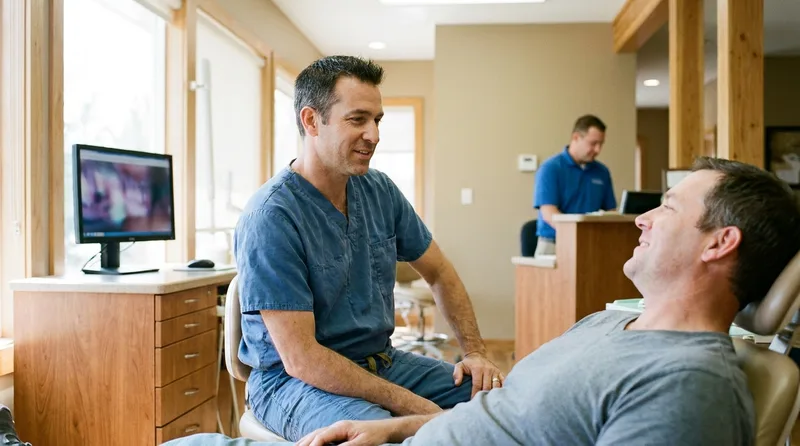
Our first visit page walks through the same steps. You can also ask for paper forms if you'd rather not fill anything out online, and our team will have them ready.
Ready to take the first step?
Request your first visit at our Peterborough office. Tell us how you're feeling, and we'll plan around it.
Request an Appointment →You'll probably need some. The ADA notes that new patients may need X-rays to establish a baseline, and that if a previous dentist has images of you, the new dentist may ask for copies instead of taking new ones. X-rays reveal problems you can't see, such as new cavities, and dentists take them only when they'll help.
The American Dental Association's guide to dental X-rays explains that X-rays can confirm your teeth are healthy or reveal damage or disease not visible during an exam. It adds that dental X-rays emit very low doses of radiation, and that radiation doses in dental imaging are much lower now than they were in the past.
It also says that, according to 2024 recommendations from an expert panel of dentists at the ADA, X-rays should be taken only when your dentist believes they'll provide necessary diagnostic information. If you have recent images from another office, bring them or ask us to request them.
After years away, your dentist may find plaque and tartar buildup, gum inflammation, new cavities, worn or aging fillings, or signs of grinding. Some people find nothing serious at all. Most of these problems are treatable, and the earlier they're caught, the simpler the treatment tends to be.
Mayo Clinic's guide to periodontitis explains that gingivitis, the mildest form of gum disease, can be reversed with professional treatment and good home care if it's treated early, before bone loss. The National Institute of Dental and Craniofacial Research describes how decay moves deeper if it isn't treated. Our guide to bleeding gums, guide to the stages of tooth decay, and guide to tooth sensitivity to cold explain the signs.
A good dentist won't lecture you. Our team listens first, explains what we see in plain language, answers every question, and never pressures you. The goal is to help you from here, not to look backward. You set the pace, and you can ask us to pause at any moment during your visit.
You're also in charge of the pace. If you'd like to start with just an exam and a conversation, that's a perfectly good first visit, and we'll plan the rest together.
Judgment-free isn't just a slogan. It means we won't make you feel small for the gap, we won't pressure you into treatment, and we won't push you to decide anything on the spot. We'll tell you honestly what's urgent, what can wait, and what's simply nice to have.
If something does need attention, you'll hear it with options, not ultimatums. And if everything looks better than you feared, you'll hear that too.
Tell us you're nervous, and we'll build comfort into the visit: warm blankets, neck pillows, noise-canceling headphones, your choice of music, breaks whenever you need them, gentle numbing, and, if you'd like, nitrous oxide or oral sedation. Both sedation options keep you awake and able to respond.
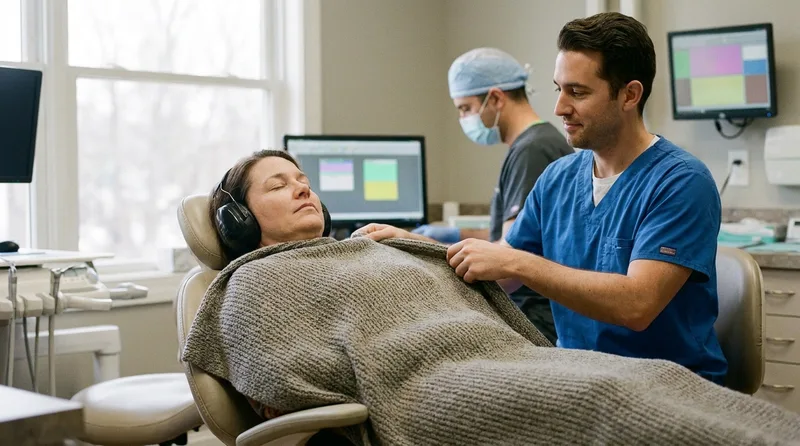
We don't provide general anesthesia or IV sedation, so you stay awake and responsive either way. The Journal of Dental Anesthesia reports that sedation dentistry has helped 75% of fearful patients keep up with regular visits. Our comfort and sedation page has the details, and our guide to sedation dentistry and tips for nervous dental patients offer more ways to feel at ease.
Nervous about coming back?
Send us a note or call, and we'll talk through how to make your visit comfortable.
Contact Our Office →If you haven't been to the dentist in years and need a lot of work, we put it in order: urgent problems first, then the rest, spread out to fit your schedule and budget. You'll receive a written plan with your options and costs before anything begins. Big plans feel much smaller once they're broken into clear steps.
Costs are explained up front. We're in-network with Delta Dental Premier, we check your benefits for free, and we offer financing options and a membership plan for patients without insurance. Our year-end guide to using your dental benefits explains how annual maximums work.
If teeth have been lost over the years, there are good ways to replace them. The Journal of Oral and Maxillofacial Surgery reports implant success rates of 95-98% over 10 years, and our comparison of implants and dentures explains the options. There's no need to decide that now.
Start small: request a visit online or call, say you've been away for a while, and ask what to expect. Gather any records you have, write down your concerns, and consider bringing a friend or family member. One short conversation is all it takes to book your first visit back.

A real person from our team replies to online requests the same business day to confirm your visit, so you won't be left wondering.
Book your first visit back, and let us take it from there. A short exam and a clear plan turn a long-avoided task into a manageable one, and regular visits keep it that way.
Regular visits pay off from here. The Journal of Dental Research reports that people who see a dentist regularly are 60% less likely to lose teeth, and the ADA notes that regular visits can catch 80% of oral health issues before they become serious. Mayo Clinic notes that most people have cleanings every 6 to 12 months, and our guide on how often to see the dentist explains how your risk sets your schedule.
We welcome patients from Peterborough, Jaffrey, Dublin, Hancock, and across the Monadnock region. Bring your questions to Dr. Muhammad Rahim or Dr. Jasper Ainslie, and our calm, judgment-free team will take care of the rest.
If a plan feels big, our guide to getting a dental second opinion explains what to bring, and our guide to choosing a dentist in the Monadnock region covers what to look for in a long-term dental home.
Results may vary. Please consult with your dentist at Peterborough Family Dental for personalized treatment recommendations.
Come back on your own terms
Request your first visit at Peterborough Family Dental & Implant Center, and we'll take it at your pace, with no judgment.
Request an Appointment →Prefer to talk to someone first?
Call (603) 924-3664 →
Dr. Muhammad Rahim, DMD
Dentist · Peterborough Family Dental & Implant Center
Peterborough, NH dentist providing gentle general, cosmetic, restorative, and implant dentistry for the whole family.
Was this article helpful?
No. Patients who've been away a long time are common, and our team is judgment-free. We listen first, explain what we see in plain language, and build a plan around your goals and your budget without pressure.
Our Peterborough team is happy to answer questions and get you on the calendar.


