
Back to all articlesgeneral-dentistry Dr. Muhammad Rahim, DMDNovember 16, 202610 min read

Use Your Dental Benefits Before They Reset: A Year-End Guide
Dr. Muhammad Rahim, DMDNovember 16, 202610 min read
Loading blog post
Dr. Muhammad Rahim, DMDNovember 16, 202610 min readCall and you'll reach a real person on our team: no phone tree, no hold music. We'd genuinely love to help.
(603) 924-3664Rather write to us? Contact us
If you have dental insurance, now is the time to look at it. Most plans reset on January 1, and the benefits you haven't used don't carry over, so it pays to use your dental benefits while you still can. At Peterborough Family Dental & Implant Center in Peterborough, NH, we provide preventive and restorative dental care, and every November and December we help patients make the most of the coverage they've already paid for.
This is not a pitch to squeeze in extra treatment. It's a reminder to use benefits for the care you already need, such as cleanings, exams, and treatment you've been putting off, before they vanish.
This guide explains how annual maximums, deductibles, and FSAs work, how to find out what you have left, and what's worth scheduling before year end.
For most plans, your annual maximum resets, your deductible starts over, and unused benefits are gone. The ADA notes that many insurers have a December 31 deadline and that unused benefits don't roll over into the new year for most dental plans. Some plans end at different times of the year, so check your plan document.

The reset catches many people off guard. Dental plans usually work as a fixed yearly benefit, so unused dollars simply expire.
The American Dental Association's guide to using dental benefits adds a useful reminder. When you buy a plan, you and your employer are paying premiums, and those upfront dollars are wasted if you don't see your dentist. Nothing is refunded for benefits that go unused.
Our year-end benefits page puts it plainly. Whatever you haven't used by the reset date simply disappears. It does not roll over, and there is no refund. Every plan is different, which is why it's worth checking yours.
An annual maximum is the most your plan pays toward your care in a plan year, a deductible is what you pay before the plan starts paying for certain services, and a waiting period is the time before some services are covered. These three terms explain most surprises. Understanding them helps you plan.
We're in-network with Delta Dental Premier, and we work with most other major plans. Many plans pay meaningful benefits at our practice even when we're not in their network, and we show you the numbers before you decide.
To use your dental benefits well, call the number on your insurance card, log in to your plan's website, or ask our team to check. You want to know your remaining annual maximum, whether your deductible is met, how many cleanings and exams you've used, and whether waiting periods apply.
The ADA notes that your dentist's office will often look into this information for you. Send us your details through our free benefits check, and our team reaches out within one business day with what your plan covers in plain numbers, with no obligation. Every treatment plan comes in writing, with what your insurance is expected to pay and what's left.
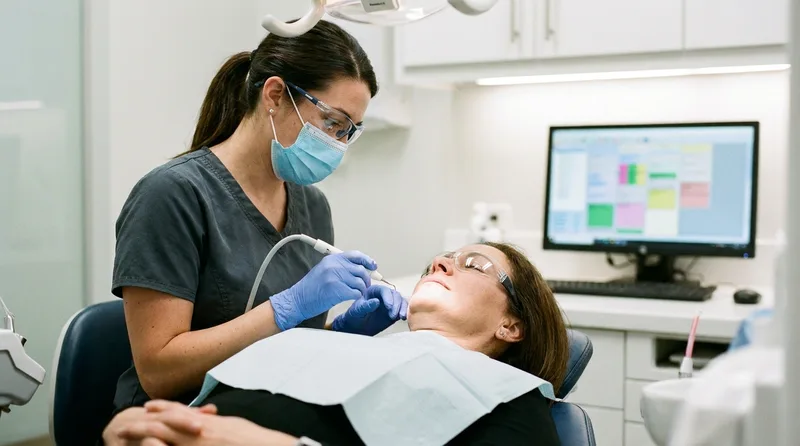
Preventive visits, treatment you've already been told you need, and care for family members who haven't been in yet are the most sensible things to schedule. Preventive visits are usually the best-covered service on any plan, often at little or no cost to you. Finishing planned treatment now lets this year's benefits help pay for it.
The ADA suggests talking with your dentist early about what you might need before year end. If you've had a small problem you've been watching, our guide to the stages of tooth decay explains why waiting rarely helps. Our guide on how often to see the dentist covers how often to come in, and our guide to same day crowns explains how some crowns can be finished in a single visit.
Not sure what's left on your plan?
Send us your insurance details and we'll check your benefits for free, with no obligation.
Check My Benefits →It can help, since implants and dentures happen in stages, and this year's benefits may contribute to the first phase while next year's fresh maximum helps with the rest. That means two plan years working on one smile. How your plan applies benefits to staged work varies, so ask us to check before you decide.
Larger treatment is where planning matters most. Our dental implants work usually involves several steps over months, and insurers differ on when they count a stage toward your maximum. We'll tell you how your plan handles it, and we'll tell you honestly if waiting makes more sense.
Our guide to implant insurance coverage explains annual maximums and why they matter for bigger plans. If you've already been given a plan elsewhere, we offer a free second opinion, and we match the price on comparable care.
Flexible spending account money often expires too. The ADA says you generally must use FSA money within the plan year, though some employers offer a grace period or a limited carryover, and unspent money is otherwise lost. Dental treatment is typically an eligible expense. Check with your employer or FSA administrator.
The ADA explains that an FSA is an account set up through your employer, funded with pre-tax dollars deducted from your paycheck, and that it generally covers services that keep your mouth healthy, such as cleanings, braces needed for dental health reasons, plan co-pays, and dentures. Many FSAs work like debit cards.
Plan carefully so you don't set aside more than you'll spend on dental and other eligible care in a year. Your dentist's office can help you estimate what's likely.
HSAs work differently, and rules vary by account, so ask your administrator what applies to you. Either way, year-end is a natural time to look at what's in the account and what care it could cover.
Call early. November and December appointments fill fastest, since everyone makes the same smart calculation at once. We offer early-morning hours from 7 AM Monday through Thursday, and a real person from our team replies to online requests the same business day. The sooner we look at your benefits, the more options you have.

There's no artificial deadline here, just the one on your insurance card. If it's too late for this year, we'll help you plan the first weeks of January so your new benefits are put to good use.
Want to use your benefits before they reset?
Send us a note or call, and our team will check your plan and find a time that works.
Contact Our Office →You still have good options. Almost half of our patients pay without insurance, so we built answers for them: new patient specials with clear prices, a membership plan, CareCredit financing, and savings on larger treatment. Everything is explained in writing first, with no pressure and no surprise fees.
If you're not sure whether the membership or an insurance plan makes sense for your family, ask. We'll walk through the numbers honestly and tell you which option fits.
With no plan resetting on January 1, you can schedule treatment when it suits you. The membership runs for 12 months from the date you join, and benefits start immediately.
Avoid treating things you don't need just to use benefits, assuming your plan resets on January 1 without checking, waiting until the last week of December, forgetting family members, and ignoring a problem because the timing is inconvenient. Good timing helps, but the care itself should come first.
Prevention keeps paying off beyond the calendar. The CDC reports that 42% of adults aged 30 and older have some form of periodontal disease, the Journal of Dental Research reports that people who see a dentist regularly are 60% less likely to lose teeth, and the ADA notes that regular visits can catch 80% of oral health issues before they become serious. For kids, the CDC reports that 20% of children ages 5 to 11 have at least one untreated decayed tooth, and that sealants can reduce the risk of cavities by nearly 80%. Our guide to dental sealants for kids explains how they work.
Check what's left on your plan, book your cleanings and any treatment you've been putting off, and ask our team to verify your coverage. A short call or form tells you where you stand, and how to use your dental benefits before the reset. If you're nervous about starting, you're not alone.
BMC Oral Health (2024) reports that 36% of Americans have dental anxiety and 12% have extreme dental fear, and the Journal of Dental Anesthesia reports that sedation dentistry has helped 75% of fearful patients keep up with regular visits. Our tips for nervous dental patients can help, and we offer nitrous oxide and oral sedation.
We welcome patients from Peterborough, Jaffrey, Dublin, Hancock, and across the Monadnock region, with early-morning hours from 7 AM Monday through Thursday. Bring your questions to Dr. Muhammad Rahim or Dr. Jasper Ainslie. If you request a time online, a real person from our team replies the same business day to confirm your visit.
Results may vary. Please consult with your dentist at Peterborough Family Dental for personalized treatment recommendations.
Put your benefits to work before they reset
Request an appointment at Peterborough Family Dental & Implant Center, and we'll check your coverage for free.
Request an Appointment →Prefer to talk to someone first?
Call (603) 924-3664 →
Dr. Muhammad Rahim, DMD
Dentist · Peterborough Family Dental & Implant Center
Peterborough, NH dentist providing gentle general, cosmetic, restorative, and implant dentistry for the whole family.
Was this article helpful?
For most plans, no. The ADA notes that many plans have a December 31 deadline and unused benefits don't roll over, though some plans end at different times of the year, so check your plan document or ask your employer.
Our Peterborough team is happy to answer questions and get you on the calendar.


