
Back to all articlesgeneral-dentistry Dr. Muhammad Rahim, DMDNovember 16, 202610 min read
Tooth Sensitivity to Cold: Causes and How to Treat It
Dr. Muhammad Rahim, DMDNovember 16, 202610 min read
Loading blog post
Dr. Muhammad Rahim, DMDNovember 16, 202610 min readCall and you'll reach a real person on our team: no phone tree, no hold music. We'd genuinely love to help.
(603) 924-3664Rather write to us? Contact us
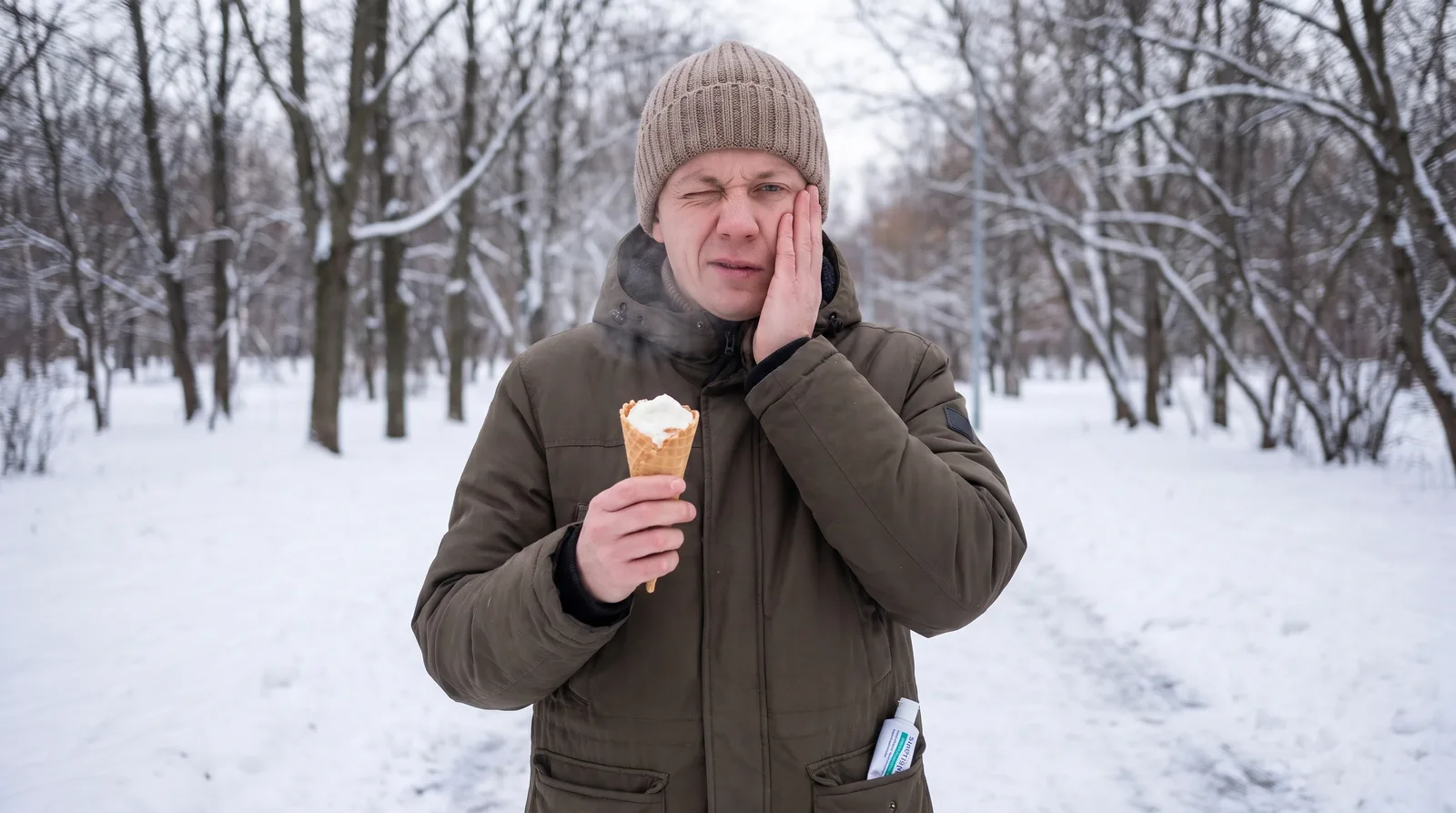
Tooth sensitivity to cold is that sudden, sharp zing you get from ice cream, a cold drink, or even a breath of winter air. It's common, it's annoying, and it's often fixable. At Peterborough Family Dental & Implant Center in Peterborough, NH, we provide preventive and restorative dental care, and sensitive teeth are one of the most common reasons patients call us.
New Hampshire winters make it hard to ignore. Cold air alone can set a sensitive tooth off. The reassuring part is that sensitivity usually has a cause you can find, and treatment depends on what that cause is.
This guide explains why teeth react to cold, what you can do at home, when it's a warning sign, and what a dentist can do.
Tooth sensitivity to cold usually happens when enamel wears down or gums recede and expose the softer dentin underneath. Dentin contains tiny channels that let cold reach the nerve inside the tooth. Cavities, cracks, worn fillings, and gum disease can all open that path too.
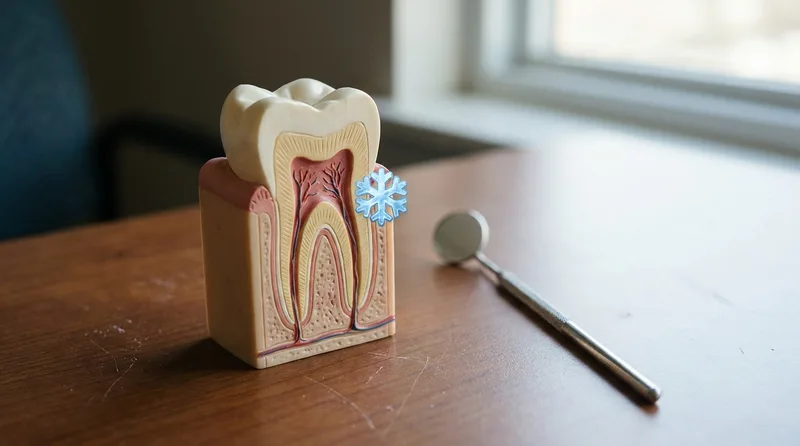
The American Dental Association's guide to sensitive teeth explains that enamel protects the crown of the tooth above the gumline, and a layer called cementum protects the root below it. Underneath both is dentin, which is less dense and contains microscopic tubules. When dentin loses its protective covering, those tubules let heat, cold, or acidic and sticky foods reach the nerves and cells inside the tooth.
The ADA lists the possible causes as tooth decay, fractured teeth, worn fillings, gum disease, worn tooth enamel, and an exposed tooth root. Each one has a different fix, which is why finding the cause matters more than silencing the zing.
Worn enamel leads to sensitivity because enamel is the shield over the dentin. Once it thins, cold reaches the nerve more easily. Enamel can wear from brushing too hard, acidic foods and drinks, grinding or clenching, and normal aging, and it doesn't grow back.
Thin enamel also changes how teeth look. As it wears, the yellowish dentin shows through, which our guide to why teeth look yellow explains. If your teeth look more yellow and feel more sensitive, they may be telling you the same thing.
Yes. When gums recede, the tooth root is exposed, and roots lack enamel's protection, so cold reaches the nerve more easily. The ADA notes that dentin may also be exposed when gums recede. Gum disease, hard brushing, and aging are common reasons gums move back.
A receding gumline can be hard to notice yourself. If a tooth looks longer than it used to, or you can feel a notch near the gumline with your tongue, mention it to your dentist.
Gum health connects directly to sensitivity. The CDC reports that 42% of adults aged 30 and older have some form of periodontal disease, and the National Institute of Dental and Craniofacial Research describes gum disease as an infection that can spread to the bones supporting the teeth. Receding gums can be a sign that something is going on below the surface.
Our guide to bleeding gums explains the early warning signs, and our gum disease treatment service covers how we treat gum problems. If your gums look like they've moved back, mention it at your next visit.
Yes, sensitivity to cold can come from a cavity, a cracked tooth, or an old filling that has worn or leaked. These problems let cold reach the dentin or nerve directly. Sensitivity in one tooth that keeps returning in the same spot is the pattern that points to them.
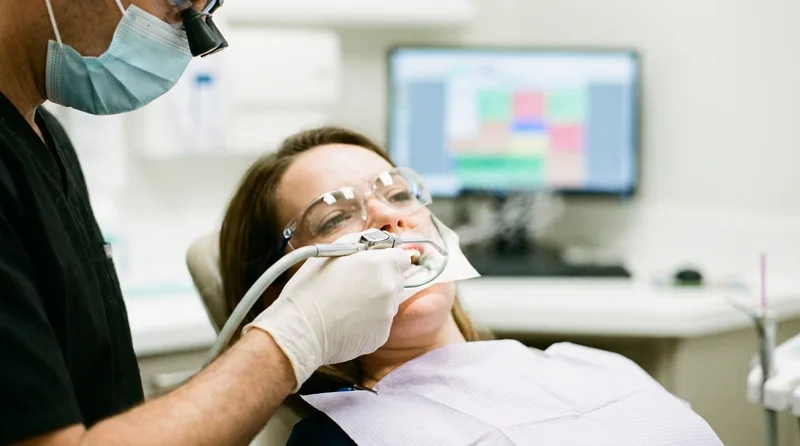
These are the causes that don't improve with toothpaste. They need a dentist to find and treat them, and treating them early is far simpler than treating them late.
Sensitivity in one tooth that keeps coming back?
Request an appointment at our Peterborough office and we'll find the cause.
Request an Appointment →A quick zing that fades within seconds is usually mild, while sensitivity that lingers, wakes you at night, keeps returning in one tooth, or comes with swelling or fever is a warning sign. The pattern tells you a lot. When in doubt, have it checked, since early treatment is simpler.
| What you notice | What it may mean | What to do |
|---|---|---|
| A quick zing that fades within seconds | Mild exposed dentin or worn enamel | Try desensitizing toothpaste, brush gently, and mention it at your next visit |
| Sensitivity that lingers after the cold is gone | A deeper problem such as decay or a cracked tooth | Book an exam soon |
| The same tooth, in the same spot, again and again | A cavity, a crack, or a worn filling | Have that tooth checked |
| Discomfort that wakes you at night | Possible nerve irritation | Call your dentist promptly |
| Swelling, fever, or a bad taste | A possible infection | Seek care right away, and go to the ER for trouble breathing or swallowing |
| Sensitivity after new dental work | Often temporary | Mention it if it doesn't settle |
Pay attention to timing. Tooth sensitivity to cold that lingers after the cold is gone suggests the nerve is involved, which is more serious than a brief zing. If you notice swelling or fever, call right away, since it may signal an infection.
Use a desensitizing toothpaste, brush gently with a soft brush, and cut back on acidic and very cold foods and drinks. The ADA explains that desensitizing toothpaste contains compounds that help block sensation from the tooth surface to the nerve, and that it usually requires several applications before sensitivity is reduced. Give it time.
Home care works for mild sensitivity from worn enamel or exposed roots. It can't fix a cavity, a crack, or a failing filling, so don't spend months on toothpaste if the same tooth keeps reacting.
A dentist treats the cause: fluoride gel to strengthen enamel, bonding, an inlay, or a crown to correct a flaw or decay, a gum graft if gum tissue has been lost from the root, or root canal treatment if sensitivity is severe and persistent. The right option depends on what the exam finds.
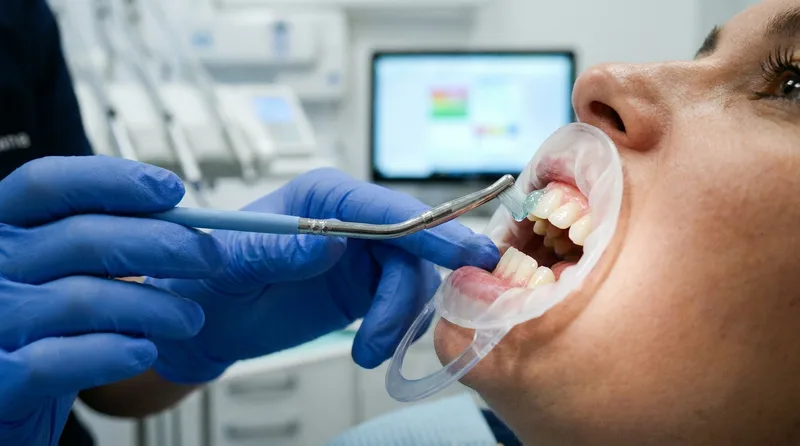
The ADA lists these same options. Our comparison of tooth-colored and amalgam fillings helps you choose a filling material, and our guide to same day crowns explains how some crowns can be placed in one visit.
If a tooth can't be saved, replacement options exist. The Journal of Oral and Maxillofacial Surgery reports implant success rates of 95-98% over 10 years, and the American Academy of Implant Dentistry reports that implant-supported teeth can restore up to 90% of natural chewing power.
Not sure what's behind your sensitivity?
Send us a note or call, and our team will help you decide the next step.
Contact Our Office →Sometimes, yes. Sensitivity can follow teeth whitening or new dental work, and it often settles on its own, but tell your dentist if it doesn't. Whitening doesn't suit every mouth, and decay or gum problems should be treated first. Your dentist can adjust the plan if sensitivity is a problem.
Many people try whitening because their teeth look dull, then find sensitivity comes with it. Starting with an exam helps you choose a method and strength that suits your teeth.
If you're thinking about whitening and already have sensitive teeth, talk to your dentist before you start. Our teeth whitening service starts with an exam, and a dentist can recommend options that fit sensitive teeth.
Likewise, a new filling or crown can feel sensitive to cold for a short while. If it lasts or gets worse, call. A high bite or a deeper problem may need a small adjustment.
Brush gently, clean between your teeth daily, limit acidic and sticky foods, wear a night guard if you grind, and keep up with checkups. The ADA notes that proper oral hygiene is the key to preventing sensitive teeth. Catching problems early keeps them small.
Small changes add up. Switching to a soft brush and rinsing with water after acidic drinks costs nothing and protects enamel for years.
Checkups catch early decay, cracks, and gum recession before they cause trouble. The Journal of Dental Research reports that people who see a dentist regularly are 60% less likely to lose teeth, and the ADA notes that regular visits can catch 80% of oral health issues before they become serious.
Try desensitizing toothpaste and gentle brushing, and book an exam if sensitivity lingers, wakes you at night, or keeps returning in one tooth. A short visit finds the cause and gives you a plan. Waiting only lets a small problem grow.
Dental visits can feel daunting. BMC Oral Health (2024) reports that 36% of Americans have dental anxiety and 12% have extreme dental fear, and the Journal of Dental Anesthesia reports that sedation dentistry has helped 75% of fearful patients keep up with regular visits. We offer nitrous oxide and oral sedation.
We welcome patients from Peterborough, Jaffrey, Dublin, Hancock, and across the Monadnock region, with early-morning hours from 7 AM Monday through Thursday. Bring your questions to Dr. Muhammad Rahim or Dr. Jasper Ainslie. If you request a time online, a real person from our team replies the same business day to confirm your visit.
Results may vary. Please consult with your dentist at Peterborough Family Dental for personalized treatment recommendations.
Find out why your teeth react to cold
Request an appointment at Peterborough Family Dental & Implant Center for an exam and a clear plan.
Request an Appointment →Prefer to talk to someone first?
Call (603) 924-3664 →
Dr. Muhammad Rahim, DMD
Dentist · Peterborough Family Dental & Implant Center
Peterborough, NH dentist providing gentle general, cosmetic, restorative, and implant dentistry for the whole family.
Was this article helpful?
Cold reaches the nerves through exposed dentin, which happens when enamel wears down, gums recede, or a cavity, crack, or worn filling opens a path. The ADA notes dentin contains tiny tubules that let heat and cold reach the nerves.
Our Peterborough team is happy to answer questions and get you on the calendar.


