
Back to all articlesRestorative Dentistry Dr. Muhammad Rahim, DMDOctober 6, 20269 min read
How Long Do Dental Bridges Last? Lifespan and Care Guide
Dr. Muhammad Rahim, DMDOctober 6, 20269 min read
Loading blog post
Dr. Muhammad Rahim, DMDOctober 6, 20269 min readCall and you'll reach a real person on our team: no phone tree, no hold music. We'd genuinely love to help.
(603) 924-3664Rather write to us? Contact us
How long do dental bridges last? With good care, many last 10 to 20 years or longer. In a major review of traditional bridges, about 89% were still in place after 10 years. How long yours lasts depends mostly on the health of the teeth holding it up and how well you clean under it.
Whether you already have a bridge or you're about to get one, it helps to know what wears it out, which habits protect it, and which changes are worth a call. Most bridge problems start quietly, under the crowns or along the gumline, so knowing what to watch for can add years to its life. Our team places and maintains dental bridges for patients across the Monadnock region.
Here's what the research shows, why bridges fail, how to clean under one, and when repair or replacement makes sense.
Bridge lifespan at a glance
Typical lifespan
Often 10-20 years or longer with good care
10-year survival
About 89% for traditional bridges
Most common weak spot
Decay or problems with the supporting teeth
Best protection
Daily cleaning under the bridge plus regular checkups
Bridge feeling different lately?
Book a checkup in Peterborough, NH. We'll check the bridge, the supporting teeth, and the gums, and let you know if anything needs attention.
Request an Appointment →Dental bridges commonly last 10 to 20 years or longer. Research on traditional bridges found about 89% were still in place after 10 years. Some last decades, while others need attention sooner, usually because a supporting tooth develops decay or gum problems rather than because the bridge itself breaks.
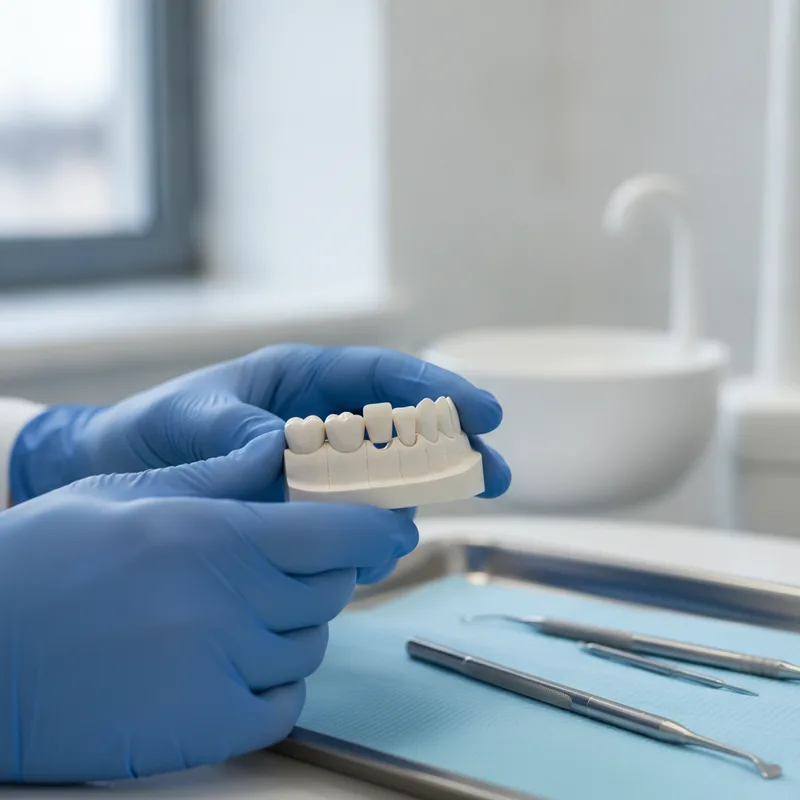
A bridge is only as strong as its foundation. With a traditional bridge, the replacement teeth are held up by crowns on the natural teeth beside the gap. If those supporting teeth stay healthy, the bridge can last a very long time. If one of them develops decay or gum disease, the whole bridge may need work.
That's why two people with the same bridge can see very different results. Daily habits, checkups, and the condition of the supporting teeth matter more than the bridge material itself.
The short version
Think of a bridge’s lifespan as the lifespan of the teeth holding it. Protect those teeth, and you protect the bridge.
A major systematic review of traditional bridges found a 10-year survival rate of 89.1%, meaning nearly nine in ten were still in place after a decade. About 71% were completely free of complications over that time. The rest needed some kind of repair, from re-cementing to treating decay.
89.1%
of traditional bridges still in place after 10 years
Source: Clinical Oral Implants Research, 2004
71.1%
free of any complication after 10 years
Source: Clinical Oral Implants Research, 2004
2.6%
lost to decay over 10 years
Source: Clinical Oral Implants Research, 2004
Those figures come from a systematic review of conventional fixed bridges that pooled long-term studies. Read them as encouraging. Most bridges last well past the 10-year mark, and many of the complications that did occur were fixable without replacing the whole bridge.
Survival and success aren't the same thing. A surviving bridge is still in your mouth. A successful one has also avoided problems. The gap between 89% and 71% is mostly made up of small issues like a loose bridge that needed re-cementing, which is why regular checkups pay off.
Dental bridges most often fail because of decay under the supporting crowns, the bridge coming loose, gum disease around the supporting teeth, or a fracture of a supporting tooth or the bridge material. Over 10 years, loss of retention affected about 6% of bridges in the major review, and abutment tooth fractures about 2%.
Most common
Decay under the crowns
Plaque collects at the edges of the crowns and under the bridge, where it's harder to clean.
Fixable
Bridge coming loose
The cement can wear over time. A loose bridge can often be cleaned and re-cemented.
Gums
Gum disease
Inflamed gums and bone loss can weaken the teeth holding the bridge.
Force
Fractures
Grinding or biting hard objects can crack the bridge or a supporting tooth.
Notice that most of these start slowly. A little decay at a crown edge or some gum inflammation rarely causes discomfort at first. By the time it does, the problem has usually grown. That's the whole case for regular exams and X-rays.
Not necessarily. Their 10-year survival rates are similar: about 89% for traditional bridges and about 87% for implant bridges in the same research series. The difference is in what can go wrong. Traditional bridges depend on natural teeth, while implant bridges depend on healthy gums and bone around the implants.
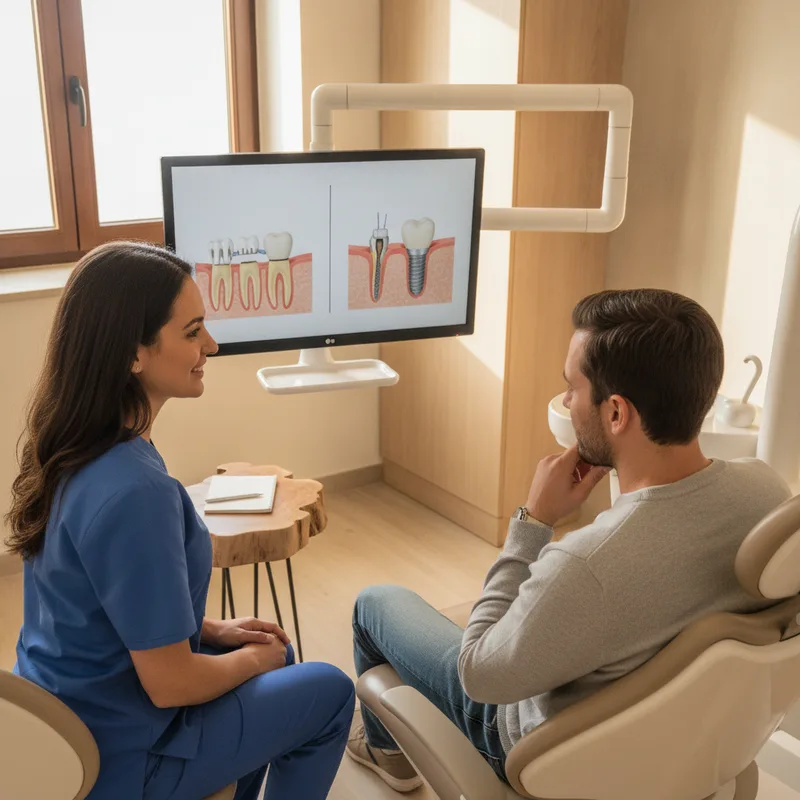
An implant bridge doesn't rely on natural teeth, so decay under supporting crowns isn't a risk. But the gums around the implants still need care, and the bridge on top can wear. If you're still deciding which to get, our comparison of implant bridge vs traditional bridge walks through the full decision.
You clean under a dental bridge by threading floss beneath the replacement teeth with a floss threader or special bridge floss, or by using a water flosser or small interdental brushes. Do it once a day, along with brushing twice a day, so plaque can't build up where the bridge meets the gums.
Cleaning under a bridge, step by step
Brush first
Brush twice a day with a soft brush, angling toward the gumline around the bridge.
Thread the floss
Pass a floss threader or bridge floss under the replacement tooth, between the bridge and the gum.
Clean both sides
Slide the floss gently against the side of each supporting tooth and under the replacement teeth.
Add a water flosser if you like
A water flosser flushes out food under the bridge and is easier for some people.
Check the edges
Use a mirror now and then to look for redness, swelling, or dark spots at the crown edges.
It takes about a minute once you get the hang of it. Your hygienist can show you the technique at your next visit, and the ADA's MouthHealthy guide to bridges explains why keeping the supporting teeth healthy matters so much.
The habits that help a bridge last longest are daily cleaning under it, regular checkups and cleanings, using fluoride toothpaste to protect the supporting teeth, wearing a night guard if you grind, and avoiding very hard or sticky foods that can loosen or crack it.
Helps your bridge last
Shortens bridge life
Fluoride deserves a mention. The supporting teeth are still natural teeth, and the edges of their crowns are where decay most often starts. A fluoride toothpaste, and sometimes a fluoride rinse or in-office treatment, helps protect those edges for years.
Due for a bridge checkup?
We'll check the bridge, look at the supporting teeth on X-rays, and clean the hard-to-reach spots under it.
Book a Checkup →Signs your bridge needs attention include a bridge that feels loose or moves, sensitivity or discomfort in a supporting tooth, bleeding or swollen gums around it, a bad taste or odor, food getting stuck more than usual, and visible chips or dark spots near the crown edges.
Is it time to have your bridge checked?
Check each one that applies to you.
Checked any? Call us. Most bridge problems are easier to fix early.
| What you notice | How soon to call |
|---|---|
| The bridge comes off completely | Within a day or two; keep it safe and bring it in |
| Swelling, discharge, or fever | Same day |
| Loose bridge or new sensitivity | Within a few days |
| Bleeding gums or food trapping | Soon; at least before your next cleaning |
If your bridge comes off, don't try to glue it back yourself. Household glues can damage the bridge and trap bacteria. Keep it in a safe container and call us.
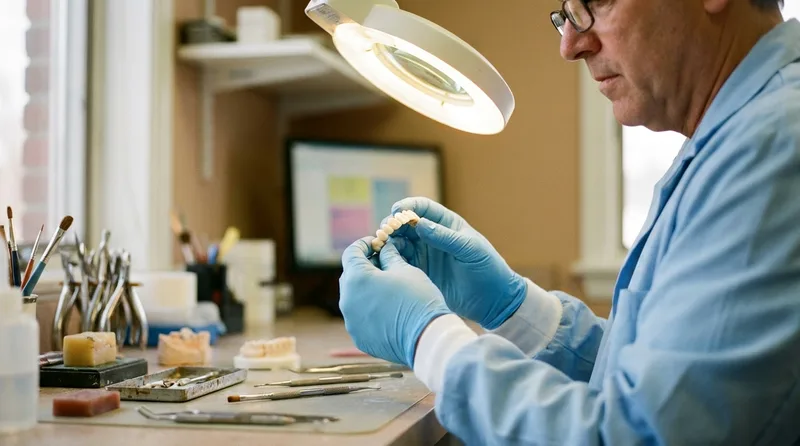
Many bridge problems can be repaired. A loose bridge can often be re-cemented, and small chips can sometimes be smoothed or fixed. A bridge usually needs replacing when a supporting tooth has significant decay or damage, when the bridge itself breaks, or when the fit has changed after many years.
| Problem | Usual fix |
|---|---|
| Bridge came loose, teeth healthy | Clean and re-cement the bridge |
| Small chip in the porcelain | Polish or repair |
| Early decay at a crown edge | Treat the decay; bridge may stay |
| Major decay or fracture of a supporting tooth | Remove and replace; implant options may be discussed |
| Bridge material fractured | Make a new bridge |
We stand behind the bridges we make. Our written warranty covers bridges and crowns we craft: if one fails under normal use during its coverage period, we repair or remake it at no cost to you. Ask for the warranty details for your bridge at your next visit.
When a bridge does need replacing after many years, it's also a natural time to ask whether a different option would serve you better for the next stretch.
If you can't remember your last checkup, it probably is. So how long do dental bridges last? Often 10 to 20 years or longer, and regular exams are one of the best ways to reach the high end of that range, because they catch decay and gum problems while they're still small.
A bridge rarely fails overnight. It usually sends small signals first, and a checkup is how you hear them.
Dr. Muhammad Rahim and Dr. Jasper Ainslie care for bridges placed here and at other offices, for patients from Peterborough, Jaffrey, Dublin, Hancock, and across the Monadnock region. We'll check yours, clean the spots you can't reach, and let you know honestly how it's holding up.
Results may vary. Please consult with your dentist at Peterborough Family Dental for personalized treatment recommendations.
Keep Your Bridge Going Strong
Schedule a checkup at our Peterborough, NH office. We'll look at your bridge, the supporting teeth, and your gums, and explain what we find.
Request an Appointment →Prefer to talk it through first? Our front desk opens at 7 AM.
Call (603) 924-3664 →
Dr. Muhammad Rahim, DMD
Dentist · Peterborough Family Dental & Implant Center
Peterborough, NH dentist providing gentle general, cosmetic, restorative, and implant dentistry for the whole family.
Was this article helpful?
Front bridges often last a long time because they take less chewing force. Back bridges handle heavier biting, so they may show wear or loosen sooner. In both areas, the health of the supporting teeth and daily cleaning matter more than location alone.
Our Peterborough team is happy to answer questions and get you on the calendar.


