Night Guard for Teeth Grinding: Do You Really Need One?
Dr. Muhammad Rahim, DMDOctober 13, 20269 min read
A night guard for teeth grinding is a thin, custom-fit appliance you wear while you sleep. It doesn't stop the grinding itself. Instead, it takes the force so your teeth don't, protecting enamel, fillings, and crowns from wear. If you wake up with a sore jaw, morning headaches, or teeth that look flatter than they used to, it's worth asking whether you need one.
At Peterborough Family Dental & Implant Center in Peterborough, NH, custom night guards are one of the most practical dental services we offer, because grinding damage adds up quietly over years. This guide covers the signs, custom vs store-bought options, how long a guard lasts, and how to decide if it's worth it for you.
Think you might be grinding at night?
A quick exam can spot wear patterns and tell you whether a guard makes sense.
A night guard sits over your upper or lower teeth and acts as a cushion between them. When you clench or grind in your sleep, the guard absorbs the pressure and friction instead of your enamel. That helps prevent wear, chips, and cracks, and it can ease strain on the jaw muscles.
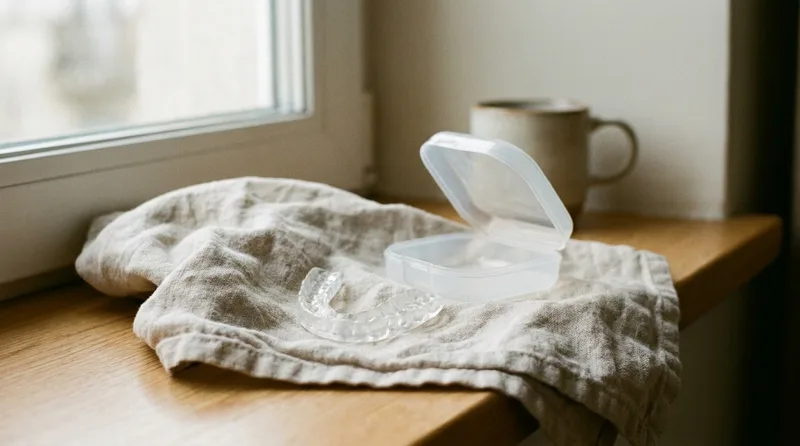
A slim custom guard takes the wear so your enamel doesn't have to.
Grinding, called bruxism, often happens without you knowing. Many people only find out when a partner hears it or a dentist spots the wear. The forces involved during sleep can be much stronger than normal chewing, and they repeat for hours.
Sleep bruxism is more common than most people think. According to the American Academy of Sleep Medicine, about 8% of young to middle-aged adults grind in their sleep, and the rate drops with age. Some people grind nearly every night for years.
One thing a night guard isn't: a way to change your bite. The National Institute of Dental and Craniofacial Research advises making sure any guard isn't designed to permanently change how your teeth fit together. A standard protective guard just covers and cushions.
Dentist · Peterborough Family Dental & Implant Center
Peterborough, NH dentist providing gentle general, cosmetic, restorative, and implant dentistry for the whole family.
Was this article helpful?
Frequently asked questions
Common signs include worn or flattened teeth, chips, morning jaw soreness, headaches at the temples, new tooth sensitivity, or a partner hearing you grind. A dentist can confirm grinding by checking wear patterns and your jaw muscles, then tell you whether a guard makes sense.
Either can work. Many guards are made for the upper teeth, but your dentist may choose the lower arch based on your bite, comfort, missing teeth, or dental work. The best choice is the one that fits well and that you'll actually wear every night.
A well-fitted guard shouldn't. A poorly fitting or bulky guard can feel awkward and may encourage chewing on it. If your jaw feels worse or your bite feels off after starting a guard, stop wearing it and have your dentist check the fit.
Cost varies with the type of guard and your insurance plan. Some plans cover part of a night guard and others don't, so our team verifies your benefits for free first. Patients without insurance can use the VIP Membership Plan for savings on most treatment.
No. A night guard is slim and designed to protect teeth from grinding during sleep. A sports mouthguard is thicker and built to absorb impact during contact sports. The ADA notes night guards aren't a substitute for athletic mouthguards, and vice versa.
Yes, and it's often especially helpful, because grinding can chip porcelain and stress implant restorations. Your dentist will design the guard around your dental work. If you get new crowns or implants later, bring your guard so the fit can be checked or remade.
You may need a night guard if your teeth look worn, flat, or chipped, your jaw feels sore or tired when you wake up, you get frequent morning headaches, your teeth have become more sensitive, or someone has heard you grinding. A dental exam can confirm the pattern.
Worn or flattened teeth, especially the edges of front teeth or the tips of canines.
Chips or small cracks in enamel, fillings, or crowns.
Morning jaw soreness or a tired feeling when you chew breakfast.
Dull headaches at the temples that fade during the day.
New sensitivity to cold, from enamel thinning near the gumline.
Scalloped tongue edges or cheek lines from clenching.
You're far from alone. According to the ADA's MouthHealthy guide to teeth grinding, a 2021 ADA Health Policy Institute survey found that more than 70% of dentists noticed signs of grinding and clenching in their patients. The ADA also notes that people who smoke, drink alcohol, or drink coffee are about twice as likely to grind.
If jaw discomfort, clicking, or limited opening are your main concerns, our guide to TMJ disorder symptoms explains how grinding and jaw problems connect.
Is a custom night guard better than a store-bought one?
For most people who grind regularly, yes. A custom night guard is made from a precise scan of your teeth, so it fits closely, stays put, and is slim enough to sleep in. Store-bought boil-and-bite guards cost less up front, but the ADA notes they may not provide the same protection.
Custom night guard
Store-bought guard
Fit
Made from a scan of your teeth
Shaped at home by softening and biting
Comfort
Slim and precise
Often bulkier and looser
Durability
Typically lasts a few years
Often wears through faster with heavy grinding
Exam included
Yes, your dentist checks wear and bite
No
Up-front cost
Higher
Lower
Fit matters more than people expect. A guard that's bulky or loose tends to end up on the nightstand, and a guard you don't wear protects nothing. A slim, comfortable guard is the one that actually gets used night after night.
Night guards also aren't the same as sports mouthguards, which are thicker and built to absorb impact. Our comparison of custom vs boil-and-bite mouthguards covers the athletic version.
How is a custom night guard made?
Getting a custom night guard usually takes two short visits. Your dentist examines your teeth and jaw, takes a quick digital scan, and has the guard made to fit your bite. At the second visit, you try it on, and any tight or uneven spots are adjusted before you take it home.
A digital scan replaces messy impression putty and captures your bite precisely.
Exam. Your dentist confirms grinding is the issue and checks for cracks, worn fillings, or other problems to address first. Fixing a cracked tooth before the scan means the guard fits the mouth you'll actually have.
Digital scan. A small wand captures a 3D model of your teeth in a few minutes, with no goopy impression material.
Fabrication. The guard is made to match your scan. At our office, in-house Formlabs 3D printers let us make many appliances on-site for a faster turnaround.
Fitting. You try it on, and your dentist adjusts it so your bite feels even and the guard seats comfortably.
Follow-up. Bring it to your regular checkups so the fit and wear can be checked.
Most patients get used to wearing it within a few nights. Some notice extra saliva at first, which usually settles quickly. If anything still feels tight or uneven after a week, call us, since a small adjustment usually fixes it in minutes.
How long does a night guard last?
A quality custom night guard typically lasts a few years with good care, though heavy grinders may wear one out sooner. The guard is doing its job when it shows wear, because that's wear your teeth didn't take. Your dentist can check its condition at each regular visit.
How you treat it matters too. Guards left in a hot car, chewed by a pet, or cleaned with harsh products tend to warp or crack long before they wear out from grinding. With the care tips below, many patients get the full expected life out of their guard.
Replace your guard if you notice any of these:
Holes or thin spots worn through the material
Cracks, rough edges, or sharp spots
A loose fit, or a guard that no longer snaps into place
A changed fit after dental work like a crown or filling
Odor or discoloration that won't clean off
Dental changes matter here. If you get a new crown, an implant, or orthodontic treatment, your old guard may no longer fit. Bring it to the appointment so your dentist can decide whether to adjust it or make a new one.
How do you clean and care for a night guard?
Rinse your night guard every morning, brush it gently with a soft toothbrush and mild soap or non-abrasive cleaner, let it dry, and store it in a ventilated case. Keep it away from heat, pets, and harsh cleaners, which can warp or damage the material.
Skip regular toothpaste. It's abrasive and can scratch the surface, giving bacteria places to hide.
Avoid hot water. Heat can warp the guard and ruin the fit.
Let it dry before storing. A damp guard in a closed case invites odor.
Keep it away from pets. Dogs love chewing on guards.
Brush your teeth first. Putting a guard over plaque traps bacteria against your teeth all night.
A quick weekly soak in a cleaner made for dental appliances can help keep it fresh. Ask your dentist which products are safe for your guard's material.
When you travel, bring the case rather than wrapping the guard in a tissue, which is the fastest way to lose it. And if your guard ever starts to smell or feel rough no matter how well you clean it, that's a sign it's time for a check or a replacement. Never try to reshape a warped guard yourself with hot water. Bring it in, and we'll tell you whether it can be adjusted.
Can kids and teens need a night guard?
Sometimes, but it's less common. According to the ADA, children often grind their teeth, and because their teeth and jaws are growing quickly, it doesn't always cause serious damage. Many outgrow it by adolescence, so a dentist usually monitors before recommending any appliance.
The American Academy of Sleep Medicine estimates that about 14% to 17% of children grind their teeth, and around one-third of them still grind as adults.
Teens are a different story. Once most adult teeth are in, heavy grinding can cause the same wear as in adults, especially during stressful times like exams. If a guard is recommended for a younger patient, it's designed with ongoing growth in mind and checked regularly.
Grinding in kids or adults can also be linked to sleep problems. If grinding comes with loud snoring or pauses in breathing, mention it to your dentist. Our article on whether a dentist can detect sleep apnea explains what to look for.
Protect your teeth while you sleep
Ask about a custom night guard made from a quick digital scan at our Peterborough office.
Do you really need a night guard for teeth grinding?
If your dentist sees active wear, chips, or strain from grinding, a guard is usually worth it, because the damage builds slowly and repairs cost far more than the guard. If you grind only occasionally with no visible wear, your dentist may suggest monitoring and habit changes first.
Think about what grinding can lead to over time: cracked teeth, broken fillings, crowns that fail early, and worn enamel that can't grow back. Each of those means treatment. Our article on what to do if a crown falls off shows how disruptive that can be.
Insurance coverage for night guards varies by plan, so our team will check your benefits before you decide. Patients without insurance can use our VIP Membership Plan for member savings on most treatment, and our guide to dental financing options covers other ways to pay.
A night guard for teeth grinding is one of the simplest ways to protect your smile. Learn more on our custom night guards page.
Results may vary. Please consult with your dentist at Peterborough Family Dental for personalized treatment recommendations.
Find out if a night guard is right for you
Book an exam at Peterborough Family Dental and we'll check for signs of grinding.


 Dr. Muhammad Rahim, DMDOctober 13, 20269 min read