Back to all articlesSpecialty Services Dr. Muhammad Rahim, DMDNovember 25, 202611 min read
Jaw Clicking and Popping: Is It Normal or a Problem?
Dr. Muhammad Rahim, DMDNovember 25, 202611 min read
Loading blog post
Dr. Muhammad Rahim, DMDNovember 25, 202611 min readCall and you'll reach a real person on our team: no phone tree, no hold music. We'd genuinely love to help.
(603) 924-3664Rather write to us? Contact us
Jaw clicking and popping without any soreness is common, considered normal, and usually needs no treatment, according to NIDCR. It's worth a visit when the sounds come with soreness, stiffness, grating, or locking. At Peterborough Family Dental & Implant Center in Peterborough, NH, we provide family, restorative, and specialty dental care, and we'll tell you honestly whether your jaw needs treatment or just reassurance.
This guide explains what the sounds mean, what's happening in the jaw joint, which signs deserve attention, what helps at home, and how we approach jaw problems conservatively.
Usually, yes. NIDCR's guide to TMD says clicking or popping sounds in the jaw joints without discomfort are common, are considered normal, and do not require treatment. The sounds become worth attention when they come with soreness, stiffness, limited movement, locking, or an uncomfortable grating feeling in the joint.
Many people first notice the sound when they yawn, chew a large bite, or open wide at the dentist. If it's the only symptom, there's no need to change how you eat or talk. That distinction matters, because many people worry about a sound that turns out to be harmless. The sound alone isn't the problem. What matters is whether it comes with other symptoms, and whether it's getting worse.
If your jaw clicks but works comfortably, you can relax. If anything else comes with it, keep reading, and consider booking an exam.
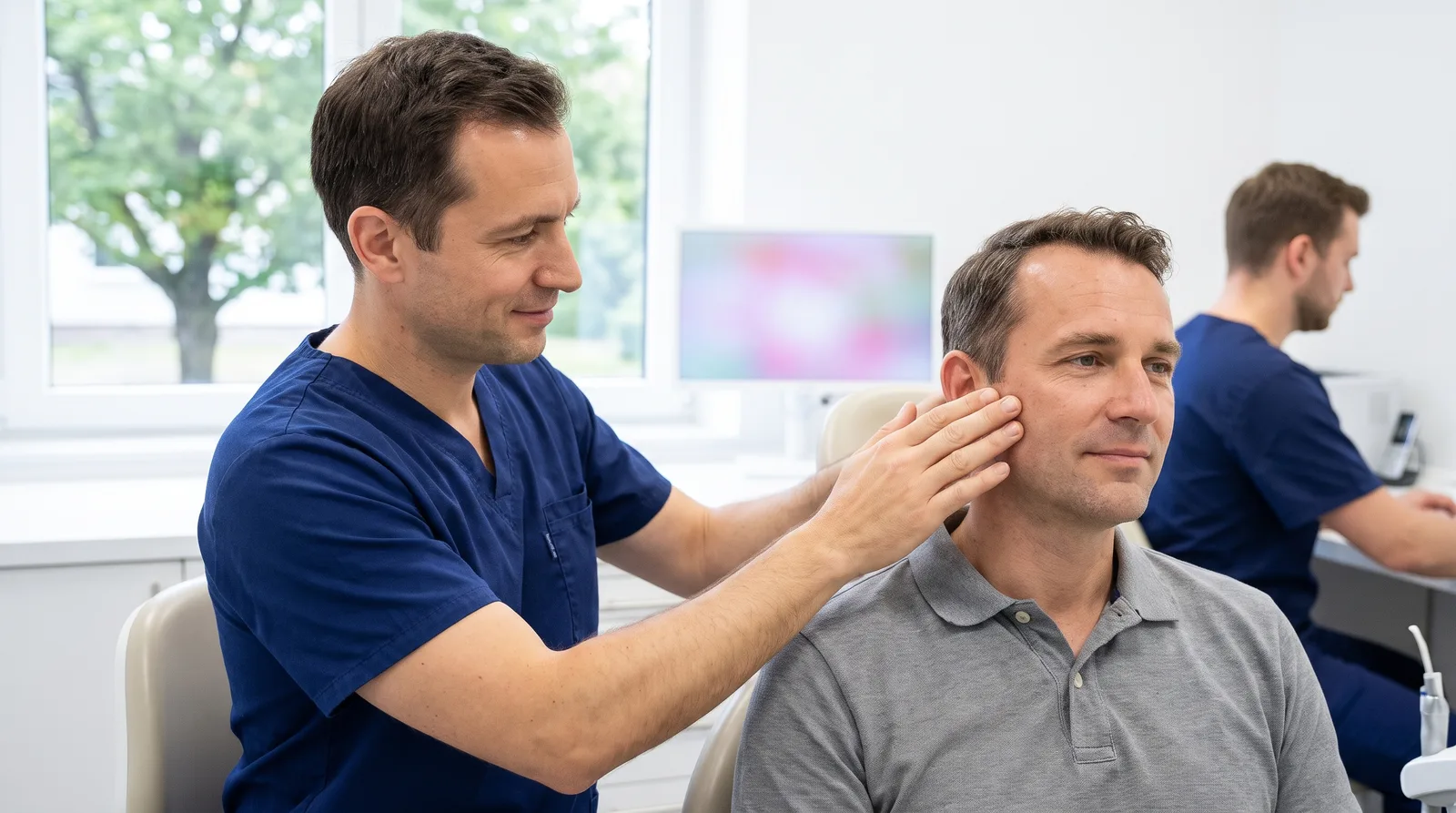
You have two temporomandibular joints, one on each side of your jaw, in front of your ears. You can feel them by placing your fingers there and opening your mouth. They work together every time you chew, talk, or yawn. NIDCR describes temporomandibular disorders (TMDs) as a group of more than 30 conditions affecting these joints and the chewing muscles.
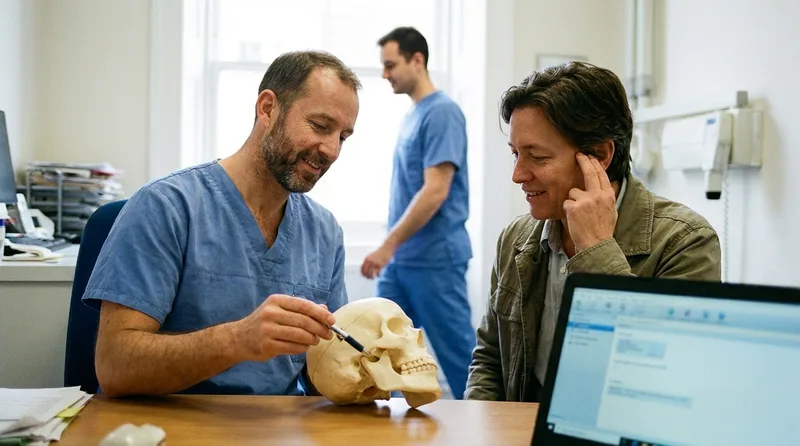
TMDs fall into three broad groups: disorders of the joints, including disc disorders, disorders of the muscles used for chewing, and headaches associated with a TMD. A person may have more than one at the same time.
You don't need to understand every detail. What matters is that the joint, the muscles, and the bite all work together, and that a dentist can look at all three. Many TMDs last only a short time and go away on their own. In some cases they become long-lasting, which is when an exam and a plan become more important. Our guide to TMJ disorder symptoms, causes, and when to see a dentist covers the symptoms in more depth.
For most people, the exact cause isn't clear. NIDCR says an injury to the jaw joint can lead to some TMDs, but in most cases symptoms seem to start for no obvious reason. Research suggests a mix of genes, psychological and life stressors, and how a person perceives discomfort may play a part.
TMDs are more common in women than in men, and researchers are exploring whether differences in joint structure and function play a role. They can also occur together with other conditions such as headaches, back problems, and sleep problems, which is one reason an exam looks at the whole picture, not just the jaw.
Knowing that the cause is often unclear helps explain why conservative, step-by-step care is the usual approach.
See a dentist if jaw clicking and popping comes with soreness in the jaw or chewing muscles, soreness spreading to the face or neck, stiffness, limited movement, locking, grating, or a change in your bite. NIDCR lists these as signs that may signal a TMD. Ringing in the ears, hearing loss, or dizziness can also be associated.
| What you notice | What it usually means | What to do |
|---|---|---|
| Clicking or popping with no soreness | Common, considered normal, and doesn't need treatment, according to NIDCR | Nothing special. Mention it at your next checkup |
| Clicking, popping, or grating with soreness | May signal a temporomandibular disorder (TMD) | Book an exam so we can look at the joints and muscles |
| Jaw stiffness, limited movement, or locking | May signal a TMD | See a dentist or doctor soon |
| Soreness that spreads to the face or neck | May signal a TMD | Book an exam |
| Ringing in the ears, hearing loss, or dizziness | May signal a TMD, but can have other causes | Have it checked by a dentist or doctor |
| A change in how your upper and lower teeth fit together | May signal a TMD | Book an exam |
If you're unsure which row you're in, treat the more serious one as true and book an exam, since it costs little to find out. Soreness in the mouth, jaw, or face may or may not be related to a TMD, so a dentist may need to rule out other causes first.
Jaw clicking with soreness or locking?
Request an exam at our Peterborough office. We'll look at your jaw joints, muscles, and bite, and tell you honestly what we find.
Request an Appointment →There's no widely accepted, standard test for TMDs, so diagnosis relies on your history and an exam. NIDCR says your dentist or doctor will note your symptoms, ask where and when they occur, what makes them better or worse, and whether they spread, and may examine your head, neck, face, and jaw for tenderness, clicking, or difficulty moving.
They may also ask about headaches or back problems, and recommend imaging such as an X-ray, MRI, or CT scan when it's useful. Because symptoms overlap with other conditions, diagnosis can be difficult, and other causes may need to be ruled out first.
A written note helps: when the sound started, which side, what you were doing, and whether it comes with headaches or a tired jaw in the morning. We'll ask those questions at your exam, and your notes make the answers faster. That's why a careful exam matters more than any single test, and why we start by listening to what you've noticed and when.
Simple steps often help: eat soft foods, apply heat or cold to the face alongside gentle stretching and strengthening exercises, and reduce habits like jaw clenching, gum chewing, and nail biting. NIDCR lists these as first steps when you notice discomfort in the jaw joints or muscles. Many jaw problems are temporary and don't get worse.

Try one change at a time, so you know what helps, and give each a few days. If steps don't help within a couple of weeks, or symptoms worsen, book an exam. NIDCR also notes that signs of TMD go away without treatment for many people, which is why conservative steps come first.
Night guards, also called splints or stabilization appliances, fit over the teeth, protect them, and may help break clenching habits. NIDCR says they don't change the teeth or bite, and evidence for improving jaw soreness is limited. If one is suggested, make sure it isn't designed to change your bite, and stop if it causes discomfort.
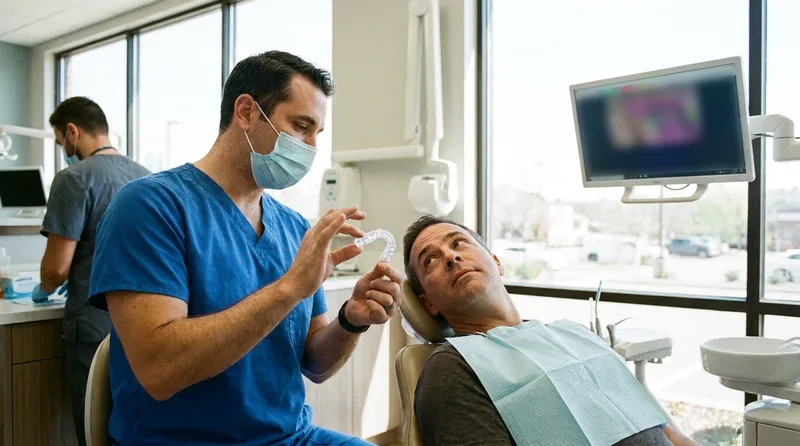
We make custom night guards, fitted to your bite, not boil-and-bite versions from the pharmacy. For grinding and clenching, a well-made guard protects your teeth and lets overworked jaw muscles settle. We check how it and your symptoms are doing at your regular visits.
Wear it as directed and bring it to your checkups so we can see how it fits and how it's wearing. A guard is a tool, not a verdict. If it doesn't help, we change the plan instead of insisting on it. Our guide to night guards for teeth grinding explains who benefits, and our TMJ and TMD treatment page describes how we assess jaw problems.
Research doesn't support the belief that a bad bite or orthodontic treatment such as braces causes TMDs, according to NIDCR. NIDCR also says some bite-changing treatments don't work and may make the problem worse, so ask about simpler treatments first, understand the risks, and get a second opinion before any irreversible procedure.
Straightening teeth is a reasonable goal for its own reasons, but it isn't a treatment for jaw clicking, so we keep the two questions separate. That advice is why we recommend conservative care and are open to second opinions. We offer a free second opinion, and our guide to getting a dental second opinion explains what to bring.
Straight teeth still matter for oral health. The ADA's guide to braces says correcting an abnormal bite can create a healthier mouth, and the ADA reports up to 30% fewer cavities and gum disease with straight teeth. Our orthodontics pages and comparison of Invisalign and braces for adults explain the options.
We start conservative, measure how you respond, and escalate only when there's a good reason. First comes an exam and bite assessment, then simple steps like habit changes or a custom night guard. For joint problems or cases that need physical therapy or a specialist, we coordinate the referral and stay involved.
We're careful about promising a fix. Many people get meaningful relief with conservative care, and some symptoms settle on their own, so our goal is to reduce discomfort, protect your teeth and joints, and be honest about what dentistry can and can't fix.
If you're nervous about the visit, BMC Oral Health (2024) reports that 36% of Americans have dental anxiety and 12% have extreme dental fear, and the Journal of Dental Anesthesia reports that sedation dentistry has helped 75% of fearful patients keep up with regular visits. Our comfort and sedation page and tips for nervous dental patients explain more, and our guide for patients who haven't been to the dentist in years is for anyone returning after a long gap.
Not sure if your jaw needs attention?
Send us a note or call. We'll talk through what you've noticed and tell you honestly how urgent it is.
Contact Our Office →If your jaw clicking and popping doesn't bother you, you can leave it alone and mention it at your next checkup. If it comes with soreness, stiffness, locking, or a change in your bite, book an exam.
A real person from our team replies to online requests the same business day, and a free consultation comes with a clear written plan.
Regular visits catch jaw and tooth problems early. The CDC reports that 42% of adults aged 30 and older have some form of periodontal disease, the Journal of Dental Research reports that people who see a dentist regularly are 60% less likely to lose teeth, and the ADA notes that regular visits can catch 80% of oral health issues before they become serious. Our guide on how often to see the dentist explains how often to come in.
We welcome patients from Peterborough, Jaffrey, Dublin, Hancock, and across the Monadnock region, with early-morning hours from 7 AM Monday through Thursday. Bring your questions to Dr. Muhammad Rahim, Dr. Jasper Ainslie, or Dr. Nabeel Almaaz, and see our Meet Our Doctors page.
Results may vary. Please consult with your dentist at Peterborough Family Dental for personalized treatment recommendations.
Find out what your jaw is telling you
Request an exam at Peterborough Family Dental & Implant Center and get an honest, conservative plan.
Request an Appointment →Prefer to talk to someone first?
Call (603) 924-3664 →
Dr. Muhammad Rahim, DMD
Dentist · Peterborough Family Dental & Implant Center
Peterborough, NH dentist providing gentle general, cosmetic, restorative, and implant dentistry for the whole family.
Was this article helpful?
Usually. NIDCR says clicking or popping sounds in the jaw joints without discomfort are common, considered normal, and don't require treatment. It's worth an exam if the sounds come with soreness, stiffness, grating, locking, or a change in your bite.
Our Peterborough team is happy to answer questions and get you on the calendar.