
Back to all articlesOrthodontics Dr. Muhammad Rahim, DMDNovember 25, 202611 min read

Invisalign vs Braces for Teens: A Parent's Guide to Choosing
Dr. Muhammad Rahim, DMDNovember 25, 202611 min read
Loading blog post
Dr. Muhammad Rahim, DMDNovember 25, 202611 min readCall and you'll reach a real person on our team: no phone tree, no hold music. We'd genuinely love to help.
(603) 924-3664Rather write to us? Contact us
Invisalign vs braces for teens comes down to your teen's bite and habits: braces work around the clock and handle complex cases, while clear aligners are removable but only work when they're worn about 20 to 22 hours a day. At Peterborough Family Dental & Implant Center in Peterborough, NH, we provide family, orthodontic, and preventive dental care, and we'll tell you honestly which option fits your teen.
This guide explains how each works, who each suits, when to start, how eating and sports change, and what parents should ask at a consultation.
Braces suit teens with crowding, overbites, underbites, crossbites, or complex alignment issues, and teens who might forget removable trays. Clear aligners suit mild to moderate cases and teens who can reliably wear them most of the day. An exam decides, because the right choice depends on the bite.
Parents often feel pressure to pick the less visible option, but visibility is only one factor. Comfort, treatment time, and your teen's reliability matter too, and sports, instruments, and school photos matter to teens, so we take all of it seriously. Invisalign is the most familiar brand name for clear aligners, which is why parents often search for it by name. We offer both braces and clear aligners, so we have no reason to push one over the other.
Both options work when they fit the case and the teen. The most important question isn't which looks better. It's which one your teen will actually succeed with for the length of treatment.
Braces use small brackets bonded to each tooth and joined by a thin wire. The wire applies gentle, continuous pressure that moves teeth gradually, with adjustments about every 4 to 6 weeks and treatment typically taking 12 to 24 months. The ADA's guide to braces says brackets may be metal or tooth-colored.
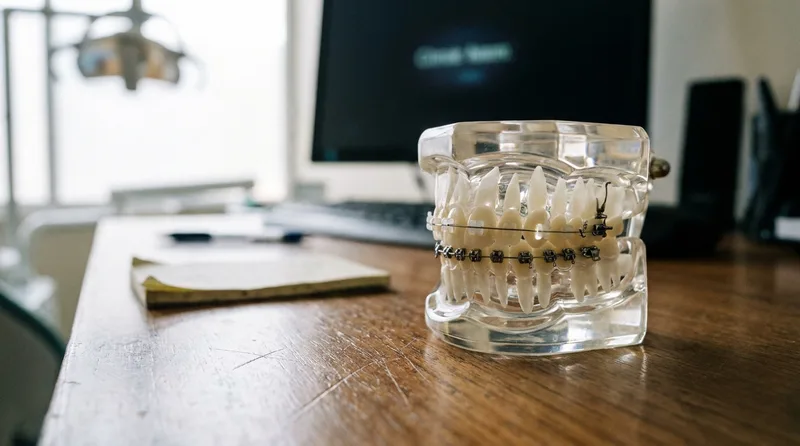
Modern brackets are smaller, lower-profile, and more comfortable than the braces parents remember. We offer metal, ceramic, and self-ligating brackets. Ceramic blends with the tooth color, and self-ligating brackets reduce friction and may mean fewer adjustment visits.
Braces wearers do need extra care with cleaning, since food can catch around brackets and wire. We show you and your teen how at the first appointment, so brushing becomes routine. Because braces are bonded on, they work around the clock with nothing to forget or lose. That's a real advantage for teens who struggle with routines. Our braces page explains each type.
Clear aligners are custom-made, removable trays that gradually guide teeth into place without metal or wires. They suit mild to moderate cases and are nearly invisible. The ADA notes that removable aligners are an option under the direct supervision of a dentist or orthodontist. Teens need to wear them about 20 to 22 hours a day.

The American Journal of Orthodontics reports that aligners treat about 90% of mild-to-moderate alignment issues. They come out for meals and brushing, then go back in, which makes them popular with teens who play instruments, take photos, or dislike metal.
The catch is responsibility. Aligners only work when they're in, so a teen who often leaves them in a pocket or a case will see slow progress. We're most comfortable with aligners for teens who are at least twelve and have most of their adult teeth in. Our clear aligners page explains the process.
Braces are fixed and always working, while aligners are removable and depend on your teen's habits. Braces handle the widest range of cases, and aligners handle milder ones with fewer food limits. Both move teeth with gentle pressure, and both are followed by a retainer to hold the result.
| What to compare | Braces | Clear aligners |
|---|---|---|
| How they work | Brackets bonded to each tooth, joined by a thin wire that applies gentle, continuous pressure | Custom-made, removable trays that guide teeth into place |
| Cases they handle | Crowding, spacing, overbites, underbites, crossbites, and other complex alignment issues | Mild to moderate cases without complex bite correction |
| Wear time | Always working, with nothing to remember | About 20 to 22 hours a day, taken out to eat and brush |
| Eating | Avoid popcorn, corn on the cob, gum, whole apples, and sticky foods | Remove them to eat, so fewer food limits |
| Cleaning | Brush carefully around brackets and wire | Brush teeth and clean the trays as directed |
| Visits | Adjustments about every 4 to 6 weeks | New trays at scheduled checks, with fewer adjustments |
| Who it depends on | Your dentist, since the braces stay on | Your teen, since the trays must be worn |
Teens often care most about looks, comfort, and how long it takes. Aligners look less noticeable and come out for meals, while braces are fixed, so there's nothing to take out and forget. Any new appliance can feel strange at first, and we explain what to expect before you start. Cost and coverage differ too, so ask for a written estimate for both options, and ask for a second look if a first recommendation doesn't feel right. The table is a starting point, not a verdict. A short exam and a conversation about your teen's schedule, habits, and goals fill in the rest.
Not sure which fits your teen?
Request a free consultation at our Peterborough office. We'll assess your teen's teeth and bite and give an honest recommendation.
Request an Appointment →For invisalign vs braces for teens, the right choice depends on the case first, then on your teen. Complex bites usually call for braces, while mild to moderate cases and disciplined teens suit aligners. We assess teeth, bite, and goals at the consultation and recommend whichever gives the better result.
If your teen wants a say, include them, since buy-in matters. That honesty saves time and money. Be honest about your teen's habits. A plan that matches how they live is a plan they'll finish, and finishing is what gives the result.
Often between ages 8 and 14, but it depends on the child. The ADA says abnormal bites usually become noticeable between ages 6 and 12, and that treatment that begins while a child is growing helps produce optimal results. Most people are in treatment for one to three years, followed by a period of wearing a retainer.
Starting early doesn't always mean starting braces early. Sometimes watching and waiting is the right call, and we'll tell you when. That doesn't mean teens past that window have missed their chance. The ADA notes healthy teeth can be treated at any age. Early checks catch problems while there's still room to guide growth, which is why we offer early orthodontic checks as part of children's dentistry.
If your child still has baby teeth, our guide to space maintainers for kids explains how to hold space for adult teeth, and our guide to family dentistry explains how we look after every age.
With braces, avoid popcorn, corn on the cob, chewing gum, whole apples, and sticky foods, and limit sugar. The ADA warns that sugary foods can lead to plaque build-up around the brackets that could stain or damage teeth. With aligners, you remove them to eat and brush, so there are fewer food limits, but teeth still need careful cleaning.

The ADA reports up to 30% fewer cavities and gum disease with straight teeth, so the effort pays off long-term. If your teen has a sports accident, our guide to a dental emergency kit explains what to do in the first minutes. Our guide to cleaning under a dental bridge shows how tool choices work around fixed dental work, a similar idea to cleaning around braces.
After treatment, your teen wears a retainer to hold teeth in their new positions. The ADA says treatment is followed by a period of wearing a retainer, and skipping it is a common reason teeth drift back. We make retainers and explain when to wear them, often full time at first, then at night.
Ask your teen to set a phone reminder for retainer wear, since small habits protect a year or two of work. Retainers are the least glamorous part of orthodontics and one of the most important. A teen who finished a year or two of treatment and then stops wearing the retainer can lose much of the result.
We check the fit at regular visits, replace retainers that wear out, and answer questions as your teen's habits change. Our guide on how often to see the dentist explains how often to come in.
Research doesn't support the belief that orthodontic treatment such as braces causes temporomandibular disorders, according to NIDCR's guide to TMD. If your teen has jaw soreness, clicking with discomfort, or locking during treatment, mention it so we can examine it. Clicking without soreness is common and normal.
If your teen mentions jaw soreness at any point, don't wait for the next adjustment, because we're happy to take a look at any time. Our guide to jaw clicking and popping explains what the sounds mean and when to seek an exam. Jaw symptoms and alignment are separate questions, so we assess them separately.
BMC Oral Health (2024) reports that 36% of Americans have dental anxiety and 12% have extreme dental fear, and the Journal of Dental Anesthesia reports that sedation dentistry has helped 75% of fearful patients keep up with regular visits. Teens can feel nervous too, and our comfort and sedation page and tips for nervous dental patients explain how we keep visits comfortable.
Questions about your teen's smile?
Send us a note or call, and we'll talk through options in plain language, with no pressure.
Contact Our Office →Choosing between invisalign vs braces for teens is easier with an exam, so book a free consultation, bring your teen, and ask questions. We assess teeth, bite, and goals, explain both options honestly, and give you a written plan. A real person replies to online requests the same business day.
You decide what happens next, and there's no pressure either way.
Coverage varies, so we check your benefits for free. Clear aligners are often covered like braces, and we accept most insurance and FSA or HSA funds, with financing options. If you've already been quoted elsewhere, we offer a free second opinion, and we do a free benefits check before you decide.
The American Academy of Cosmetic Dentistry reports that 99.7% of adults believe a smile is an important social asset, and teens feel it too. The Journal of Dental Research reports that people who see a dentist regularly are 60% less likely to lose teeth, the ADA notes that regular visits can catch 80% of oral health issues before they become serious, and the CDC reports that 42% of adults aged 30 and older have some form of periodontal disease, so habits formed now last. Our comparison of Invisalign and braces for adults covers the adult version of this choice.
We welcome families from Peterborough, Jaffrey, Dublin, Hancock, and across the Monadnock region, with early-morning hours from 7 AM Monday through Thursday. Bring your questions to Dr. Muhammad Rahim, Dr. Jasper Ainslie, or Dr. Nabeel Almaaz, and see our Meet Our Doctors page.
Results may vary. Please consult with your dentist at Peterborough Family Dental for personalized treatment recommendations.
Find the right fit for your teen
Request a free consultation at Peterborough Family Dental & Implant Center and get an honest recommendation.
Request an Appointment →Prefer to talk to someone first?
Call (603) 924-3664 →
Dr. Muhammad Rahim, DMD
Dentist · Peterborough Family Dental & Implant Center
Peterborough, NH dentist providing gentle general, cosmetic, restorative, and implant dentistry for the whole family.
Was this article helpful?
Neither is better for everyone. Braces handle the widest range of cases and work around the clock. Clear aligners suit mild to moderate cases and teens who reliably wear them 20 to 22 hours a day. A dental exam shows which fits your teen's bite and habits.
Our Peterborough team is happy to answer questions and get you on the calendar.