
Back to all articlesgeneral-dentistry Dr. Muhammad Rahim, DMDNovember 18, 202610 min read

How Long Does Numbing Gel Last at the Dentist? Cream Too
Dr. Muhammad Rahim, DMDNovember 18, 202610 min read
Loading blog post
Dr. Muhammad Rahim, DMDNovember 18, 202610 min readCall and you'll reach a real person on our team: no phone tree, no hold music. We'd genuinely love to help.
(603) 924-3664Rather write to us? Contact us
You've been told you'll get numbing gel first, and now you're wondering: how long does numbing gel last, and is it enough? The short version is that gel is quick and short-lived, and it's only the first step. At Peterborough Family Dental & Implant Center in Peterborough, NH, we provide gentle family and restorative dental care with comfort built into every visit, and numbing is a big part of that.
This guide explains how long numbing gel and cream last, what they can and can't do, how they differ from injected numbing, and when to call your dentist.
Dental numbing gel usually works for about 5 to 15 minutes once it takes effect. A review of recent advances in topical anesthesia reports that lidocaine gel has a duration of about 15 minutes with peak effect around 5 minutes, and that benzocaine lasts about 5 to 15 minutes. The exact time depends on the product and the area.
That short window is by design. Gel is used so that you feel less when the dentist begins the next step, not to numb you for the whole appointment. By the time you've settled back in the chair, the gel has done its job.
People often ask how long does numbing gel last because they worry it will wear off too soon, but it isn't meant to carry you through treatment. Injected numbing does that, and it lasts much longer. Products and strengths vary slightly, so treat these as typical ranges rather than exact timers.
Numbing gel numbs the surface tissue where it's placed, so the next step, usually an injection, feels more comfortable. The ADA notes that your dentist may apply a topical anesthetic to numb an area before injecting a local anesthetic, and that topical anesthetics also may be used to soothe mouth sores.
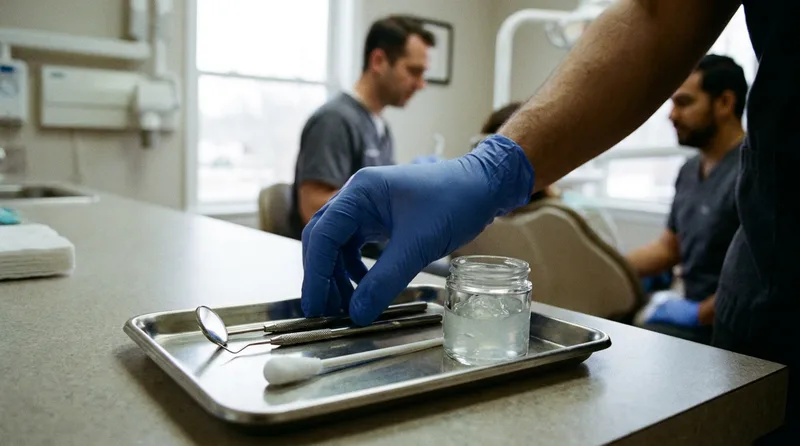
In other words, gel works on the outside layer. It doesn't reach the nerve inside a tooth, which is why it can't make a filling comfortable on its own. Think of it as a small kindness before the main numbing, not the main numbing itself.
The American Dental Association's guide to anesthesia and sedation covers the different types of anesthesia and sedation, and how your dentist chooses among them.
Gel lasts about 5 to 15 minutes and numbs only the surface, while injected anesthetic numbs deeper and often lasts two to three hours for the lip and tongue after routine work. Gel makes the injection more comfortable. The injection is what makes the treatment comfortable.
| Feature | Numbing gel or cream | Injected anesthetic |
|---|---|---|
| What it numbs | The surface of the gum or lip tissue | Deeper tissue, including the nerve around a tooth |
| Typical duration | About 5 to 15 minutes | Often two to three hours for the lip and tongue after routine work |
| How it's applied | Rubbed or placed on the surface with a swab | Injected near the nerve |
| Main job | Makes the injection more comfortable, or soothes surface irritation | Numbs a tooth or area so treatment is comfortable |
| Enough for a filling? | No | Yes, this is the usual choice |
After a routine filling, lip and tongue numbness usually lasts about two to three hours, as our guide to how long dental numbing lasts explains. Plan around that longer window, not the short one from the gel.
Questions about numbing before your visit?
Request an appointment at our Peterborough office, and tell us what worries you. We'll explain exactly what to expect.
Request an Appointment →The two most common dental numbing gels contain benzocaine or lidocaine. They work well on the gums and tongue but not on every part of the mouth. The review notes that benzocaine is hardly effective on the roof of the mouth, because that tissue is thick and firm with densely packed nerves.
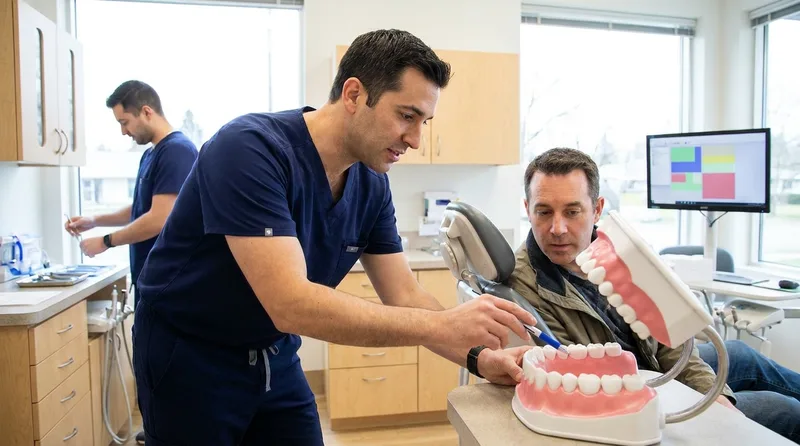
Which product your dentist uses depends on the treatment and the area. If you're curious, just ask. We're happy to explain what we're using and why.
Gum health is a big reason this matters. The CDC reports that 42% of adults aged 30 and older have some form of periodontal disease, and deeper cleanings are common. Our guide to scaling and root planing explains what to expect, and our gum disease treatment service covers how we treat it.
Numbing creams made for skin aren't designed for the inside of your mouth, and their duration isn't the same as a dental gel's. The review notes that, for one skin cream used in dentistry, the manufacturer does not recommend use on mucous membranes. Ask your dentist or pharmacist before trying any numbing cream on your lips or mouth.
People often search for how long numbing cream lasts on the lips, usually because they've tried an over-the-counter product. Those products vary widely in strength and how long they work, so it's hard to give one answer. For dental care, stick with what your dentist applies. Keep numbing products out of children's reach and follow label directions exactly.
If you're thinking about using a numbing product at home, check the label and ask first. Numbing the wrong area can make swallowing or chewing harder, so follow product directions closely and ask a pharmacist to help you choose.
Dental numbing gels are widely used and generally well tolerated, but rare reactions can happen. The review notes that benzocaine is a well-known cause of methemoglobinemia, a condition that can be serious, and that the FDA continues to warn about it. Tell your dentist about any allergies and ask before using over-the-counter products.
Most people never have a problem, but knowing the warning signs means you can act quickly if something feels off. If you've had a reaction to a numbing medicine before, bring it up at your next visit, even if it seemed minor. Your dentist can note it in your chart and choose a different product.
If you're pregnant, our guide to dental care during pregnancy explains what the ADA says about numbing medicine, and we'll plan around it.
No. For a filling, a crown, or gum treatment, your dentist uses an injected local anesthetic, because gel only numbs the surface. The ADA notes that injectable anesthetics may be used in procedures such as filling cavities, preparing teeth for crowns, or treating gum disease.
If a procedure is longer or more involved, your dentist may add more anesthetic during the visit, so numbness stays steady for the whole appointment.
Routine cleanings are different. They often need no numbing at all, or only a topical gel for sensitive areas. If cleanings are uncomfortable for you, tell us. We have more options than most people realize.
Our dental filling service uses comfortable numbing, and our comparison of tooth-colored and amalgam fillings explains your material options. For children, our guide to cavities in baby teeth explains how comfortable fillings work. The CDC reports that 20% of children ages 5 to 11 have at least one untreated decayed tooth, so a gentle approach matters.
Tell us you're nervous, and we'll build comfort into your visit: gentle numbing, warm blankets, headphones, music, and breaks whenever you need them. We also offer nitrous oxide and oral sedation. Many nervous patients find the numbing is the part they dread most, and it's often easier than expected.

BMC Oral Health (2024) reports that 36% of Americans have dental anxiety and 12% have extreme dental fear, and the Journal of Dental Anesthesia reports that sedation dentistry has helped 75% of fearful patients keep up with regular visits. We don't provide general anesthesia or IV sedation, so you stay awake and responsive either way.
Our comfort and sedation page has the details, our tips for nervous dental patients offer more ways to feel at ease, and our guide to sedation dentistry explains your options. If it's been years since your last visit, our guide for patients who haven't been to the dentist in years explains what to expect.
Nervous about numbing?
Send us a note or call, and we'll talk through how to keep you comfortable.
Contact Our Office →Call if numbness lasts well beyond the time you were told to expect, if it's still there the next day, or if tingling doesn't fade. Numbing gel itself wears off within minutes, so lingering numbness points to the injection, not the gel. Go to the ER for trouble breathing or swallowing, or for facial swelling with hives.
Keep notes if you can: when your visit ended, when the numbness started to fade, and any symptoms that stand out. Those details help your dentist decide whether what you're feeling is normal.
If you're ever unsure, call us rather than waiting. A short phone call can settle your mind or get you the care you need sooner.
Lingering numbness is rare and usually settles, but it's always worth a call. Our team would rather hear from you than have you wonder.
Ask your dentist what numbing you'll have and how long to expect it, then plan your day around the longer injected numbing, not the short gel. If a visit worries you, call us first and tell us what would help. A real person from our team replies to online requests the same business day.
Regular visits make everything easier. The Journal of Dental Research reports that people who see a dentist regularly are 60% less likely to lose teeth, and the ADA notes that regular visits can catch 80% of oral health issues before they become serious. Our guide on how often to see the dentist explains how often to come in. Our teeth cleaning service covers routine cleanings.
We welcome patients from Peterborough, Jaffrey, Dublin, Hancock, and across the Monadnock region, with early-morning hours from 7 AM Monday through Thursday. Bring your questions to Dr. Muhammad Rahim, Dr. Jasper Ainslie, or Dr. Nabeel Almaaz.
Results may vary. Please consult with your dentist at Peterborough Family Dental for personalized treatment recommendations.
Make your next visit more comfortable
Request an appointment at Peterborough Family Dental & Implant Center and tell us what would help you feel at ease.
Request an Appointment →Prefer to talk to someone first?
Call (603) 924-3664 →
Dr. Muhammad Rahim, DMD
Dentist · Peterborough Family Dental & Implant Center
Peterborough, NH dentist providing gentle general, cosmetic, restorative, and implant dentistry for the whole family.
Was this article helpful?
Dental numbing gel usually works for about 5 to 15 minutes once it takes effect. Lidocaine gel lasts around 15 minutes, and benzocaine about 5 to 15 minutes, according to a review of topical anesthetics. The exact time depends on the product and the area.
Our Peterborough team is happy to answer questions and get you on the calendar.