
Back to all articlesRestorative Dentistry Dr. Muhammad Rahim, DMDNovember 16, 202610 min read
Full Mouth Reconstruction: Who Needs It and What It Involves
Dr. Muhammad Rahim, DMDNovember 16, 202610 min read
Loading blog post
Dr. Muhammad Rahim, DMDNovember 16, 202610 min readCall and you'll reach a real person on our team: no phone tree, no hold music. We'd genuinely love to help.
(603) 924-3664Rather write to us? Contact us
Full mouth reconstruction sounds like a big phrase for a simple idea: when problems are spread across your whole mouth, you fix them together, in a planned order, instead of one emergency at a time. At Peterborough Family Dental & Implant Center in Peterborough, NH, we offer restorative and cosmetic dental care, including full mouth reconstruction as one coordinated plan, backed by an in-house lab and sedation options for longer visits. It's for people who are tired of patching and ready to rebuild.
If you have worn, broken, missing, or failing teeth in several places, you've probably felt this cycle. One tooth gets repaired, then another breaks. A complete plan breaks the cycle.
This guide covers who needs it, how it differs from a smile makeover, what treatments it can include, how long it takes, and what to ask first.
Full mouth reconstruction is a coordinated plan that rebuilds teeth that are badly worn, broken, decayed, or missing across the mouth. It combines several treatments, such as implants, crowns, bridges, gum care, and cosmetic work. The goal is a healthy, balanced bite and a natural-looking smile, not just a better appearance.
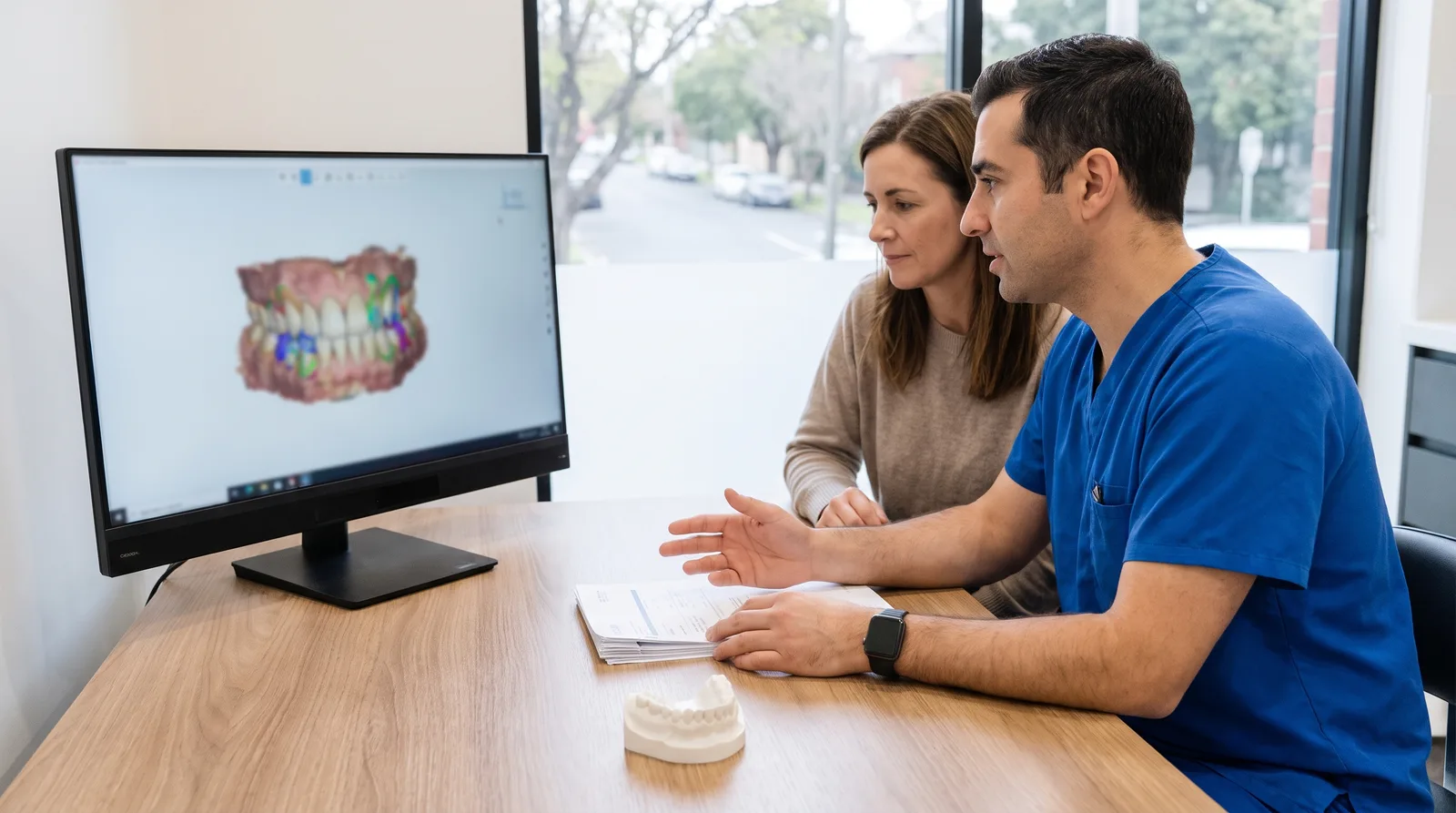
It's easiest to understand as one project with many steps. Rather than treating each problem as it appears, your dentist maps out your whole mouth, plans the order of treatment, and phases the work to fit your life and budget.
Our full mouth reconstruction page shows how a plan comes together, from first exam to final fit.
It's also not a single procedure. Think of it as a roadmap that might include a handful of treatments or many, depending on what your mouth needs.
Because it restores how your teeth fit together as well as how they look, many patients say the biggest change is simply being able to eat what they love and smile without a second thought.
Reconstruction is for people with widespread dental problems rather than a single tooth, such as multiple missing, broken, or worn teeth, years of grinding or acid wear, bite or jaw problems, or a mix of failing dental work. A coordinated plan is often more predictable than treating problems one at a time.
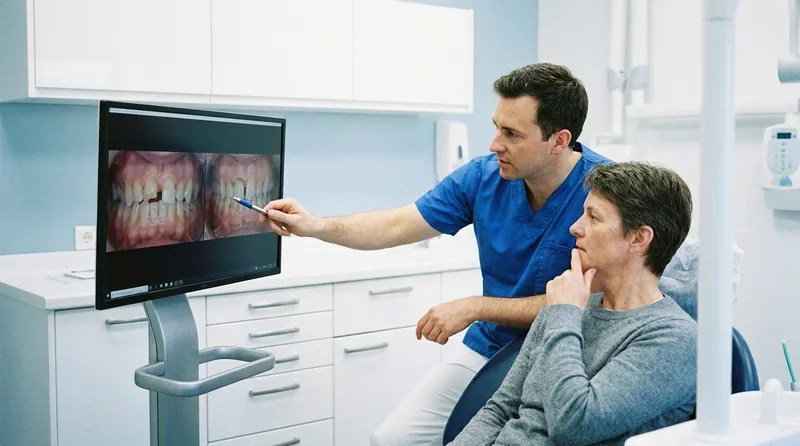
Grinding deserves a closer look. Mayo Clinic's guide to teeth grinding lists flattened, fractured, chipped, or loose teeth and worn enamel that exposes the inner layers of the teeth among the signs of bruxism, and notes that severe grinding can damage teeth, restorations, crowns, and the jaw. If that sounds like you, our guide to night guards explains how protection fits into a long-term plan.
A smile makeover is mainly cosmetic, focused on how your smile looks, while a full rebuild also restores function, your bite, and the health of teeth and gums across the whole mouth. A makeover often suits people with healthy teeth who want a change. Reconstruction suits people whose teeth need structural repair.
| Feature | Smile makeover | Full mouth reconstruction |
|---|---|---|
| Main goal | How your smile looks | Function, bite, and health, plus appearance |
| Teeth involved | Usually healthy teeth | Teeth that are worn, broken, decayed, or missing |
| Bite | Usually left as it is | Evaluated and rebuilt when needed |
| Gums and bone | Usually healthy already | Assessed and treated as part of the plan |
| Treatments | Often whitening, bonding, veneers, or aligners | Often several treatments combined, such as implants, crowns, bridges, and cosmetic work |
| Planning | A cosmetic design | A full exam, 3D imaging, and a phased written plan |
The two can overlap. A reconstruction often includes cosmetic work, so the result looks natural. But the reason for it is health and function first. Our smile makeover guide explains the cosmetic side, and our smile makeover page shows what that involves.
Not sure which one you need?
Book a free consultation at our Peterborough office and we'll tell you honestly whether a full reconstruction or a simpler plan fits.
Request an Appointment →A reconstruction can include dental implants, crowns, bridges, and cosmetic work, along with gum treatment, root canal treatment, and extractions when a tooth can't be saved. Your plan uses only what your mouth needs. Many people need a few of these rather than all of them.
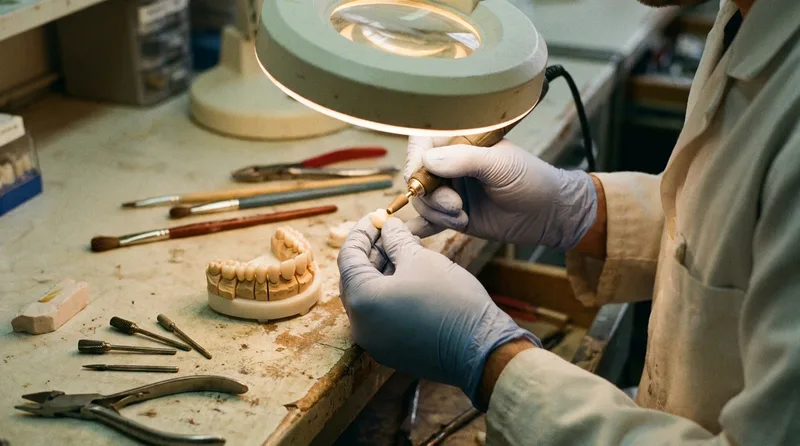
Our in-house lab helps keep the fit precise and the visits efficient. Some crowns can be made in a single visit, as our guide to same day crowns explains. For replacing many teeth at once, our comparison of All-on-4 and implant-supported dentures shows the full-arch options.
Implants take time. Mayo Clinic describes implant treatment as a process that can take many months, with much of that time devoted to healing and waiting for new bone to grow. That's one reason a reconstruction is phased.
Planning starts with a thorough exam and 3D imaging, then a clear written plan with the timeline and cost, phased to fit your life and budget. Nothing begins until you understand each phase. You should never be surprised by a step or a bill.
Plans can change as you go. If healing takes longer than expected or a tooth needs more work than the scan showed, your dentist updates the plan and explains the change before moving on.
Bring your questions. Our list of questions to ask at a consultation will help you get the most from the first visit.
It depends on how much work is involved. Some plans wrap up in a few months, while more complex cases that include implants and healing time can take longer. We map out the full timeline before we begin, so you know what to expect at each stage.
The biggest factor is healing. Crowns and veneers may take just a few visits, while implants need months for the bone to bond to each post, and bone grafting adds more time. Temporary teeth keep you eating and smiling while you wait.
Our guide to implants with bone loss explains how grafting adds steps and why it can make implants possible when bone is thin.
Want to see your own timeline?
Send us a note and we'll explain what a plan could look like for your mouth.
Contact Our Office →Yes, comfort is planned into every step. We use gentle technique, local anesthetic, and sedation options such as nitrous oxide and oral sedation, so even longer appointments feel calm. Most patients are surprised by how manageable the process feels.

Nerves are normal, and bigger treatment can feel more daunting. BMC Oral Health (2024) reports that 36% of Americans have dental anxiety and 12% have extreme dental fear, and the Journal of Dental Anesthesia reports that sedation dentistry has helped 75% of fearful patients keep up with regular visits. Our guide to sedation options explains each option.
Nitrous oxide keeps you relaxed but awake and wears off quickly, while oral sedation gives deeper relaxation. Your dentist will recommend what fits the length of your visit.
Ask about sedation at your consultation, so you know what to expect. If you choose oral sedation, you'll need someone to drive you home, and you'll get clear instructions beforehand.
Cost depends on the treatments involved, so we give you a clear written estimate up front. Financing options include CareCredit, Cherry, and Sunbit, with low-monthly and 0% plans for those who qualify, and most insurance is accepted. Phasing treatment can also spread out the cost.
Don't let cost keep you from asking. A written estimate costs nothing, and seeing the numbers phase by phase often makes a large plan feel far more manageable than the number you imagined.
Our guide to implant insurance coverage explains terms like annual maximums, which matter a lot with larger plans.
Gum health, bone, general health, and habits like smoking and grinding can all affect your plan. These factors rarely rule you out. They shape the order of treatment and what needs to happen first. A consultation and exam show where you stand.
Gum health comes first. The National Institute of Dental and Craniofacial Research describes gum disease as an infection that can spread to the bones supporting the teeth, and the CDC reports that 42% of adults aged 30 and older have some form of periodontal disease. Treating it protects every other part of the plan.
Book a free consultation, bring your questions and any existing plan, and let your dentist look at your whole mouth. You'll get an exam, 3D imaging, and an honest recommendation about whether a full reconstruction or a simpler plan is right. There's no pressure to start.
Results last longer with good care. The Journal of Oral and Maxillofacial Surgery reports implant success rates of 95-98% over 10 years, and the Journal of Dental Research reports that people who see a dentist regularly are 60% less likely to lose teeth. The ADA also notes that regular visits can catch 80% of oral health issues before they become serious.
We welcome patients from Peterborough, Jaffrey, Dublin, Hancock, and across the Monadnock region, with early-morning hours from 7 AM Monday through Thursday. Bring your questions to Dr. Muhammad Rahim or Dr. Jasper Ainslie. If you request a time online, a real person from our team replies the same business day to confirm your visit.
Results may vary. Please consult with your dentist at Peterborough Family Dental for personalized treatment recommendations.
Start with a plan, not a patch
Request a free consultation at Peterborough Family Dental & Implant Center and get an honest recommendation and a clear written plan.
Request an Appointment →Prefer to talk to someone first?
Call (603) 924-3664 →
Dr. Muhammad Rahim, DMD
Dentist · Peterborough Family Dental & Implant Center
Peterborough, NH dentist providing gentle general, cosmetic, restorative, and implant dentistry for the whole family.
Was this article helpful?
No. A smile makeover is mainly cosmetic, while full mouth reconstruction also rebuilds function, your bite, and the health of teeth and gums across the whole mouth, often combining several treatments.
Our Peterborough team is happy to answer questions and get you on the calendar.


