
Back to all articlesDental Implants Dr. Muhammad Rahim, DMDNovember 9, 202610 min read
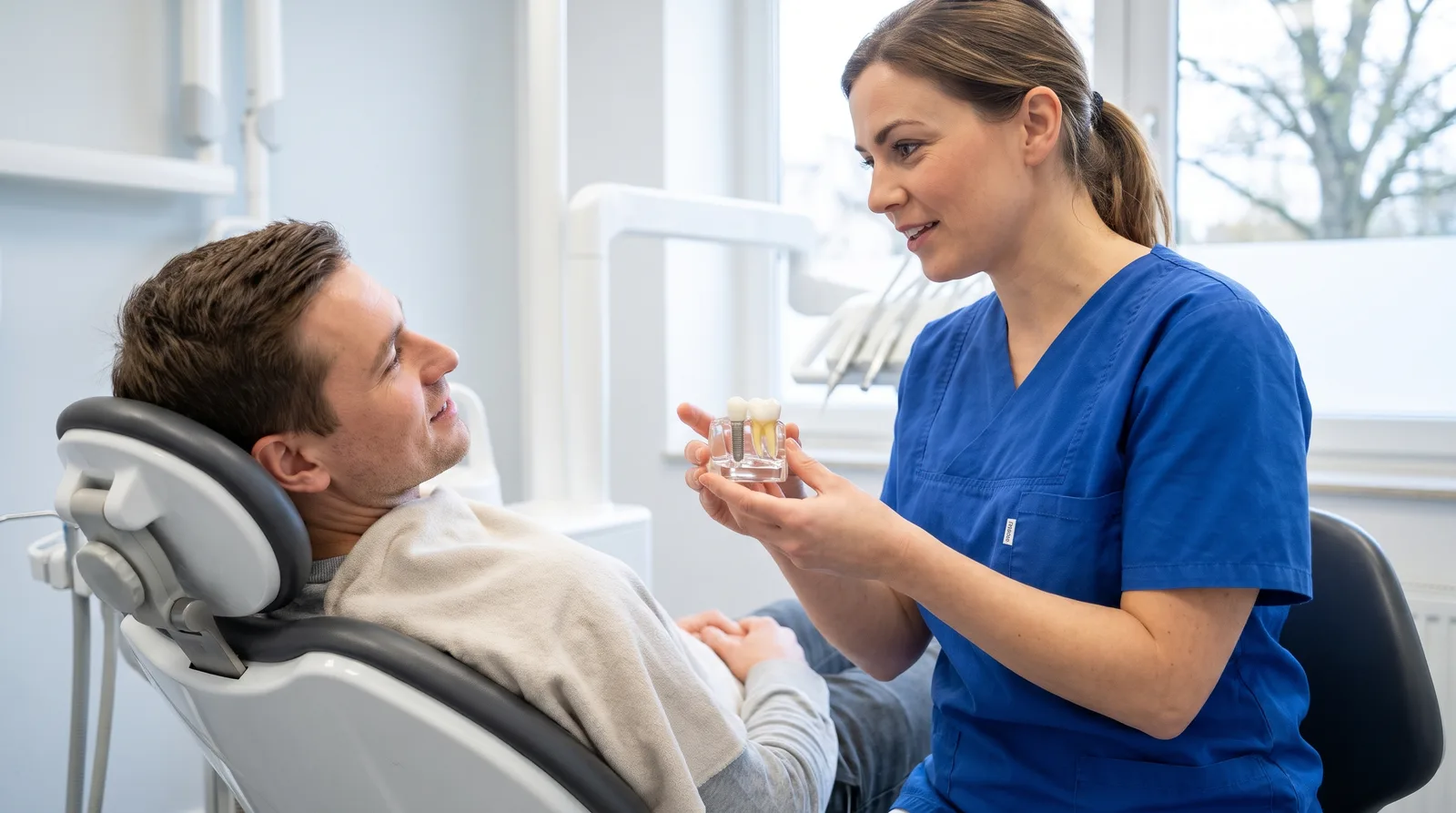
What Does a Dental Implant Feel Like? Before, During, After
Dr. Muhammad Rahim, DMDNovember 9, 202610 min read
Loading blog post
Dr. Muhammad Rahim, DMDNovember 9, 202610 min readCall and you'll reach a real person on our team: no phone tree, no hold music. We'd genuinely love to help.
(603) 924-3664Rather write to us? Contact us
What does a dental implant feel like? It's the question behind most hesitation about treatment, and it deserves a straight answer. Most patients describe pressure and vibration during surgery, then mild soreness for a few days. At Peterborough Family Dental & Implant Center in Peterborough, NH, we place dental implants with comfort planned into every step, and we explain what to expect before you ever sit in the chair.
You're not alone if the idea makes you nervous. BMC Oral Health (2024) reports that 36% of Americans have dental anxiety, and fear of the unknown is a big part of that. Knowing what each stage feels like takes away a lot of it.
This guide walks through the experience from numbing to the finished tooth, including what's normal and when to call us.
Most patients feel pressure and vibration during implant surgery, not sharp sensations, because the area is fully numbed with local anesthetic. Afterward, expect mild soreness and swelling for a few days that usually eases with your dentist's guidance. Once healed, the finished implant feels much like a natural tooth.
The experience falls into four stages. Each feels different, and each is manageable.
Pressure is the word patients use most. Many are surprised that the numbing step is the part they notice, and the surgery itself fades into the background. Everyone's experience differs, so your own may be milder or stronger than the typical pattern. Your dentist will tell you what to expect for your specific case.
During surgery you typically feel pressure, vibration, and movement, but not sharp sensations, because the gum and bone are numbed before anything begins. You stay awake unless you choose sedation. Your dentist checks that the area is fully numb before starting and can add more if you feel anything.

The numbing step is the part patients ask about most. A topical gel is often applied first, then the local anesthetic is placed in the gum. You may feel a brief pinch or pressure for a moment. After that, the area goes numb within minutes.
Mayo Clinic's overview of implant surgery notes that implant surgery can be done with local anesthesia, sedation, or general anesthesia depending on your case. For most single implants, local anesthetic is what patients describe, which is why they report pressure rather than sharp sensations.
You'll hear the small instruments and feel pressure as the dentist prepares the site and places the post. Some patients notice vibration from the dental handpiece. None of it should feel sharp. If it does, raise your hand and your dentist will pause and add more anesthetic.
A single implant is often placed in a shorter visit than patients expect, while full-arch treatment takes longer. Your dentist will give you a realistic estimate when you plan treatment.
Sedation takes the edge off nerves and makes time feel shorter, while local anesthetic still handles numbing. Nitrous oxide keeps you relaxed but awake, and oral sedation produces deeper relaxation. Both are available at our office, and you can choose what fits your comfort level.
The Journal of Dental Anesthesia reports that sedation dentistry has helped 75% of fearful patients keep up with regular visits. That matters, because avoiding the dentist often makes problems bigger. Our guide to sedation options explains the options in more detail.
Follow any eating and medication instructions your dentist gives you before sedation. They exist for your safety.
Nervous about the procedure?
Call our Peterborough office and we'll talk through your comfort options before you book anything.
Call (603) 924-3664 →The first day usually brings numbness that fades over a few hours, then mild soreness, pressure, and a little oozing at the site. Swelling starts building. Most patients rest at home, use the medication their dentist recommends, and eat soft, cool foods once the numbness is gone.
Be careful while you're numb. It's easy to bite your cheek or tongue without noticing. Our guide on how long dental numbing lasts explains the typical timing and how to eat safely until feeling returns.
Mild oozing is normal. Your dentist will tell you how long to expect it and what to do if it seems heavier than described. Rest matters more than most people expect, so plan a quiet evening with no heavy lifting or intense exercise.
Soreness and swelling are usually strongest in the first couple of days, then ease through the week. You may see mild bruising. Most people return to routine activities within a few days, while keeping food soft and the area clean. Your dentist will give you specific guidance for your case.

| When | What you may feel | What helps |
|---|---|---|
| Day of surgery | Numbness for a few hours, pressure and tightness, mild bleeding | Rest, use gauze as directed, keep your head raised |
| Day 2 to 3 | Soreness and swelling, sometimes mild bruising | Cold compress in the first day, then follow your dentist's guidance |
| Days 4 to 7 | Swelling and soreness ease gradually | Soft foods, gentle cleaning, keep taking medication as advised |
| Weeks 2 to 4 | Gums look and feel closer to normal | Return to normal routines, keep follow-up visits |
| Months 2 to 6 | Little to feel as the bone bonds to the post | Keep up cleanings and daily care until the final tooth |
That timeline is a general guide, and your own pace may be faster or slower. Our dental implant recovery timeline goes into more detail, week by week.
The bone takes months to bond to the post, but you won't feel that happening. During this stage the implant becomes part of your jaw quietly. The Journal of Oral and Maxillofacial Surgery reports implant success rates of 95-98% over 10 years, and following aftercare closely supports that result.
Normal healing means mild to moderate soreness, swelling that peaks early, and slight bleeding in the first day or two. Warning signs include swelling that worsens after the third day, bleeding that won't ease, fever, a bad taste, or a loose temporary tooth. When in doubt, call your dentist.
Here is how to tell the two apart.
Infection near an implant is the main thing to catch early. The National Institute of Dental and Craniofacial Research describes how infection of the gums can affect the tissue and bone that support teeth, and the same principle applies around implants. Early calls solve most problems quickly.
Not sure if what you feel is normal?
Send us a note or call, and our team will tell you whether it needs a visit.
Contact Our Office →Yes, a little. Adding a bone graft or removing a tooth during the same visit usually means more swelling and soreness afterward, because there's more work at the site. Recovery may take a few extra days, but you still heal once instead of twice when the steps are combined.
Swelling and bruising are common effects after tooth removal and grafting, and aftercare matters even more when more work is done at the site. If your treatment includes grafting, your dentist will tell you how that changes your recovery and what to expect.
Many patients find that combining steps is easier overall, even with a bit more swelling. The trade-off is one recovery period instead of two. Your plan will show which approach fits your case.
Whether a graft or extraction is part of your plan is decided at the exam and 3D scan, not on the day. That way the conversation about recovery happens before surgery, when you can still plan time off and meals.
A finished implant feels much like a natural tooth when you bite and chew, though it can feel slightly different at first because implants lack the ligament natural teeth have. Most patients stop noticing it within a short time. The American Academy of Implant Dentistry reports that implant-supported teeth can restore up to 90% of natural chewing power.

Your dentist checks your bite when the final crown goes in. Small adjustments make it comfortable. If something feels high or off, say so, since a quick adjustment fixes it.
Some patients notice a little tenderness around the gum for a few weeks while tissue matures around the crown. That usually settles on its own. Tenderness that lingers or grows deserves a call.
Long-term, the experience is simple: brush, floss, and keep your cleanings. The Journal of Dental Research reports that people who see a dentist regularly are 60% less likely to lose teeth, and the ADA notes that regular visits can catch 80% of oral health issues before they become serious.
Tell your dentist about your fears, ask about sedation, and prepare your home before surgery. Planning ahead removes most of the uncertainty. A calm, informed patient usually has a smoother experience from numbing to recovery.
Bring a friend or family member if that helps. Wear comfortable clothing and arrive a few minutes early so you aren't rushed. Small steps like these keep the visit calm.
Book a consultation and ask every question you have about comfort. A short visit and 3D scan will show your treatment plan, and our team will explain what each stage will feel like for you. Knowing in advance turns a source of worry into a plan.
We welcome patients from Peterborough, Jaffrey, Dublin, Hancock, and across the Monadnock region, with early-morning hours from 7 AM Monday through Thursday. Bring your questions to Dr. Muhammad Rahim or Dr. Jasper Ainslie. If you request a time online, a real person from our team replies the same business day to confirm your visit.
Results may vary. Please consult with your dentist at Peterborough Family Dental for personalized treatment recommendations.
Ask your questions in person
Request an appointment at Peterborough Family Dental & Implant Center and hear exactly what your treatment will feel like.
Request an Appointment →Prefer to talk first?
Call (603) 924-3664 →
Dr. Muhammad Rahim, DMD
Dentist · Peterborough Family Dental & Implant Center
Peterborough, NH dentist providing gentle general, cosmetic, restorative, and implant dentistry for the whole family.
Was this article helpful?
Many patients say it's about the same or easier than they expected, since both use local anesthetic. Implant surgery involves placing a post, while removal involves taking the tooth out. Soreness afterward is usually mild to moderate and varies from person to person.
Our Peterborough team is happy to answer questions and get you on the calendar.


