Water Flosser vs Floss: Is the Upgrade Really Worth It?
Dr. Muhammad Rahim, DMDSeptember 6, 202610 min read
The water flosser vs floss question comes up often, especially for patients who find traditional string floss awkward or simply skip it altogether. Both can effectively clean between teeth when used consistently, though each has real strengths worth understanding before deciding whether the upgrade makes sense for you.
This guide breaks down what actually matters when comparing the two. Flossing guidance is part of routine preventive dentistry care at Peterborough Family Dental & Implant Center. Most patients are surprised there isn't a single universal answer that applies to everyone, since marketing for each product often suggests otherwise.
Not Sure Which Fits Your Routine?
Ask at your next checkup for guidance based on your specific dental history and habits.
Water Flosser vs Floss: Which Actually Cleans Better?
String floss and water flossers both effectively remove plaque and debris between teeth, though string floss provides more direct physical contact against the tooth surface, while a water flosser uses pressurized water to dislodge particles and stimulate gums. Neither is universally superior for every patient.
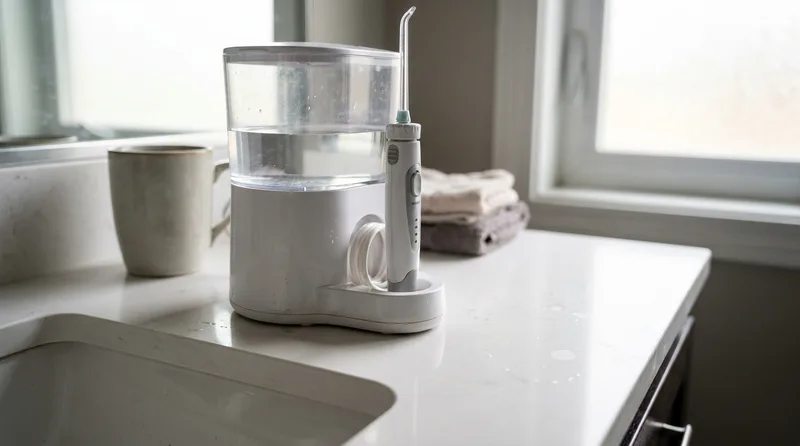
String floss, used correctly with proper technique wrapping around each tooth, can reach tight spaces very effectively. But it requires consistent technique and can be uncomfortable for patients with sensitive gums or limited dexterity. A water flosser uses a stream of pulsating water to flush out debris and massage the gumline.
Many patients find it easier to use consistently, even if it doesn't always match the direct mechanical action of floss in very tight contacts. The best tool is often the one you'll actually use every day without skipping it.
Consistency, more than the tool itself, tends to be the deciding factor in long-term results, regardless of which tool someone ultimately chooses.
An exam and cleaning can help identify whether your current flossing method, whichever one you use, is actually reaching everywhere it should. According to MouthHealthy, the ADA's patient education site, daily flossing in some form is an important part of removing plaque that a toothbrush alone can't reach.
How Do You Use a Water Flosser Correctly?
Using a water flosser correctly involves aiming the tip at a 90-degree angle to the gumline, working slowly along each tooth, and pausing briefly at each space between teeth rather than moving quickly across the entire mouth. Technique matters here just as much as it does with string floss.
Dentist · Peterborough Family Dental & Implant Center
Peterborough, NH dentist providing gentle general, cosmetic, restorative, and implant dentistry for the whole family.
Was this article helpful?
Frequently asked questions
Neither is universally better. String floss provides more direct contact in tight spaces, while a water flosser is often easier to use consistently, especially for patients with braces or limited dexterity.
Patients with braces, dental implants, bridges, or limited dexterity tend to benefit most, since a water flosser reaches areas traditional floss struggles with and requires less fine motor control overall.
Many dentists recommend combining both, since string floss provides direct contact in tight spaces while a water flosser cleans along the gumline more broadly, producing the most thorough results overall.
Yes, a water flosser can help reduce gum inflammation and bleeding, particularly for patients with early gum disease or sensitivity to traditional floss, since the water pressure is gentler overall.
It's worth it for patients who otherwise skip flossing, have braces or implants, or experience discomfort with string floss. For patients already flossing consistently, the added cost may not be necessary.
Yes, a water flosser can be a good option for kids, especially those with braces, since it requires less fine motor coordination and can feel less tedious than traditional string floss.
Consistent flossing in any form outperforms skipping it entirely, regardless of which tool is used.
Angling the tip at the gum line matters more than the pressure setting.
Starting with a lower pressure setting and gradually increasing it as your gums adjust helps avoid discomfort. This especially helps patients who are new to using one or have sensitive gums. Working systematically around the mouth, rather than randomly, helps ensure every area gets equal attention. This avoids missing spots along the way.
Leaning over the sink and keeping your lips mostly closed around the tip helps control water spray while still allowing it to drain effectively.
Fill the reservoir with water and select a low pressure setting to start.
Aim the tip at a 90-degree angle to the gumline near each tooth.
Pause briefly at each space between teeth before moving to the next.
Work systematically around the entire mouth, upper and lower.
Increase pressure gradually over time as your gums adjust.
Most patients find their technique improves noticeably after the first week or two of regular use, making the whole process quicker and more comfortable over time, similar to learning any new habit.
Who Tends to Benefit Most From a Water Flosser?
Patients with braces, dental implants, bridges, or limited dexterity tend to benefit most from a water flosser, since it can reach areas that traditional floss struggles with and requires less fine motor control to use effectively.
It's also often easier for patients who simply dislike traditional flossing, which is a common enough reason to skip it entirely, even among patients who otherwise maintain good habits.
Patients with braces or other orthodontic appliances
Patients with dental implants, bridges, or other restorative work
Patients with arthritis or limited hand dexterity
Patients who consistently skip flossing because string floss feels uncomfortable
For these situations, a water flosser often makes the difference between flossing consistently and not flossing at all, which matters more for gum health than which specific tool is used to achieve it.
Who Gets the Most Out of One
Does a Water Flosser Require Special Maintenance?
A water flosser requires basic maintenance, rinsing the reservoir after use, occasionally cleaning the tip, and periodically descaling the unit if you have hard water, to keep it working effectively and hygienically over time. This upkeep is relatively minimal compared to the daily habit itself.
Emptying and rinsing the water reservoir after each use prevents bacterial buildup, since standing water left in the tank can become a breeding ground if left unaddressed for extended periods of time.
Replacing the tip every few months, similar to replacing a toothbrush head, ensures the water stream stays effective and hygienic for continued daily use. For patients with hard water, an occasional descaling solution run through the unit helps prevent mineral buildup from affecting performance over time.
None of this maintenance takes more than a few minutes every so often, and it's a small trade-off for a tool many patients find easier to stick with long-term than string floss. According to Mayo Clinic, consistent plaque removal between teeth, regardless of method, plays a meaningful role in preventing cavities and gum disease.
Is String Floss Still Worth Using If You Have a Water Flosser?
String floss remains worth using even alongside a water flosser, since it provides direct mechanical contact against the tooth surface that can be more effective in very tight spaces between teeth.
Most people get the best result using both rather than choosing one.
Many dentists recommend combining both rather than choosing exclusively one or the other, since each addresses a slightly different part of the cleaning process rather than fully overlapping with the other.
Factor
String Floss
Water Flosser
Direct contact with tooth surface
Yes, direct mechanical contact
Indirect, via water pressure
Ease of use with braces or implants
Can be more difficult
Often easier to maneuver around
Portability
Highly portable, no power needed
Requires a countertop unit or charging
Using both, string floss for tight spaces and a water flosser for overall gumline cleaning, often produces the most thorough results, combining the strengths of each approach into a single, thorough daily routine.
Dealing With Sensitive Teeth Too?
Our guide on sensitive teeth causes covers what actually helps stop the discomfort, coming soon to our blog.
Why Cleaning Between Teeth Matters at All
According to the CDC, 42% of adults aged 30 and older have some form of periodontal disease, and it starts between the teeth where a brush cannot reach. According to the ADA, regular dental visits catch 80% of oral health issues before they become serious, which is why a hygienist often spots the gaps in a home routine before the patient does.
Does a Water Flosser Help With Gum Health Specifically?
Yes, a water flosser can help with gum health, since the pulsating water stream massages the gumline and can reduce inflammation and bleeding, particularly for patients with early gum disease or sensitivity to traditional floss.
Many patients notice less bleeding after switching to or adding a water flosser, often within the first couple of weeks of adding it to their daily routine.
For patients who currently skip flossing entirely because string floss causes discomfort or bleeding, a water flosser is often a more approachable starting point. It still provides meaningful gum health benefits.
Roughly 42% of adults aged 30 and older have some form of periodontal disease, according to CDC 2024 data, which underscores how much consistent gumline care matters regardless of which tool is used.
The gentle water pressure can be adjusted on most models, allowing patients to start softer and increase over time as their gums adjust. This makes a water flosser a reasonable option for patients easing back into a consistent flossing habit after a long gap.
Starting gently and building up tends to work better than starting at full pressure right away.
If bleeding gums have been a barrier to flossing consistently, mentioning it at your next checkup helps Dr. Rahim or Dr. Ainslie recommend the right approach for your specific situation.
String Floss Still Has a Role
Is a Water Flosser a Good Option for Kids?
A water flosser can be a good option for kids, particularly those with braces or who find traditional floss difficult to manage on their own, since it requires less fine motor coordination and can feel less tedious for a child to use consistently. Adult supervision is still recommended for younger children until they've developed the technique on their own.
Kids with braces often struggle significantly with traditional floss, since threading it around brackets and wires requires patience and dexterity that many children haven't developed yet. A water flosser designed with a lower-pressure kids' setting can make the process considerably more approachable, sometimes turning a frustrating chore into something a child can manage independently.
As with adults, technique still matters, so a quick demonstration from a parent or during a dental visit helps set kids up for success and confidence with the new tool.
Bringing it up at a pediatric checkup is a good way to get a specific recommendation based on your child's age, dexterity, and any orthodontic needs they currently have.
Is the Cost of a Water Flosser Worth It?
The cost of a water flosser is worth it for many patients, particularly those who otherwise skip flossing entirely, have braces or implants, or experience bleeding and discomfort with string floss. For patients who already floss consistently and comfortably with string, the added cost may not provide much additional benefit, since they've already established an effective habit.
Weighing the investment against the alternative, continuing to skip flossing altogether, generally favors trying a water flosser for patients in that situation. Consistent flossing in any form outperforms skipping it entirely. Basic models are considerably more accessible than higher-end versions with multiple settings and attachments.
This makes it possible to try the approach without a significant investment upfront. Most patients know within the first few weeks whether the habit is sticking better than string floss did, which is a reasonable trial period before deciding.
If cost is a concern, starting with a simple, basic model is a reasonable way to test whether it improves your consistency before considering a more advanced version. CDC oral health data notes that consistent daily flossing, regardless of method, remains an important part of preventing gum disease.
Water flosser vs floss ultimately comes down to which tool helps you floss consistently, not which one is universally superior. Both can be effective, and many patients find combining them produces the most thorough results. Peterborough Family Dental & Implant Center can help assess your current routine and offer guidance suited to your specific needs, whichever approach you currently use.
Results may vary. Please consult with your dentist at Peterborough Family Dental for personalized treatment recommendations.
If flossing consistency has been a struggle, bringing it up at your next checkup is a simple way to get a recommendation tailored to you, without any judgment about your current habits.
Ready for Your Next Checkup?
Request an appointment with Peterborough Family Dental & Implant Center and get personalized flossing guidance.


 Dr. Muhammad Rahim, DMDSeptember 6, 202610 min read