
Back to all articlesSedation Dentistry Dr. Muhammad Rahim, DMDOctober 11, 20269 min read
How to Stop Gagging at the Dentist: What Really Helps
Dr. Muhammad Rahim, DMDOctober 11, 20269 min read
Loading blog post
Dr. Muhammad Rahim, DMDOctober 11, 20269 min readCall and you'll reach a real person on our team: no phone tree, no hold music. We'd genuinely love to help.
(603) 924-3664Rather write to us? Contact us
If you've ever wondered how to stop gagging at the dentist, you're in good company. A sensitive gag reflex can turn a simple cleaning, X-ray, or impression into something you dread. The good news is that it's a normal protective reflex, not a weakness, and there are practical ways to calm it down.
This guide explains why gagging happens, what you can do before and during a visit, how digital scans and sedation help, and when to tell your dental team. You can also browse all of our dental services to see the care we offer.
Gag easily at the dentist?
Tell us when you book. Dr. Muhammad Rahim and Dr. Jasper Ainslie can plan breaks, use digital scans instead of impression trays, and offer comfort options so your visit feels manageable.
Request an Appointment →People gag at the dentist because the gag reflex is a built-in protective response that stops objects from reaching the throat. In some people it's extra sensitive, so touching the back of the tongue or the roof of the mouth, or even the taste, smell, or sight of dental tools, can set it off.

A 2025 article in the British Dental Journal by Tarnowski describes the reflex as vital protection that becomes a problem when it's oversensitive. It also notes that psychological triggers play a big role, and that better gag management can reduce anxiety-related avoidance of dental care.
Triggers usually fall into two groups:
Those two often feed each other. You gag once during an impression, worry about it at the next visit, and the worry makes the reflex quicker to fire. Breaking that loop is the whole point of the steps below.
Gagging can also be worse when your nose is blocked, because you lose the easy breathing route that keeps the reflex calm. A stuffy nose from a cold or allergies is worth mentioning when you arrive.
A strong gag reflex is common in both children and adults. A 2023 study in the Journal of Oral Rehabilitation of 320 children ages 7 to 14 found that 34.1% gagged in the dental setting, along with 20.3% of their mothers. Fear and past dental experiences raised the risk.
That same study, led by Gucyetmez Topal, found the reflex tends to run in families. When a mother gagged, her child was 6.83 times more likely to gag too. Children with higher dental fear scores were also more likely to gag, which shows how closely the reflex and anxiety are linked.
34.1%
of children ages 7 to 14 gagged in the dental setting
Source: Journal of Oral Rehabilitation, 2023
20.3%
of their mothers reported gagging too
Source: Journal of Oral Rehabilitation, 2023
75%
of children preferred a digital scan over a putty impression
Source: Orthodontics & Craniofacial Research, 2023
You can read the abstract of the 2023 study on gagging in children on PubMed. The takeaway for adults is simple: if you gag easily, you're far from unusual, and your dental team has almost certainly helped people just like you.
And if you gag, your kids may too. Staying calm and matter-of-fact at their visits can help them feel the same way.
Before your appointment, tell the office you have a strong gag reflex, eat a light meal a couple of hours ahead rather than a large one, clear a stuffy nose if you can, and practice slow breathing through your nose. Preparation gives both you and your dental team a plan before anything enters your mouth.
These steps work best together:
Pick an appointment time when you're usually relaxed. For many people that's first thing in the morning, before the day's stress builds.
Good to know
Gagging and anxiety often go together. If nerves are part of the picture, our guide to dental anxiety tips covers ways to feel calmer before and during a visit.
When you start to gag in the chair, slow nose breathing, a quick break, and distraction usually help most. A 2023 systematic review in the Journal of Dentistry (Shiraz) looked at 9 studies and found distraction techniques, nitrous oxide, and low-level laser therapy all effective for managing the gag reflex.
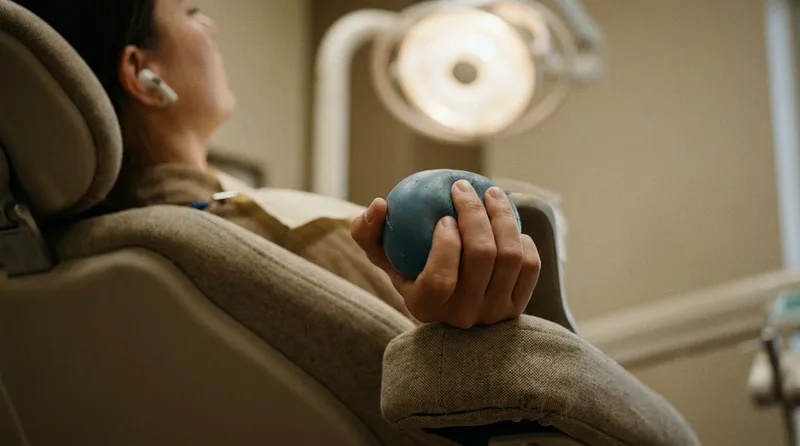
Distraction works by giving your brain something else to focus on. That's why simple tricks often help more than you'd expect:
Your dentist can help too. Working quickly in short bursts, using smaller X-ray sensors, keeping instruments away from the back of the tongue when possible, and suctioning saliva often all reduce triggers.
Many offices also keep topical numbing gel or spray on hand. A little on the back of the tongue or palate can dull the sensation for short procedures like X-rays. Ask whether it's an option for you.
If you do gag, don't apologize. It's a reflex. Take a breath, rinse if you need to, and carry on when you're ready.
Yes, in many cases. Digital intraoral scanners capture a 3D model of your teeth with a small wand instead of a tray of putty, which is a common gag trigger. A 2023 randomized trial found children reported less gagging and more comfort with digital scans, and 75% preferred them.
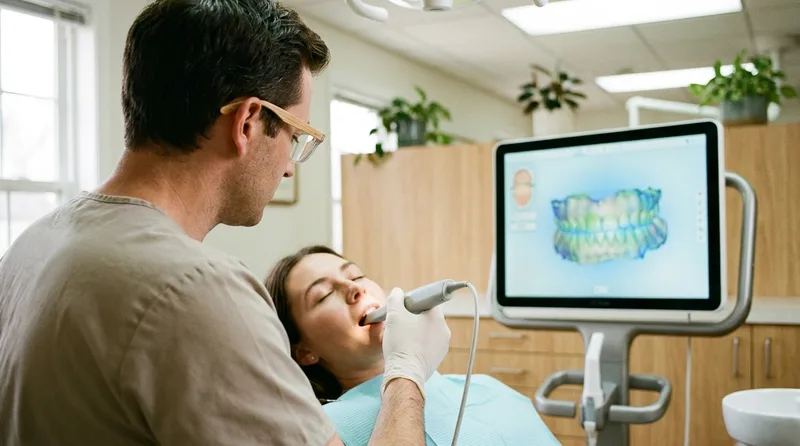
That trial, published in Orthodontics & Craniofacial Research by Bosoni and colleagues, compared alginate impressions with intraoral scans in 24 children ages 6 to 11. Scanning was also faster, by about 118 seconds on average, and caused fewer breathing difficulties.
| Factor | Traditional impression | Digital scan |
|---|---|---|
| What goes in your mouth | Tray filled with soft putty | Small handheld wand |
| Gag trigger | Material can flow toward the throat | Lower, nothing pools at the back |
| Breaks | Must hold still until it sets | Can pause and resume anytime |
| Taste and smell | Noticeable for some people | None |
The ability to pause is the big one for people who gag. With a scan, the dentist can stop, let you breathe, and pick up right where they left off. Not every procedure can use a scan, so ask your dentist which parts of your treatment can.
Scans show up in more treatments than people expect. They're used for crowns, clear aligners, night guards, sports mouthguards, and implant planning. If a past impression left you dreading the next one, it's worth asking whether a scan can take its place this time.
Sedation is a good option when breathing tricks and breaks aren't enough, or when you have a longer procedure ahead. Nitrous oxide, often called laughing gas, is the most common choice. The ADA explains you breathe it through a small nose mask, stay awake, and feel the effects wear off soon after.
Nitrous oxide was one of the methods the 2023 Journal of Dentistry review found effective for gag control. Because it relaxes you without putting you to sleep, you can still follow simple instructions like "breathe through your nose" or "turn your head slightly."
For stronger gagging or anxiety, a prescribed oral sedative taken before the visit offers a deeper sense of calm. You'll stay awake and responsive, but you'll need a ride home. Deeper IV sedation is generally handled by oral surgery offices when a case truly calls for it.
Not sure which option fits? Think about what usually sets you off. If it's one specific step, like an X-ray or impression, nitrous oxide for just that part of the visit may be plenty. If the whole appointment feels hard from the moment you sit down, a deeper option might make more sense. Your dentist can help you decide.
Sedation also has a long-term payoff. If gagging has kept you from routine cleanings, getting back on schedule matters, because Americans who visit a dentist regularly are 60% less likely to lose teeth, according to the Journal of Dental Research.
We start by listening. Tell us what triggers your gag reflex, and we'll plan the visit around it with breaks, a stop signal, and gentler techniques. We use digital intraoral scanners instead of putty impressions for many treatments, and we offer nitrous oxide and oral sedation when you need extra help.
Our comfort and sedation options are designed for exactly this: a sensitive gag reflex, dental anxiety, or longer appointments. Nitrous oxide wears off within minutes so you can usually drive yourself home, while oral sedation offers deeper calm for bigger visits.
We also see many families, so if your child gags easily, let us know. Short, positive visits and calm explanations go a long way with kids.
And if it's been a while since your last visit because of gagging, that's okay. We'll start with whatever feels manageable, even if that's just a conversation and a look, and build from there at your pace.
Calming a sensitive gag reflex is mostly about having a plan. Tell your team, breathe through your nose, use the tools that help, and remember that a reflex is nothing to be embarrassed about.
Results may vary. Please consult with your dentist at Peterborough Family Dental for personalized treatment recommendations.
A visit planned around your gag reflex
Tell us what triggers it, and we'll use breaks, digital scans, and comfort options to make your visit easier. Call (603) 924-3664 or request a visit online.
Request an Appointment →
Dr. Muhammad Rahim, DMD
Dentist · Peterborough Family Dental & Implant Center
Peterborough, NH dentist providing gentle general, cosmetic, restorative, and implant dentistry for the whole family.
Was this article helpful?
Brushing is predictable and you control it, while dental instruments, X-ray sensors, and impression trays reach further back and move unexpectedly. Anxiety about the visit can also make the reflex quicker to fire, which is why gagging is often worse in the dental chair than at home.
Our Peterborough team is happy to answer questions and get you on the calendar.


