
Back to all articlesDental Implants Dr. Muhammad Rahim, DMDNovember 9, 202611 min read
Can You Get Dental Implants With Bone Loss? Your Options
Dr. Muhammad Rahim, DMDNovember 9, 202611 min read
Loading blog post
Dr. Muhammad Rahim, DMDNovember 9, 202611 min readCall and you'll reach a real person on our team: no phone tree, no hold music. We'd genuinely love to help.
(603) 924-3664Rather write to us? Contact us
Can you get dental implants with bone loss? For many people, yes, even when another dentist has said otherwise. Bone loss is one of the most common reasons patients put off implants, and it's also one of the most workable. At Peterborough Family Dental & Implant Center in Peterborough, NH, we place and restore dental implants, and we see patients every week who were told they didn't have enough bone.
About 120 million Americans are missing at least one tooth, according to the American College of Prosthodontists, and bone shrinks in the spaces where teeth used to be. That's why the question comes up so often.
This guide explains why bone loss happens, how much bone an implant needs, what grafting and reduced-bone designs can do, and how to find out where you stand.
Yes, many people can get dental implants with bone loss, though the amount and location of bone decide the plan. Bone grafting can rebuild height or width, and designs like All-on-4 can work around thinner areas. A 3D scan measures your bone and shows which route fits before any treatment begins.
Three outcomes are common after a scan. Some patients have plenty of bone and move straight to implants. Others need a graft first or during placement. A smaller group needs a design that avoids the thinnest areas entirely.
If you've been told no before, ask what that answer was based on. A flat X-ray, a quick look, or an unfamiliar technique can all lead to a more cautious answer than a 3D scan and a full plan would. Bone also varies by location, so the front and back of your jaw can tell different stories.
The key point is that "bone loss" isn't a verdict. It describes a starting condition, and the real answer depends on numbers only a scan can give you.
Jawbone loss happens when the bone no longer gets the stimulation of tooth roots, or when gum infection, long-term dentures, or injury wear it down. The jaw behaves like muscle in one way. It stays strong when it's used and shrinks when it isn't. Tooth loss is the most common trigger.
Gum disease deserves special attention. The CDC reports that 42% of adults aged 30 and older have some form of periodontal disease, and the National Institute of Dental and Craniofacial Research explains how gum infection affects the tissue and bone that support teeth. Treating it early is one of the most effective ways to protect the bone you have.
An implant needs enough bone in height and width to hold the post steady while it heals, plus safe distance from nerves and sinuses. There's no single number that fits everyone. Your dentist measures your own bone on a 3D scan and plans the post to match.
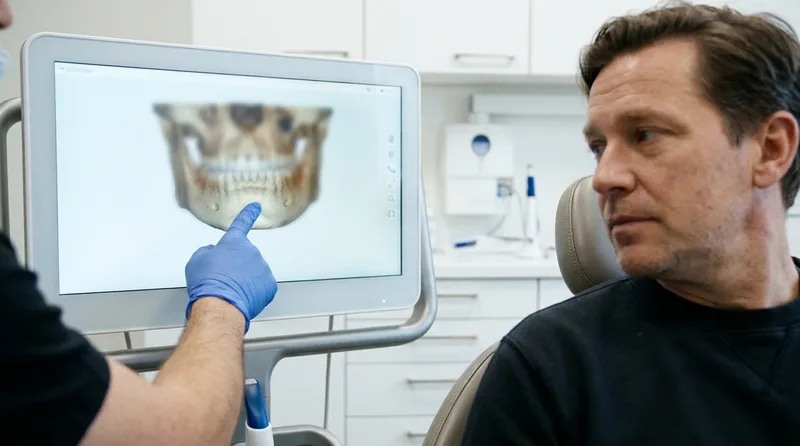
Mayo Clinic's overview of implant surgery notes that bone grafting may be needed when the jawbone isn't thick enough or is too soft to hold an implant. That's the same logic we follow at our office.
Soft bone matters as much as thin bone. Density affects how firmly a post can hold, which is why dentists look at quality as well as quantity on the scan. The back of the upper jaw tends to have softer bone than the lower jaw, so planning differs by area.
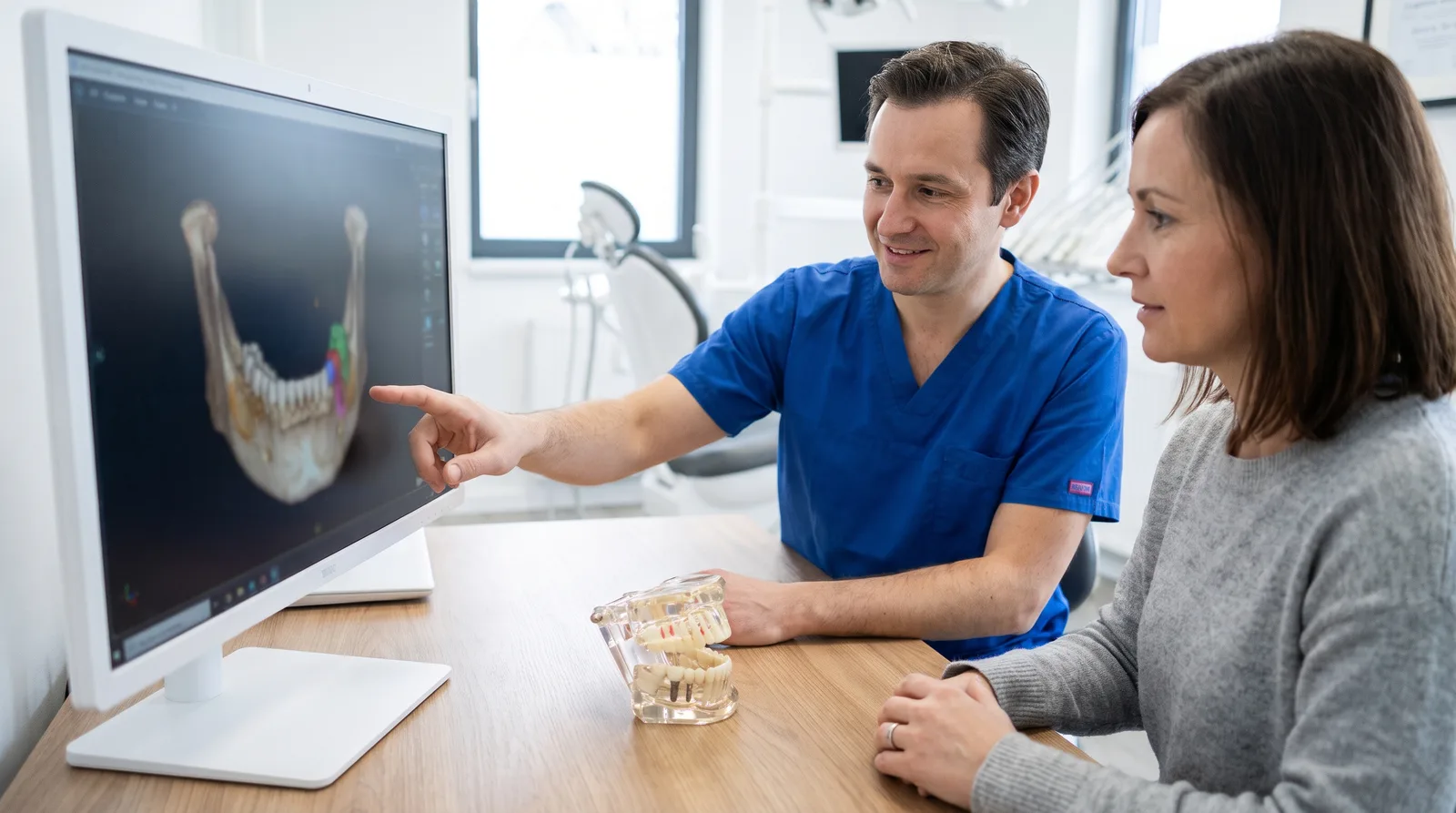
A regular X-ray shows a flat picture. A 3D CBCT scan shows depth, so your dentist can see bone volume, nerve paths, and the position of your sinuses. That detail turns a guess into a plan.
Wondering how much bone you have?
A short exam and 3D scan at our Peterborough office will measure your bone and show your options. Consultations are free.
Request an Appointment →Bone grafting adds bone material to thin areas so they can support an implant. The graft blends with your own bone as it heals over a few months. In some cases the graft is placed during implant surgery, and in others it's done first with healing time between steps.
A graft isn't always a separate surgery. When only a small area needs support, your dentist may place graft material at the same visit as the implant, which saves a step. Grafting is also often done at the time a tooth is removed, to preserve the socket.
Graft material generally comes from a few categories, and your dentist chooses based on your situation.
Many patients are surprised to learn that a graft can turn a "no" into a "yes." It adds steps and time, but it often makes implants possible where they otherwise wouldn't be. Our guide to bone grafting after tooth extraction explains the process in more detail.
Grafts heal at different speeds depending on the size of the area and your health. Your dentist checks healing with follow-up visits, and sometimes a second scan, before placing the implant. That patience is what helps the implant last.
Designs like All-on-4 and implant-supported dentures can work with less bone than one implant per tooth would need. All-on-4 angles the back implants to use the stronger bone available, which is why it often suits patients who were told they lack bone for single implants.
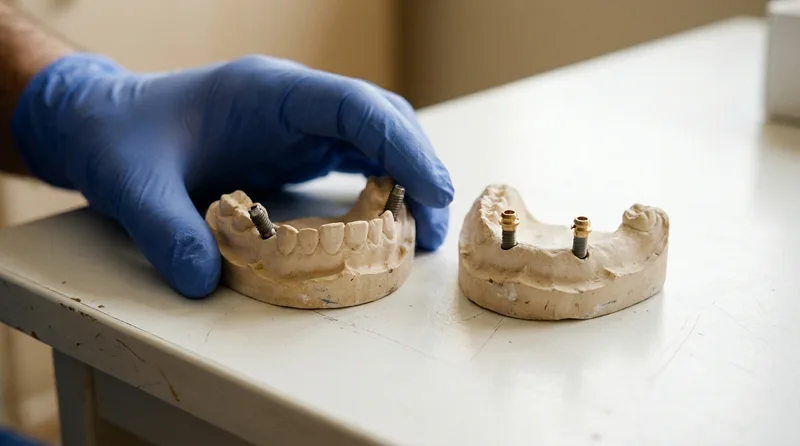
The right design depends on where your bone is thinnest. Your dentist may also consider shorter or narrower implants in some cases, or a graft to add height or width.
A fixed full arch spreads chewing forces across several implants, which can help when bone is limited. Your dentist weighs that against the cost and time of grafting for your case.
The American Academy of Implant Dentistry reports that implant-supported teeth can restore up to 90% of natural chewing power. That benefit is often what makes the extra planning worthwhile.
Years in conventional dentures usually mean thinner bone, but many long-term denture wearers still qualify for implants. A 3D scan shows how much bone remains. Many patients are candidates for implant-supported dentures or All-on-4 even after decades without natural teeth.
Dentures rest on the gums and don't stimulate bone the way tooth roots or implants do. That's why jawbone often shrinks beneath them. It's also why dentures loosen over time and need relines or replacement.
If you wear a denture now, ask your dentist to check how well it fits your bone today. A scan can also show whether a modified denture could serve as your temporary teeth while implants heal, so you don't go without.
If your denture slips, clicks, or makes eating hard, you may be a good candidate for a better option. We'd rather check than assume. Even patients who were told years ago that they couldn't have implants sometimes qualify now, because techniques and planning tools have improved.
Wearing dentures that no longer fit?
Send us a note and our team will explain how a scan can show whether implants could work for you.
Contact Our Office →Yes, all three can affect bone and healing. Gum disease destroys the bone that supports teeth, while smoking and poorly controlled diabetes slow healing and raise the chance of complications. Treating gum disease and managing health factors protect your bone and your results.
Bring your latest blood sugar readings or a list of medications to the first visit, since that helps your dentist give you a realistic plan rather than a general answer. That doesn't mean you're ruled out. It means your dentist plans with those factors in mind. Our guide to implants for smokers and people with diabetes explains how each factor affects healing and what you can do before surgery.
Diabetes and gum disease also interact. Diabetes makes gum disease harder to manage, and untreated gum disease can make blood sugar harder to control. If either applies to you, treating gums first protects both your health and your bone.
Regular care protects what you have. The Journal of Dental Research reports that people who see a dentist regularly are 60% less likely to lose teeth, and the ADA notes that regular visits can catch 80% of oral health issues before they become serious. Catching gum problems early keeps more bone in place.
Treatment with bone loss takes longer than a straightforward implant because grafting and healing add stages. Plan on several months to a year or more from first visit to final teeth, depending on the steps involved. Your dentist gives a timeline once your scan shows what you need.

| Stage | Typical timing | What it does |
|---|---|---|
| Gum treatment, if needed | Done first, with healing time | Controls infection that can damage bone |
| Bone graft | Several months of healing in many cases | Rebuilds height or width before or during placement |
| Implant placement | Surgery visit, sometimes combined with grafting | Posts are set into the stronger bone |
| Healing | Several months as the bone bonds to the posts | You wear temporary teeth or a modified denture |
| Final teeth | Made and fitted after healing | A scan and bite check guide the fit |
That timeline is a general guide. Some patients combine steps and move faster. Others need more healing between stages. A good plan shows each stage in writing, so you know what comes next and why.
During healing you aren't left without teeth. Temporary options such as a modified denture or fixed temporary teeth keep you eating and smiling. Nerves are normal, and BMC Oral Health (2024) reports that 36% of Americans have dental anxiety. The Journal of Dental Anesthesia reports that sedation dentistry has helped 75% of fearful patients keep up with regular visits, and we offer nitrous oxide and oral sedation.
Questions about your own timeline?
Call our Peterborough office and we'll explain what treatment could look like for your bone.
Call (603) 924-3664 →Get a second opinion with a 3D scan, because a different dentist may offer options you weren't shown. Dentists differ in their scanning tools, grafting experience, and design choices. It costs nothing at our office, and you're under no pressure to switch.
Bring whatever you have. Recent X-rays, a written treatment plan, and a list of medications help us work faster. If it's comparable care, we match the price of your existing quote.
The Journal of Oral and Maxillofacial Surgery reports implant success rates of 95-98% over 10 years, and careful planning around bone is a big part of that result.
Book a consultation and 3D scan before assuming bone loss rules you out. The scan shows exactly what your jaw can support, and a written plan shows the steps, the timing, and the cost. Waiting longer can mean less bone, so earlier answers usually give you more options.
We welcome patients from Peterborough, Jaffrey, Dublin, Hancock, and across the Monadnock region, with early-morning hours from 7 AM Monday through Thursday. Bring your questions to Dr. Muhammad Rahim or Dr. Jasper Ainslie. If you request a time online, a real person from our team replies the same business day to confirm your visit.
Results may vary. Please consult with your dentist at Peterborough Family Dental for personalized treatment recommendations.
Find out what your bone can support
Request an appointment at Peterborough Family Dental & Implant Center for an exam, a 3D scan, and a clear written plan.
Request an Appointment →Prefer to talk first?
Call (603) 924-3664 →
Dr. Muhammad Rahim, DMD
Dentist · Peterborough Family Dental & Implant Center
Peterborough, NH dentist providing gentle general, cosmetic, restorative, and implant dentistry for the whole family.
Was this article helpful?
Often, yes, but it may take more steps. Severe loss may call for bone grafting first, or for a design such as All-on-4 that works around thinner areas. A 3D scan shows what your bone can support, so a first visit is the only way to know.
Our Peterborough team is happy to answer questions and get you on the calendar.


