
Back to all articlesDental Implants Dr. Muhammad Rahim, DMDNovember 8, 202611 min read

Dental Implants vs Dentures: Which Is Right for You?
Dr. Muhammad Rahim, DMDNovember 8, 202611 min read
Loading blog post
Dr. Muhammad Rahim, DMDNovember 8, 202611 min readCall and you'll reach a real person on our team: no phone tree, no hold music. We'd genuinely love to help.
(603) 924-3664Rather write to us? Contact us
Choosing between implants vs dentures is one of the biggest decisions you'll make about missing teeth. Both can restore your smile and your ability to eat. But they work very differently. At Peterborough Family Dental & Implant Center in Peterborough, NH, we place and restore dental implants and we also make dentures, so we have no reason to steer you toward one over the other.
About 120 million Americans are missing at least one tooth, according to the American College of Prosthodontists. Many of them spend months comparing options and second-guessing themselves. That's understandable. The choice affects how you eat, how you speak, and how much you spend over the next decade.
This guide lays out the real differences in comfort, chewing, upkeep, lifespan, and eligibility. You'll also see the middle-ground options, so you can walk into a consultation with better questions.
Dental implants are small titanium posts placed in the jawbone to hold a crown, a bridge, or a full arch of teeth. Dentures are removable teeth that rest on your gums. Implants replace the root as well as the tooth, while dentures replace only the part you can see.
That root difference drives almost everything else. A post placed in the jaw gives your replacement teeth a foundation. Dentures never get that. As MouthHealthy, the ADA's patient site explains in its denture guide, they rest on the gums and need adjustment as your mouth changes, which is why anything anchored in bone behaves more like a natural tooth.
After the area is numbed with a local anesthetic, the dentist places a titanium post in the bone. Over the following months, the bone bonds to the post. Then a custom crown, bridge, or denture attaches on top. Our team uses a 3D scan beforehand so the post goes exactly where your bone can support it.
Dentures are made from impressions of your mouth and rest on the gum ridge. Complete dentures replace an entire arch. Partial dentures fill gaps and clip onto remaining teeth. Suction, adhesive, or clasps keep them in place.
Implants offer firmer stability, stronger chewing, and support for the jawbone, while dentures offer a lower starting cost, no surgery, and a shorter timeline. Neither is better for everyone. The table below shows where each one wins so you can weigh what matters most to you.
| Feature | Dental implants | Dentures |
|---|---|---|
| Stability | Anchored in the jawbone, so teeth don't shift | Rest on the gums and can move when you chew or talk |
| Chewing strength | Can restore up to 90% of natural chewing power | Usually lower than natural teeth, especially on the lower jaw |
| Procedure | Minor oral surgery plus healing time | No surgery for most patients |
| Treatment time | Several months in many cases, faster with immediate options | Usually a few visits over several weeks |
| Jawbone | The post helps keep bone in place where it sits | Doesn't stimulate the bone, which can shrink over time |
| Daily care | Brush and floss like natural teeth | Remove, clean, and soak every day |
| Upfront investment | Higher | Lower |
| Long-term outlook | Post can last for decades, crown may need replacing | Often relined or replaced about every 5-7 years |
Notice the trade-off. Implants ask more of you at the start: surgery, healing time, and a bigger investment. Dentures ask more of you every day, through cleaning, adjusting, and living with some movement. Which burden you'd rather carry is a personal call.
Not sure which side of the table fits you?
A short exam and 3D scan at our Peterborough office show which options your bone and gums can support. Consultations are free.
Request an Appointment →Implants usually feel closest to natural teeth because they don't move, so you can bite into firm foods and talk without worrying about slipping. Dentures can feel natural once you adjust, but they rest on soft gum tissue, so they shift more during chewing and speaking.

In the implants vs dentures debate, chewing comfort is the point patients raise most. The American Academy of Implant Dentistry reports that implant-supported teeth can restore up to 90% of natural chewing power. Conventional dentures typically restore much less, which is why many wearers avoid corn on the cob, crusty bread, and raw apples.
Most people need a few weeks to adjust. Some things never fully go away, though. A lower denture floats more than an upper one because the tongue pushes against it.
Mostly, they stop noticing. Implant teeth are brushed, flossed, and chewed with like natural ones. Early on, the bite may feel slightly different until the final crown is in place. That settles quickly.
Implants need the same routine as natural teeth: brushing twice a day, flossing, and regular checkups. Dentures need more handling, including daily removal, cleaning, and overnight soaking. Both need professional visits, because implants can develop gum inflammation and dentures can lose their fit as your jaw changes.
Denture care is a real daily commitment. Skip it and you risk stains, odor, and gum irritation. Here is the routine most dentists recommend.
Implants have their own watch-list. Gum health matters, since the CDC reports that 42% of adults aged 30 and older have some form of periodontal disease. Gum inflammation around an implant, called peri-implant mucositis, is usually reversible when caught early. Regular visits help too, since the Journal of Dental Research reports that people who see a dentist regularly are 60% less likely to lose teeth.
Already wearing dentures that don't fit well?
Dr. Muhammad Rahim and Dr. Jasper Ainslie can check the fit, adjust it, or talk through upgrade options with you.
Contact Our Office →Implants often cost more up front but can last for decades, while dentures cost less at first and usually need relining or replacement about every 5-7 years. Comparing cost per year, instead of only the first bill, gives you a fairer picture of what each option really costs.
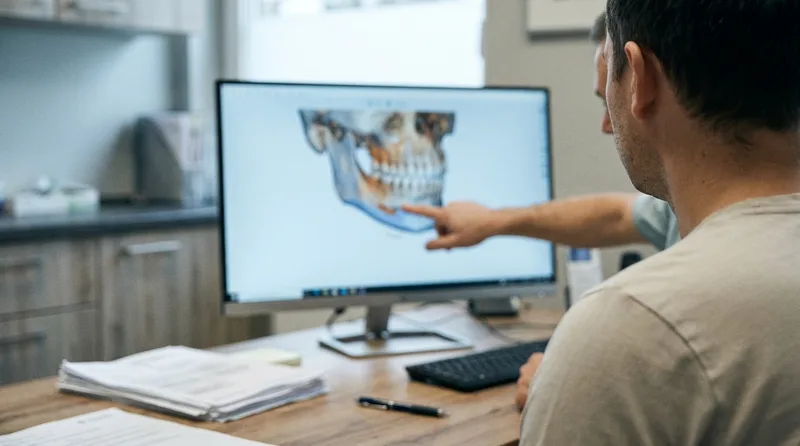
The implants vs dentures cost question looks different over ten years than it does on day one. Research published in the Journal of Oral and Maxillofacial Surgery reports implant success rates of 95-98% over 10 years. The titanium post tends to be the long-lived part. The crown on top may need replacing after years of chewing, and that costs far less than starting over.
Dentures follow a different pattern. The jawbone changes shape after tooth loss, so dentures loosen. Relines, adjustments, adhesive, and eventual remakes add up. Our dental implant cost guide walks through what shapes the price of implants, so you can compare with real context.
Every treatment plan comes in writing, with insurance estimates applied, before anything begins.
Good implant candidates have healthy gums, enough jawbone, and good general health, while dentures suit people who can't or don't want surgery. Most adults qualify for at least one option, and a 3D scan plus a medical history review shows which one fits.
Mayo Clinic's overview of implant surgery notes that conditions such as diabetes and habits such as smoking can affect healing, so your dentist reviews your history first. That doesn't automatically rule you out. It shapes the plan.
Bone loss is the most common worry. Years without teeth can thin the jaw. Grafting can rebuild it, and some full-arch designs work with reduced bone. Don't assume you've been ruled out until you've had a scan.
Questions about your own situation?
Call our Peterborough office and we'll help you figure out whether implants, dentures, or a mix makes sense.
Call (603) 924-3664 →Yes, implant-supported dentures and All-on-4 full-arch restorations sit between the two. Both use a small number of implants to anchor a full set of teeth, which gives you more stability than conventional dentures without needing one implant for every missing tooth.
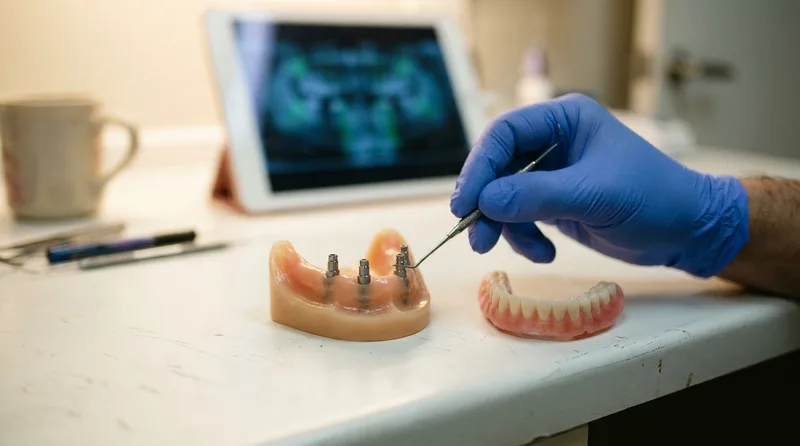
For many patients with a loose lower denture, this is the turning point. Two to four implants change how the whole arch feels.
Nervous about the process? You're far from alone, since BMC Oral Health (2024) reports that 36% of Americans have dental anxiety. The Journal of Dental Anesthesia reports that sedation dentistry has helped 75% of fearful patients keep up with regular visits.
We offer nitrous oxide and oral sedation, so you can stay relaxed through longer visits. Patients drive in from Jaffrey, Dublin, Hancock, Rindge, and across the Monadnock region for this kind of care.
Ask what you're a candidate for, what each option costs over ten years, how long treatment takes, and what happens if something needs repair. Clear answers to those four questions make the decision far easier, and any good dentist will welcome them.
Bring a short list to the visit. Write down your top three worries, whether that's cost, surgery, or how your teeth will look, and ask the dentist to address each one directly. You shouldn't feel pressure at any step. A good plan makes sense on paper before it makes sense in the chair.
The honest answer to implants vs dentures is that neither wins for everyone. What matters is your bone, your gums, your health, and what you want to eat and do without thinking about your teeth. A short exam and a 3D scan replace guesswork with facts.
If you live in Peterborough or anywhere nearby, bring your questions and any existing treatment plan to Dr. Muhammad Rahim or Dr. Jasper Ainslie. Book a free consultation and leave with a clear plan, in writing. The right answer for your neighbor may not be the right answer for you, and that's exactly why the first visit matters.
Results may vary. Please consult with your dentist at Peterborough Family Dental for personalized treatment recommendations.
Ready to compare your options in person?
Request an appointment at Peterborough Family Dental & Implant Center and get a clear, written plan for implants, dentures, or both.
Request an Appointment →Prefer to talk it through first?
Call (603) 924-3664 →
Dr. Muhammad Rahim, DMD
Dentist · Peterborough Family Dental & Implant Center
Peterborough, NH dentist providing gentle general, cosmetic, restorative, and implant dentistry for the whole family.
Was this article helpful?
Not always. Implants offer more stability and help preserve bone, but they need surgery, healing time, and a higher upfront investment. Dentures suit patients who can't have surgery or want a faster, lower-cost start. The better choice depends on your bone, health, and goals.
Our Peterborough team is happy to answer questions and get you on the calendar.


