
Back to all articlesDental Implants Dr. Muhammad Rahim, DMDNovember 8, 202611 min read

Can You Get Dental Implants If You Smoke or Have Diabetes?
Dr. Muhammad Rahim, DMDNovember 8, 202611 min read
Loading blog post
Dr. Muhammad Rahim, DMDNovember 8, 202611 min readCall and you'll reach a real person on our team: no phone tree, no hold music. We'd genuinely love to help.
(603) 924-3664Rather write to us? Contact us
Wondering about dental implants if you smoke or have diabetes? You're not alone, and the answer is usually more hopeful than people expect. At Peterborough Family Dental & Implant Center in Peterborough, NH, we plan and place dental implants for patients with all kinds of health histories, and we start every conversation by listening.
Here's the honest picture. Both smoking and diabetes can slow healing, and healing is what makes an implant work. That's why dentists plan more carefully for these patients. It's not a reason to assume the door is closed.
This guide explains how each one affects implants, what you can do to improve your odds, and what to expect if you're told to wait.
Often yes. Smoking and diabetes can both slow healing and raise the chance of complications, so your dentist plans more carefully, but neither one automatically rules you out. What matters most is how well your condition is managed, not the label itself.
The Journal of Oral and Maxillofacial Surgery reports implant success rates of 95-98% over 10 years, and that figure reflects careful patient selection. Dentists look at your gums, your bone, your medical history, and your habits together. Mayo Clinic's overview of implant surgery notes that chronic illnesses and smoking can slow healing, which is exactly why each person is evaluated individually.
Think of it as two groups. Patients whose diabetes is well controlled, or who pause nicotine around treatment, often move forward with a normal plan. Patients with unmanaged diabetes or ongoing heavy nicotine use may be asked to prepare first. Either way, you get an answer based on your own mouth.
Both conditions are common in adults, so dentists hear this question often. The first appointment is about understanding your situation, not about turning you away.
Smoking reduces blood flow to the gums and weakens the body's ability to fight infection, which slows healing around an implant and raises the chance of complications. Healing matters because the jawbone has to bond to the post. Anything that interrupts that process can affect the outcome.

Here's what dentists watch for in patients who smoke.
Vaping isn't a loophole. Nicotine in any form can reduce blood flow, so many dentists ask patients to treat vaping the same way as cigarettes. How much you use and for how long also matter. Ask your own dentist what applies to you.
Yes. Heavy, long-term use generally affects the tissues more than light or occasional use, and a recent quit gives the gums time to recover. Dentists look at the whole picture, including how long you've smoked and how your gums look today.
Healing is the first hurdle, but not the last. Nicotine can keep irritating the gums around an implant for years, so long-term habits matter too. That's why many dentists ask patients to stay nicotine-free after healing as well.
Not always, but most dentists strongly recommend stopping before surgery and through healing, because it gives the implant a better chance. Some practices make it a condition of treatment. The exact timeline depends on your dentist, your health, and the type of implant planned.
Quitting is hard, and no one at our office will lecture you about it. We would rather know where you are so we can plan realistically. If you slip, tell your team. Hiding it only makes healing harder to read.
Not ready to quit yet? Start the conversation anyway.
A consultation at our Peterborough office is free, and you'll get honest answers with no judgment.
Request an Appointment →Yes, many people with diabetes receive implants successfully, especially when blood sugar is well controlled. Poorly controlled diabetes slows healing and raises the chance of infection, so your dentist and physician may coordinate before surgery. Control matters more than the diagnosis itself.

Your dentist will ask about your diabetes at the first visit. That's routine. The goal is to time treatment for when your body can heal well.
Ask your dentist and your physician how to handle meals and medications on the day of treatment. Instructions differ from person to person, so don't guess.
Then the plan usually changes, not the goal. Your dentist may suggest waiting on the implant while you work with your physician, and treating gum disease or placing a temporary replacement in the meantime. Once your readings improve, planning picks back up.
Diabetes and gum disease feed each other, which matters because infected gums can damage the bone around an implant. Diabetes makes gum disease harder to manage, and untreated gum disease can make blood sugar harder to control. Treating gums first protects both your health and your implant.
The CDC reports that 42% of adults aged 30 and older have some form of periodontal disease, so this is common. The American Academy of Periodontology describes gum disease as a bacterial infection of the tissue and bone that support teeth, and similar infections can affect the tissue around an implant.
The usual first step is a deep cleaning, which our guide to scaling and root planing explains in detail. After that, maintenance visits every three to four months keep bacteria under control. Our guide on how often to see the dentist shows how your risk sets the schedule.
Regular care also pays off in the long run. The Journal of Dental Research reports that people who see a dentist regularly are 60% less likely to lose teeth, and the ADA notes that regular visits can catch 80% of oral health issues before they become serious.
Have diabetes and bleeding gums?
Send us a note and our team will tell you what to bring and what to expect at your first visit.
Contact Our Office →Control your blood sugar, pause nicotine, treat gum disease, and keep up daily cleaning. Each step improves healing, and together they can turn a maybe into a yes. Start well before surgery, since several of these take weeks or months to show results.
| Factor | Why it matters | What you can do |
|---|---|---|
| Nicotine | Reduces blood flow and slows healing | Pause cigarettes and vaping, and ask your physician about quit support |
| Blood sugar | Poor control slows healing and raises infection risk | Work with your physician and bring recent readings to your visit |
| Gum health | Infection near an implant can damage the bone around it | Get a deep cleaning if advised and keep maintenance visits |
| Home care | Plaque buildup irritates the tissue around each post | Brush twice daily and clean between teeth every day |
| Night grinding | Clenching adds stress to implant crowns | Ask your dentist whether a night guard makes sense |
Small wins count. Even partial progress gives your dentist more to work with, and it shows up in how your gums look at the next visit.
Your treatment may include extra planning, closer follow-up visits, and coordination with your physician, but the procedure itself is the same. Local anesthetic numbs the area, and sedation is available for nervous patients. Your dentist watches healing more closely to catch small problems early.
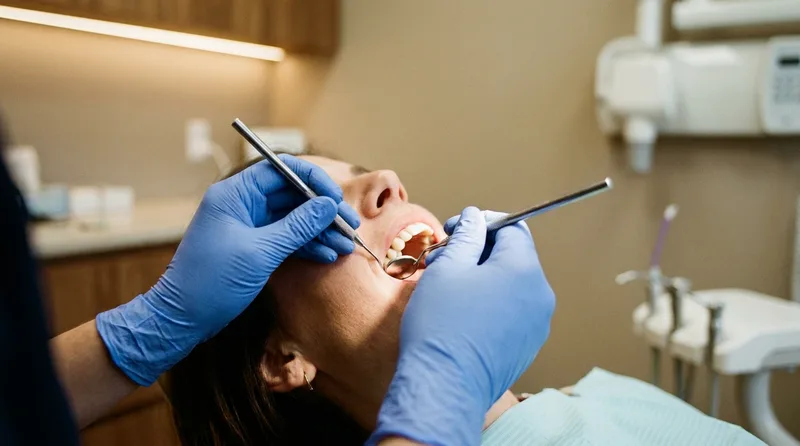
Home care becomes part of the treatment plan. Expect specific instructions about cleaning around the site, what to eat early on, and when to call if something doesn't look right.
Nervous about it? That's common. BMC Oral Health (2024) reports that 36% of Americans have dental anxiety, and the Journal of Dental Anesthesia reports that sedation dentistry has helped 75% of fearful patients keep up with regular visits. We offer nitrous oxide and oral sedation.
Questions about your own situation?
Call our Peterborough office and we'll explain what planning looks like for your health history.
Call (603) 924-3664 →Long-term care comes down to daily cleaning, regular professional visits, and steady management of your health, because the same factors that affect healing also affect how well an implant holds up over time. Your dentist may suggest maintenance visits every three to four months if you have a history of gum disease.
If you grind your teeth, bring your night guard to cleanings or ask whether one would help, since clenching adds stress to implant crowns.
Learn the early warning signs, too. Bleeding gums, swelling, a bad taste, or a crown that feels loose all deserve a call. Early gum inflammation around an implant is often reversible, while a delayed visit can allow bone loss. The American Academy of Implant Dentistry reports that implant-supported teeth can restore up to 90% of natural chewing power, which is well worth protecting.
Waiting is often a smart step rather than a setback, because it lets your gums and health settle before surgery. If implants aren't right for you, bridges and dentures can restore your smile, and many patients add implants later. A second opinion costs nothing at our office.
Being told to wait can feel discouraging. But a plan with a start date beats a rushed procedure that struggles to heal. A temporary or traditional replacement also keeps you eating and smiling comfortably while you prepare, so waiting doesn't mean living with gaps.
If another dentist told you no, bring your records and treatment plan. If it's comparable care, we match the price on your existing quote.
Book a consultation, tell your dentist the full picture, and plan around it. An honest history lets the team build a realistic timeline instead of guessing. Whether you smoke, have diabetes, or both, you'll leave with facts and a written plan.
We welcome patients from Peterborough, Jaffrey, Dublin, Hancock, and across the Monadnock region, with early-morning hours from 7 AM Monday through Thursday. Bring your questions to Dr. Muhammad Rahim or Dr. Jasper Ainslie. A list of your medications, your latest blood sugar readings if you have diabetes, and any questions about quitting or cutting back will save time and help the dentist plan.
If you request a time online, a real person from our team replies the same business day to confirm your visit.
Results may vary. Please consult with your dentist at Peterborough Family Dental for personalized treatment recommendations.
Get a plan that fits your health
Request an appointment at Peterborough Family Dental & Implant Center for an exam, a 3D scan, and a clear written plan.
Request an Appointment →Prefer to talk first?
Call (603) 924-3664 →
Dr. Muhammad Rahim, DMD
Dentist · Peterborough Family Dental & Implant Center
Peterborough, NH dentist providing gentle general, cosmetic, restorative, and implant dentistry for the whole family.
Was this article helpful?
Possibly, but even occasional nicotine use can affect healing, so tell your dentist exactly how often you smoke or vape. Many dentists ask for a complete pause around surgery. Your timeline depends on your health, your bone, and the type of implant planned.
Our Peterborough team is happy to answer questions and get you on the calendar.


