Back to all articlesemergency-dentistry Dr. Muhammad Rahim, DMDNovember 24, 202610 min read
Dental Emergency Kit: What to Keep at Home and in the Car
Dr. Muhammad Rahim, DMDNovember 24, 202610 min read
Loading blog post
Dr. Muhammad Rahim, DMDNovember 24, 202610 min readCall and you'll reach a real person on our team: no phone tree, no hold music. We'd genuinely love to help.
(603) 924-3664Rather write to us? Contact us
Dental emergencies rarely happen at a convenient time. A tooth gets knocked out at a soccer game, a crown comes off during dinner, or a toothache starts on a weekend. Having a simple dental emergency kit ready means you can act in the first few minutes, which is often what decides whether a tooth can be saved. At Peterborough Family Dental & Implant Center in Peterborough, NH, we provide family, restorative, and emergency dentistry, and we'd rather you were prepared than panicked.
This guide shows what to pack in a dental emergency kit for home and the car, what to do for the most common emergencies, when to go to the ER, and how to avoid some emergencies altogether.
A dental emergency kit is a ready-to-grab collection of items for the first minutes after a tooth injury. It doesn't replace your dentist. It protects a tooth, controls swelling or bleeding, and gets you to care in better shape. The ADA's guide to dental emergencies says knowing what to do can mean the difference between saving and losing a tooth.
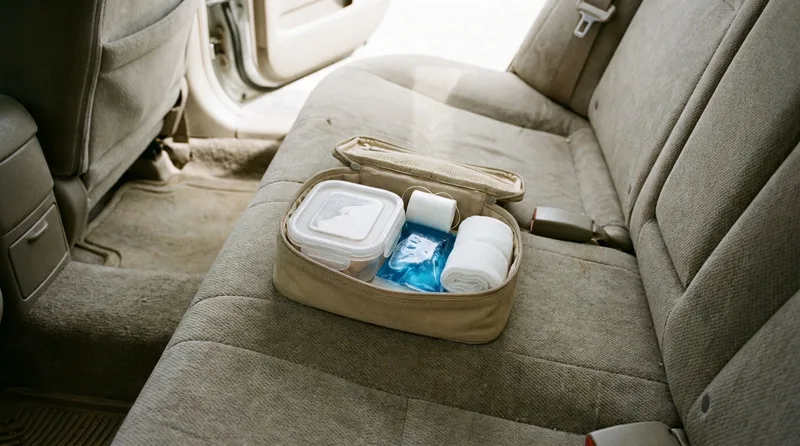
Think about where emergencies happen: at the dinner table, on the field, in the car on a road trip. A kit that lives in only one place is only useful in one place. The kit is simple, inexpensive to assemble, and takes up the space of a lunch bag. Keep one at home, and keep a smaller one in the car or in your sports bag, since many injuries happen away from home.
It's also worth including the family. If you have children who play sports, the kit belongs in the bag they carry, not just in the bathroom cabinet.
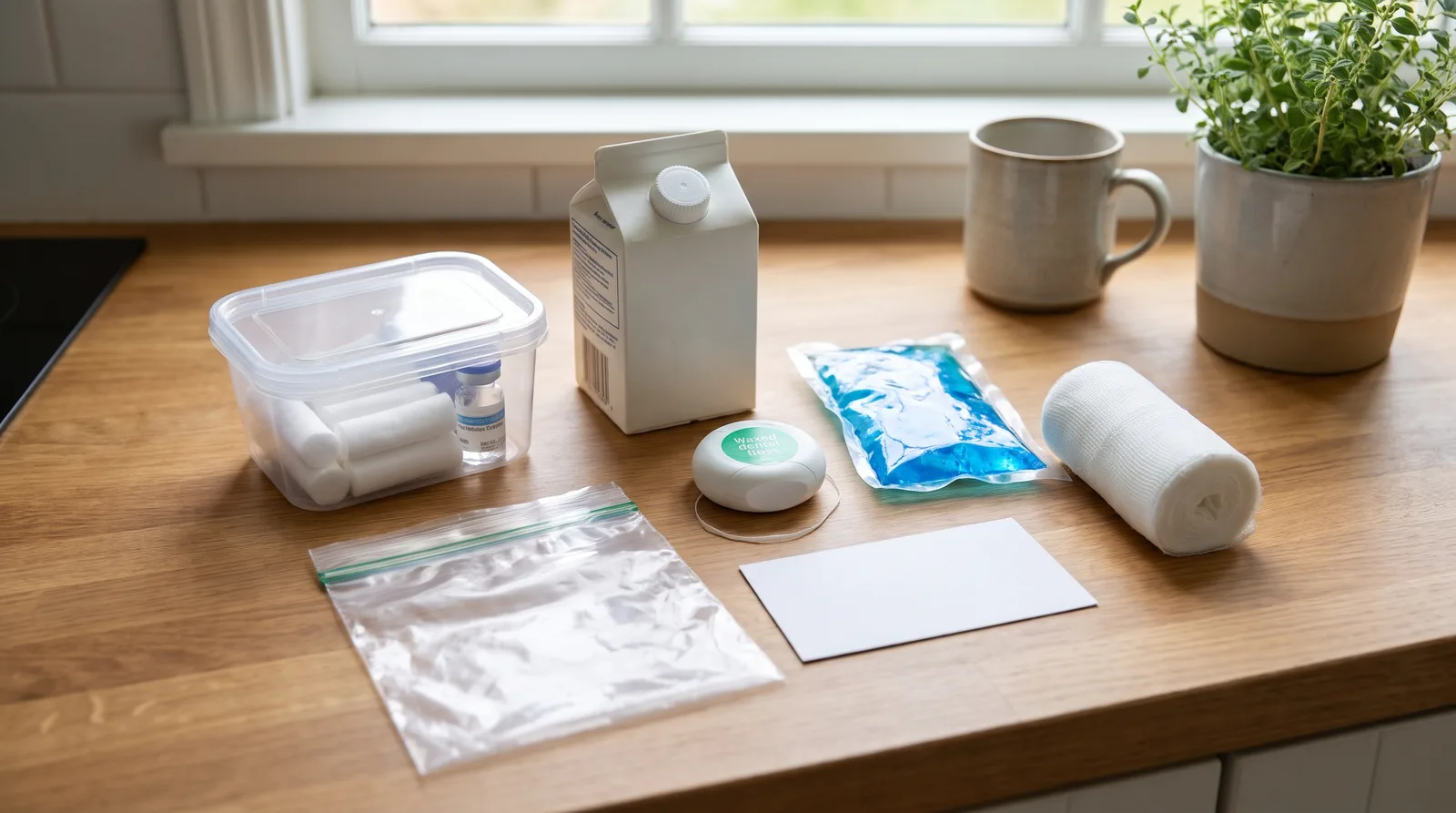
A good kit includes a small lidded container, milk or an ADA-approved tooth preservation product, floss, a cold pack, clean gauze, a zip bag, and our phone number. Every item has a specific job, from keeping a knocked-out tooth moist to controlling swelling. Nothing here needs a prescription, and almost everything is already in your home.
| What to pack | What it's for |
|---|---|
| A small container with a tight lid | Keeping a knocked-out tooth or broken pieces safe and moist |
| Milk, or a tooth preservation product with the ADA Seal of Acceptance | Keeping a knocked-out adult tooth moist until you reach the dentist |
| Dental floss | Gently removing food or an object stuck between teeth |
| A cold pack or cold compress | Keeping swelling down after a crack or a bitten lip or tongue |
| Clean gauze or a clean cloth | Applying firm pressure to bleeding |
| A small zip bag | Keeping a lost crown or filling, and any broken pieces |
| Our phone number, written down | Reaching us the moment you need us |
| A properly fitted mouthguard | Protecting teeth during sports and recreation |
Don't forget the people in your household: include a copy of each family member's allergy and medication list, and store the kit where adults can reach it quickly but young children cannot. The items come from the ADA's emergency guidance and from what we tell patients over the phone every week.
Keep the tooth moist at all times, and get to a dentist right away. The ADA says to try placing the tooth back in the socket without touching the root, and if that isn't possible, to place it between your cheek and gums, in milk, or in an ADA-approved tooth preservation product. Minutes matter, so call us on the way.
Our guide to a knocked-out tooth explains the steps in more detail. If the injury came with a head injury or a possible broken jaw, go to the ER first.
Save our number in your phone
Request an appointment or call (603) 924-3664, and tell us what's happened. We'll make a plan for you.
Request an Appointment →Rinse your mouth with warm water to clean the area, put a cold compress on your face to keep swelling down, and call us. Save any pieces you can find in your lidded container. The ADA gives the same advice, and our emergency dentistry page explains that repairs range from bonding to in-house crowns.
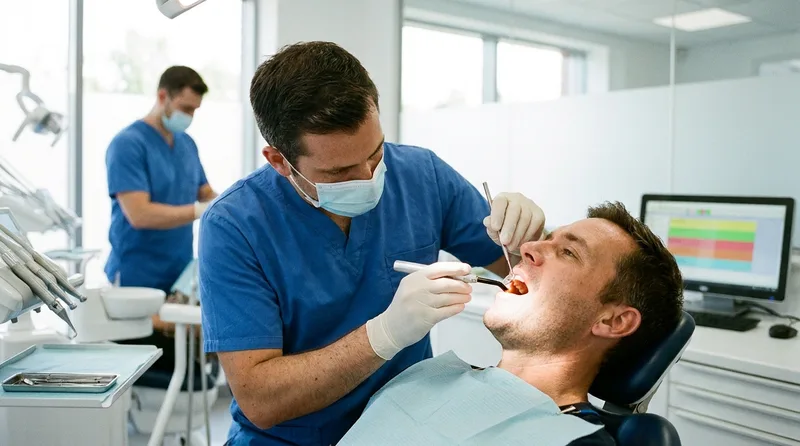
A crack isn't always visible, so see a dentist even if the tooth seems fine afterward. Our guide to cracked tooth symptoms explains the signs, and our guide to chipped tooth repair covers repair options.
If you bite your tongue or lip, clean the area gently with water and apply a cold compress, as the ADA advises. Most small bites heal quickly on their own, but bleeding that doesn't slow with firm pressure, or a deep or gaping cut, is a reason to seek care urgently. If the break is sharp, cover it gently with a clean piece of gauze to protect your tongue and cheek, and avoid chewing on that side until you've been seen.
Rinse your mouth with warm water, and gently use dental floss to remove any food caught between the teeth. The ADA says not to put aspirin on the aching tooth or gum tissue. For an object stuck in your mouth, try to remove it gently with floss, and never use sharp or pointed instruments.
Note when the ache started and what triggers it, since details help us decide how urgent it is. Swelling and infection never resolve on their own. Our guide to tooth abscess symptoms and guide to toothache at night explain what to watch for, and when a toothache can't wait.
Keep the crown or filling, put it in your zip bag, and call us. We can often remake a crown in our in-house lab, with many fixes finishing in one visit. Don't try to glue it back with household products. Protect the tooth by avoiding chewing on that side.
Our same-day crowns service explains how same-day crowns work, and our guide to what to do when a crown falls off covers what to do in the meantime. The tooth under a lost crown can be sensitive, so a quick call is worthwhile.
Bring the crown with you, along with any pieces. If a crown comes off with part of the tooth still attached, tell us on the phone, because it affects what we can do. If the tooth is broken as well as the crown being lost, tell us on the phone, so we can plan the right amount of time.
Go to the ER first for facial swelling that affects breathing or swallowing, bleeding that won't stop with firm pressure, a possible broken jaw, a head injury from the same accident, or a high fever with facial swelling. These can be life threatening. Call 911 or get to the emergency room, then call us for the dental follow-up.
If you're ever unsure whether it's an emergency, treat breathing, swallowing, and bleeding that won't stop as the priority and get to the ER first. The ADA also says to visit your dentist or an emergency room as soon as possible when you have a dental emergency. When in doubt, call us and describe what's happening, and we'll tell you honestly how urgent it is, at no charge.
You can prevent many emergencies with simple habits. The ADA recommends wearing a mouthguard for sports and recreation, avoiding chewing ice, popcorn kernels, and hard candy, which can crack a tooth, and using scissors, never your teeth, to cut things. Regular checkups also catch small problems early.
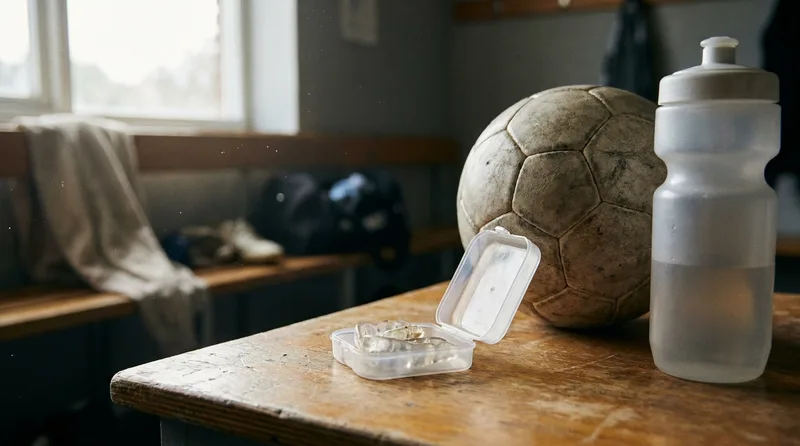
Children's sports are a common time for tooth injuries, so make mouthguards part of the gear bag. We make sports mouthguards for children and adults, and a fitted guard protects teeth far better than a one-size-fits-all option. The Journal of Dental Research reports that people who see a dentist regularly are 60% less likely to lose teeth, and the ADA notes that regular visits can catch 80% of oral health issues before they become serious.
The CDC reports that 42% of adults aged 30 and older have some form of periodontal disease, and NIDCR's guide to gum disease explains why early care matters. Our guide on how often to see the dentist explains how often to come in.
Call us first thing, describe what happened, and we'll make a plan. The earlier in the day you call, the more options we have to see you. We tell you honestly when we can see you and exactly what to do until then. Your first visit focuses on relief and stabilizing the problem, followed by a written plan.
We keep emergency visits comfortable, with a gentle pace and nitrous oxide available. BMC Oral Health (2024) reports that 36% of Americans have dental anxiety and 12% have extreme dental fear, and the Journal of Dental Anesthesia reports that sedation dentistry has helped 75% of fearful patients keep up with regular visits. Our comfort and sedation page and tips for nervous dental patients explain more. The American Academy of Cosmetic Dentistry reports that 99.7% of adults believe a smile is an important social asset, so we repair carefully.
Not sure how urgent it is?
Call and describe what's happening. We'll tell you how urgent it is and what to do, at no charge.
Contact Our Office →Build your kit this week, and save our number in your phone. Share the plan with everyone at home so anyone can act. If you're not yet a patient, request a visit now, so you have a dental home before you need one.
If you're not sure what's normal, call. A short conversation costs nothing and can save a tooth. A real person from our team replies to online requests the same business day. Our guide to when to call for a dental emergency explains when to call and when to go to the ER.
We welcome patients from Peterborough, Jaffrey, Dublin, Hancock, and across the Monadnock region, with early-morning hours from 7 AM Monday through Thursday. Bring your questions to Dr. Muhammad Rahim, Dr. Jasper Ainslie, or Dr. Nabeel Almaaz, and see our Meet Our Doctors page.
Results may vary. Please consult with your dentist at Peterborough Family Dental for personalized treatment recommendations.
Be ready before it happens
Request an appointment at Peterborough Family Dental & Implant Center and make us your dental home.
Request an Appointment →Have a dental emergency right now?
Call (603) 924-3664 →
Dr. Muhammad Rahim, DMD
Dentist · Peterborough Family Dental & Implant Center
Peterborough, NH dentist providing gentle general, cosmetic, restorative, and implant dentistry for the whole family.
Was this article helpful?
A small lidded container, milk or a tooth preservation product with the ADA Seal of Acceptance, dental floss, a cold pack, clean gauze, a zip bag for lost crowns or pieces, and our phone number written down. Add a mouthguard for sports and a note of allergies.
Our Peterborough team is happy to answer questions and get you on the calendar.