
Back to all articlesemergency-dentistry Dr. Muhammad Rahim, DMDNovember 15, 202610 min read

Cracked Tooth Symptoms, Types, and Treatment Options
Dr. Muhammad Rahim, DMDNovember 15, 202610 min read
Loading blog post
Dr. Muhammad Rahim, DMDNovember 15, 202610 min readCall and you'll reach a real person on our team: no phone tree, no hold music. We'd genuinely love to help.
(603) 924-3664Rather write to us? Contact us
Cracked tooth symptoms are tricky, because the tooth often looks fine while it quietly causes trouble. You feel a sharp ache when you bite down, then it vanishes, then it returns when you eat something cold. At Peterborough Family Dental & Implant Center in Peterborough, NH, we provide restorative and emergency dental care, and cracked teeth are among the harder problems to pin down, which is why we want you to know the signs early.
The reassuring news is that many cracks are treatable, especially when they're caught promptly. The not-so-reassuring news is that waiting can turn a savable tooth into one that can't be saved.
This guide covers the symptoms, the types of cracks, how dentists find them, and what treatment looks like.
Common cracked tooth symptoms include a sharp ache when you chew, especially when you release the bite, sensitivity to hot, cold, or sweet foods, and discomfort that comes and goes. The gum around the tooth may swell. Some cracks cause no symptoms at all.
Healthline's medically reviewed guide to cracked teeth lists these as the typical signs, and notes that not every cracked tooth produces symptoms. The pattern is the clue. Discomfort that isn't constant, and that flares at certain moments, often points to a crack rather than a cavity.
Gum swelling can have other causes too. The CDC reports that 42% of adults aged 30 and older have some form of periodontal disease, so a swollen spot near a tooth deserves an exam either way.
A cracked tooth is hard to diagnose because the crack can be tiny, the symptoms come and go, and X-rays don't always show a crack. Dentists combine your history with a close visual exam, a bite test, and other checks. It's a bit like detective work, and it's worth being patient.
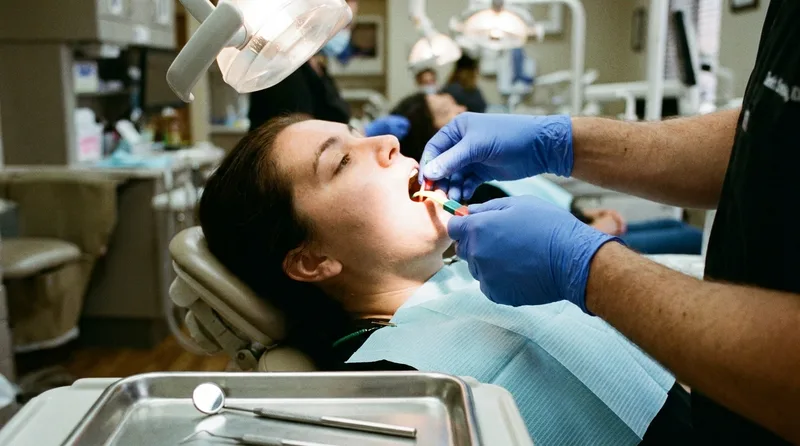
According to Healthline, X-rays don't always reveal a cracked tooth, though they can point out poor pulp health, which may suggest a crack is present. That's why your description of the symptoms matters so much.
Tell your dentist exactly when the ache happens. "It's sharp when I let go after biting into something hard" is the kind of detail that can solve the puzzle.
Teeth crack from grinding, biting hard foods, large fillings that weaken the tooth, blows to the mouth, sudden temperature changes, and age. Most cracks occur in people over 50. Often several factors combine, and the tooth cracks after years of stress rather than in a single moment.
Cracks often start small. A hairline crack can deepen over months of chewing, which is why a tooth can feel fine for a long time and then suddenly turn sensitive.
If you grind your teeth, protection matters. Our guide to night guards explains who needs one, and it's often the single most useful step for preventing the next crack.
There are five common types: craze lines, fractured cusps, cracked teeth, split teeth, and vertical root fractures. They range from harmless surface lines to cracks that can't be saved. The type and depth decide the treatment, which is why an exam matters.
| Type | What it is | Typical outlook |
|---|---|---|
| Craze lines | Tiny cracks in the outer enamel | Usually no symptoms and no treatment needed |
| Fractured cusp | A piece of the chewing surface breaks, often around a filling | Usually restored with a filling, bonding, or a crown |
| Cracked tooth | A vertical crack through the tooth that hasn't reached the gumline | Often savable, with prompt treatment |
| Split tooth | A crack that runs below the gumline and separates the tooth | Unlikely to save the whole tooth, though part may be saved |
| Vertical root fracture | A crack that starts below the gumline and travels up | Often few symptoms until infection, and removal is likely |
Two of these are usually harmless or easy to treat, and three need real attention. Healthline notes that a vertical crack that hasn't reached the gumline is generally savable, while one that extends into the gumline may need extraction. A 2021 peer-reviewed review of cracked tooth syndrome describes the same range, from symptom-free craze lines to cracks that ache whenever you bite.
Think you may have a cracked tooth?
Request an appointment at our Peterborough office and we'll work out what's going on.
Request an Appointment →Treatment depends on the size and location of the crack, your symptoms, and whether it reaches the gumline. Options include bonding, a crown, root canal treatment, or removal. Hairline cracks that cause no symptoms and don't affect appearance may simply be left alone.
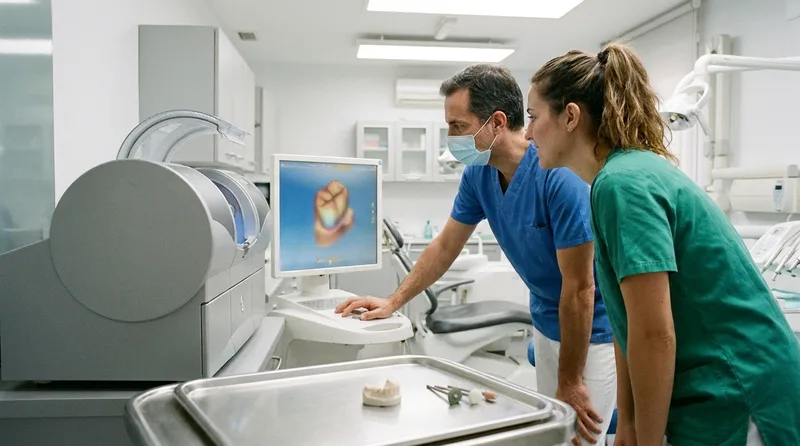
Healthline notes that some dentists can mill a porcelain crown in the office and place it the same day. We offer same-day CEREC crowns, with no second visit and no temporary crown, and our guide to same day crowns explains how that works. Our guide to what a root canal feels like explains what root canal treatment is actually like.
A cracked tooth is an emergency if you have fever, facial swelling, tender glands, a bad taste, or trouble breathing or swallowing, because these can signal infection. Otherwise, call your dentist promptly, since waiting lets a crack worsen. Don't wait for the ache to settle.
Cracked tooth symptoms combined with swelling or fever need prompt attention.
Healthline notes that the biggest complication of a cracked tooth is an infection that can spread to the bone and gums, with signs such as fever, tender neck glands, swollen gums, and bad breath. Go to an emergency room for trouble breathing or swallowing.
Our guide to tooth abscess symptoms covers those infection signs in detail, and our guide to a toothache at night explains what to do while you wait to be seen. If the crack came from an injury, our chipped and broken tooth care service is built for exactly that.
Cracked a tooth and unsure how urgent it is?
Send us a note or call, and our team will help you decide the next step.
Contact Our Office →Rinse your mouth with warm water, use a cold compress on the outside of your cheek if it's swelling, avoid chewing on that side, and call your dentist as soon as possible. You can't fix a crack at home, but these steps protect the tooth until you're seen. Delaying treatment puts the tooth at greater risk.
The American Dental Association's emergency guide advises rinsing with warm water and using cold compresses to keep swelling down, and visiting a dentist or an emergency room as soon as possible when something serious happens.
Often, yes, especially when the crack is caught early and hasn't reached the gumline. A split tooth or vertical root fracture is harder to save, and removal may be needed. Prompt treatment gives a better chance, though a cracked tooth never fully heals the way a bone can.
Healthline's outlook is honest. A crack can be repaired, but the tooth won't be 100 percent healed, so you protect it afterward. A crown, good home care, and a night guard if you grind all help it last.
If a tooth can't be saved, replacing it protects your bite. About 120 million Americans are missing at least one tooth, according to the American College of Prosthodontists. The Journal of Oral and Maxillofacial Surgery reports implant success rates of 95-98% over 10 years, and the American Academy of Implant Dentistry reports that implant-supported teeth can restore up to 90% of natural chewing power. Our guide to same day dental implants explains when an implant can be placed on the day a tooth is removed.
Prevent cracks by wearing a mouthguard for sports and a night guard if you grind, avoiding ice and hard candy, replacing large worn fillings before they weaken the tooth, and keeping up with checkups. Strong, healthy teeth are less likely to crack. Small habits make a real difference.
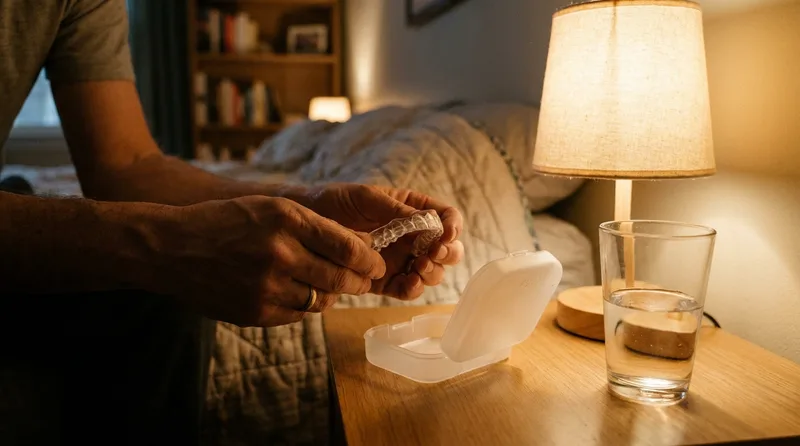
Checkups catch weak spots early. The Journal of Dental Research reports that people who see a dentist regularly are 60% less likely to lose teeth, and the ADA notes that regular visits can catch 80% of oral health issues before they become serious. Our guide to chipped tooth repair covers how we repair teeth that have already chipped.
Call us if you notice cracked tooth symptoms, such as a sharp ache when you bite, sensitivity that comes and goes, or a tooth you suspect is cracked. A short exam, a bite test, and X-rays can find the cause and give you a plan. Early treatment gives the tooth its best chance.
Nerves are normal. BMC Oral Health (2024) reports that 36% of Americans have dental anxiety, and the Journal of Dental Anesthesia reports that sedation dentistry has helped 75% of fearful patients keep up with regular visits. We offer nitrous oxide and oral sedation.
We welcome patients from Peterborough, Jaffrey, Dublin, Hancock, and across the Monadnock region, with early-morning hours from 7 AM Monday through Thursday. Bring your questions to Dr. Muhammad Rahim or Dr. Jasper Ainslie. If you request a time online, a real person from our team replies the same business day to confirm your visit.
Results may vary. Please consult with your dentist at Peterborough Family Dental for personalized treatment recommendations.
Get a possible crack checked
Request an appointment at Peterborough Family Dental & Implant Center, or call and ask about the earliest visit.
Request an Appointment →Prefer to talk to someone first?
Call (603) 924-3664 →
Dr. Muhammad Rahim, DMD
Dentist · Peterborough Family Dental & Implant Center
Peterborough, NH dentist providing gentle general, cosmetic, restorative, and implant dentistry for the whole family.
Was this article helpful?
Often a sharp ache when you bite or chew, especially when you release the bite, along with sensitivity to hot, cold, or sweets. The discomfort tends to come and go. Some cracked teeth cause no symptoms at all.
Our Peterborough team is happy to answer questions and get you on the calendar.


