
Back to all articlesCosmetic Dentistry Dr. Muhammad Rahim, DMDNovember 15, 202610 min read

How to Close a Gap Between Teeth: Bonding, Veneers, Aligners
Dr. Muhammad Rahim, DMDNovember 15, 202610 min read
Loading blog post
Dr. Muhammad Rahim, DMDNovember 15, 202610 min readCall and you'll reach a real person on our team: no phone tree, no hold music. We'd genuinely love to help.
(603) 924-3664Rather write to us? Contact us
If you've ever wondered how to close a gap between teeth, you're in good company. A space between the front teeth is one of the most common smile concerns, and it's also one of the most fixable. At Peterborough Family Dental & Implant Center in Peterborough, NH, we offer cosmetic and orthodontic care, so we can compare every route without favoring one.
The American Academy of Cosmetic Dentistry reports that 99.7% of Americans believe a smile is an important social asset, and for many people the gap is the one thing they'd change. Some also love their gap and keep it. Either choice is a good one.
This guide covers why gaps form, what each fix involves, when a tight frenum or gum problem is the real cause, and how to keep your results.
Gaps form for several reasons: normal development, a large labial frenum, small or missing teeth, tongue thrust, extra teeth, or gum disease. Often more than one factor is involved. The cause decides which treatment will work and whether the gap stays closed.

WebMD's overview of diastema lists normal growth, extra teeth, baby teeth that don't fall out, cysts, and a large frenum among the causes, and notes that a gap in the lower front teeth is often caused by the tongue pressing too far forward. A gap between the two upper front teeth is the one most people notice.
The first step is always an exam. Treating a gap without knowing its cause can mean it comes back.
A gap is often normal and harmless, so treatment is usually a choice about appearance. But new gaps that appear in adult teeth, or gaps that widen over time, can signal gum disease and should be checked. An exam tells you which situation you're in.
If you're not sure whether your gap is new, old photos can help. A gap that's been there for years behaves very differently from one that appeared recently, and your dentist will want to know the timeline.
Photos and digital mock-ups can help too. Ask your dentist to show examples, so you can picture the result before you decide.
Many adults keep a gap and like it. It's a legitimate feature of a smile, not a defect. If you want it closed, that's a legitimate choice too.
Pay attention if teeth start drifting or feel loose. The National Institute of Dental and Craniofacial Research describes gum disease as an infection that, left untreated, can spread to the bones supporting the teeth. The CDC reports that 42% of adults aged 30 and older have some form of periodontal disease, so a changing smile is worth a check before any cosmetic work.
You can close a gap between teeth with bonding, veneers, clear aligners, or braces, and sometimes a frenectomy first. Bonding and veneers add to the teeth and work quickly, while aligners and braces move the teeth together. The right choice depends on the size and cause of the gap.
| Option | How it works | Suits | Time |
|---|---|---|---|
| Dental bonding | Tooth-colored resin is added to widen the teeth | Small gaps, in one visit | One visit |
| Veneers | Thin custom shells cover the front of the teeth | Gaps plus changes in shape or color | More than one visit |
| Clear aligners | A series of trays moves the teeth together | Mild to moderate gaps and crowding | Months |
| Braces | Brackets and a wire move the teeth together | Larger gaps or complex bites | Months to a couple of years |
| Frenectomy first | A tight frenum is released before other treatment | Gaps caused by a large frenum | A short visit, then another treatment |
| Replacing a missing tooth | An implant, bridge, or denture restores the space | Gaps from a missing tooth | Varies by option |
Think of it as two families. Cosmetic options like bonding and veneers make the teeth wider to fill the space. Orthodontic options move the teeth so the space closes. Each family has strengths, and sometimes a smile benefits from a mix.
Wondering which option fits your gap?
Book a free consultation at our Peterborough office and we'll show you what's possible for your smile.
Request an Appointment →Yes, dental bonding can close a small gap between teeth by adding tooth-colored resin to the sides of the teeth. It's usually done in one visit, often with little or no removal of healthy tooth. Bonding is the quickest and most conservative option, and it suits small to moderate gaps.
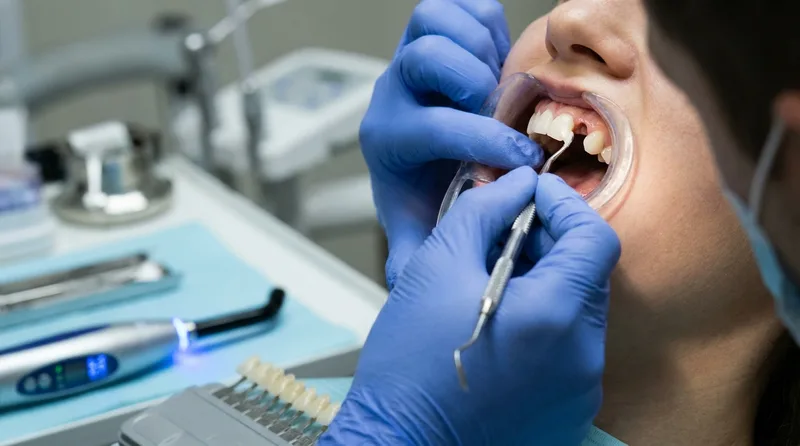
Your dentist shapes the resin to match your teeth, hardens it with a light, and polishes it. The results are immediate. Bonding is also a good way to see how a closed gap looks before committing to anything more involved.
Bonding can usually be adjusted or redone later, unlike veneers. That flexibility makes it a low-commitment way to try closing a gap.
Bonding also works well alongside other treatment. Some patients close most of a gap with aligners and use bonding to finish the last fraction, which keeps the result natural.
Our guide to composite bonding explains the process, the lifespan, and how to care for it.
Yes, veneers can close a gap by covering the front of the teeth with thin custom shells that are slightly wider. They also let you change color and shape at the same time. The ADA notes that veneers aren't reversible, because enamel is removed to place them.
The American Dental Association's veneers guide explains that veneers cover only the front surface of the tooth, can improve teeth that are chipped, broken, discolored, or too small, and may not be a good fit for people who clench or grind. It also notes that insurance may not cover them, since they're considered cosmetic.
If you're thinking about veneers for more than one gap, or alongside other concerns, ask about a smile design plan. Planning all the teeth together gives a more natural result, and our smile makeover guide explains how veneers fit into a larger plan.
Veneers make the most sense when you want a lasting, polished result and your teeth and gums are healthy. The Journal of Prosthetic Dentistry reports that porcelain veneers can last 10 to 15 years with proper care. Our porcelain veneers guide walks through the process and what to ask.
Yes, clear aligners and braces close a gap by moving your teeth together, instead of adding to them. They work well when the gap comes from tooth position, and they preserve your natural teeth. Treatment takes months rather than a single visit, and a retainer keeps the result.
WebMD notes that braces are a common treatment for diastema, using brackets, wires, and bands to move teeth. Colgate adds that a full set of braces is often needed because moving any teeth affects the entire mouth, which is why an orthodontic plan looks at your whole bite.
The American Journal of Orthodontics reports that clear aligners can treat 90% of mild-to-moderate alignment issues, which includes many gaps. Our complete guide to clear aligners explains how aligners work and who they suit.
A tight or oversized labial frenum can cause a gap by passing between the upper front teeth and keeping them from closing. A frenectomy releases it, and it often needs to be followed by orthodontic or cosmetic treatment to close the gap. Not every gap with a frenum needs surgery.
The labial frenum is the small band of tissue that connects your upper lip to your gum. WebMD notes that if a large or low frenum is behind the gap, surgery may be needed before orthodontic treatment, and that having the surgery doesn't mean the gap will close on its own.
At our office, we use a soft-tissue laser for frenectomy, and every case starts with an evaluation to confirm the release is truly needed. A frenectomy is a short procedure, and it makes closing the gap possible rather than closing it by itself.
Think a tight frenum may be involved?
Send us a note and we'll tell you honestly whether a release makes sense for you.
Contact Our Office →Keep a closed gap closed by wearing your retainer, protecting your gum health, and addressing habits like tongue thrust. Teeth naturally drift back toward their old positions without support. Bonding and veneers rely on stable teeth and healthy gums to keep the result.
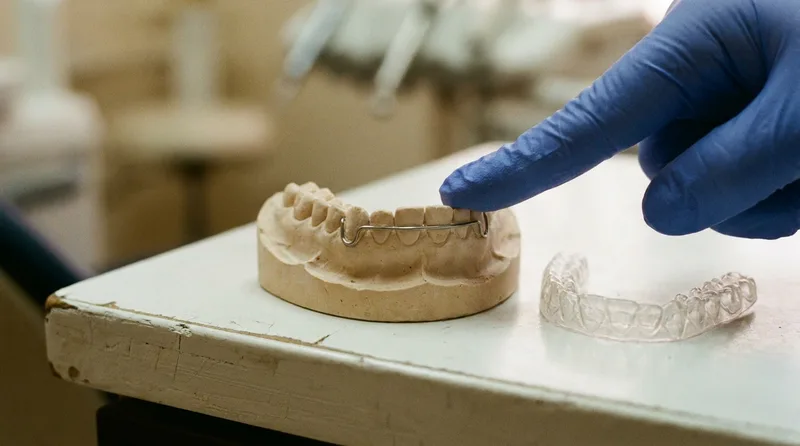
Our retainers service offers clear, fixed, and Hawley retainers. Regular visits protect your results too. The Journal of Dental Research reports that people who see a dentist regularly are 60% less likely to lose teeth, and the ADA notes that regular visits can catch 80% of oral health issues before they become serious.
Choose bonding for a small gap and a fast, conservative result, veneers for a polished cosmetic change, and aligners or braces when the teeth need to move. A frenum or gum issue may need treatment first. An exam and photos help your dentist show you what each choice would look like.
Nerves about starting are normal. BMC Oral Health (2024) reports that 36% of Americans have dental anxiety, and the Journal of Dental Anesthesia reports that sedation dentistry has helped 75% of fearful patients keep up with regular visits. We offer nitrous oxide and oral sedation when it's needed.
Book a free consultation so your dentist can find the cause of your gap and show you your options. A short exam tells you whether you need bonding, veneers, orthodontics, or a frenum release first. You'll leave with a clear plan and no pressure to decide.
We welcome patients from Peterborough, Jaffrey, Dublin, Hancock, and across the Monadnock region, with early-morning hours from 7 AM Monday through Thursday. Bring your questions to Dr. Muhammad Rahim or Dr. Jasper Ainslie. If you request a time online, a real person from our team replies the same business day to confirm your visit.
Results may vary. Please consult with your dentist at Peterborough Family Dental for personalized treatment recommendations.
Close the gap, or keep it, on your terms
Request a free consultation at Peterborough Family Dental & Implant Center and get an honest recommendation and a clear plan.
Request an Appointment →Prefer to talk to someone first?
Call (603) 924-3664 →
Dr. Muhammad Rahim, DMD
Dentist · Peterborough Family Dental & Implant Center
Peterborough, NH dentist providing gentle general, cosmetic, restorative, and implant dentistry for the whole family.
Was this article helpful?
In young children a gap between the front teeth is often part of normal development and can close as adult teeth come in. In adults, gaps rarely close by themselves, so closing one usually takes dental treatment.
Our Peterborough team is happy to answer questions and get you on the calendar.


