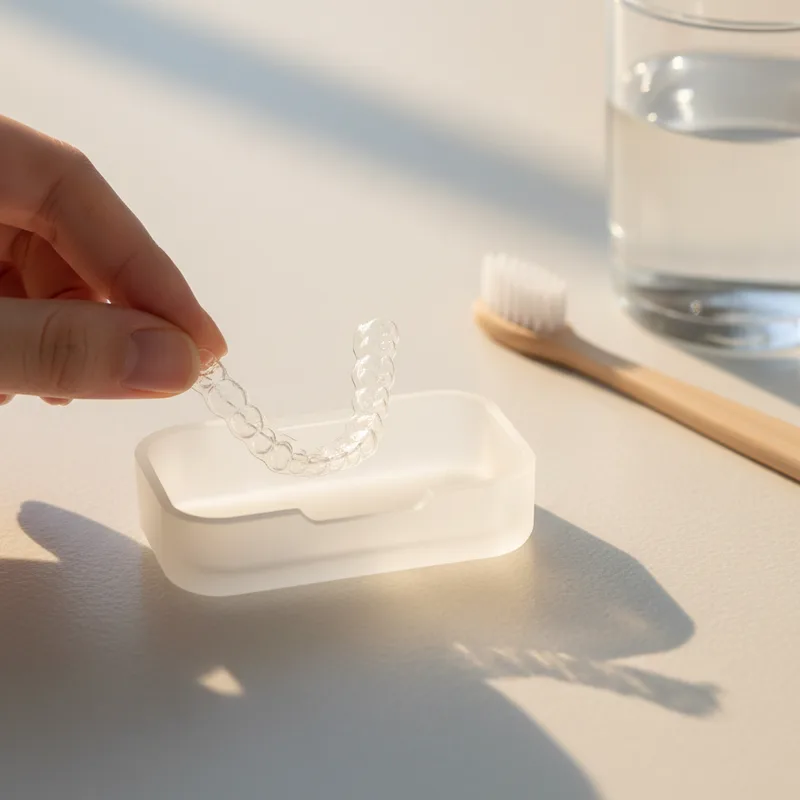
Clear Aligner Treatment Results: Before and After Guide
Dr. Muhammad Rahim, DMDJune 4, 202611 min read
Clear aligner treatment results look different from the dramatic before and after photos that fill social media feeds. Some patients close small gaps in a few months. Others spend more than a year correcting a crowded bite. The honest version sits between the marketing and the myth, and it is worth understanding before you start.
If you have scrolled through Invisalign before and after galleries, you have seen the highlight reel. This guide shows what real outcomes look like, how long they take, and what actually makes the difference. We will cover timelines, the factors that shape your result, how aligners compare to braces, and how to keep your smile straight once treatment ends.
Dr. Muhammad Rahim and the team at Peterborough Family Dental treat patients across the Monadnock region, and the questions below come up in nearly every consultation. Let's set realistic expectations together.
Curious what your own before and after could look like?
A short consultation can tell you whether clear aligners fit your bite, your timeline, and your goals.
Clear aligner treatment is one of the orthodontic dental services at Peterborough Family Dental & Implant Center, and every plan starts with a digital scan.
What Do Real Clear Aligner Treatment Results Look Like?
Real clear aligner treatment results mean straighter teeth, a more even bite, and a smile that is easier to clean. Most patients notice visible movement within two to three months. The full change shows up gradually, tray by tray, rather than in one sudden reveal.
Real results build gradually, tray by tray, not in one dramatic reveal.
The before and after photos you see online tend to show the strongest cases. That is good marketing, not a promise. A patient with mild crowding and a single rotated tooth will see a cleaner finish than someone correcting a deep overbite. Both can improve. The scale of the change just differs, and a good dentist tells you which camp you fall into before you spend a dollar.
Dentist · Peterborough Family Dental & Implant Center
Peterborough, NH dentist providing gentle general, cosmetic, restorative, and implant dentistry for the whole family.
Was this article helpful?
Frequently asked questions
Most patients see visible movement within two to three months. Full clear aligner treatment results typically take 6 to 18 months, depending on case complexity and how consistently you wear the trays each day.
Results last when you wear a retainer as directed. Teeth naturally drift over time, so most patients wear a retainer nightly long term to keep their smile straight and protect the change they earned.
For mild to moderate cases, clear aligners deliver results comparable to braces with far less visibility. Braces still handle severe rotations and complex bites more predictably, which is why a dentist evaluates your case first.
Daily wear time matters most. Aligners only move teeth while worn, so the recommended 20 to 22 hours a day is essential. Case complexity and keeping your check-ups also shape your final outcome.
Clear aligners can improve both alignment and many bite issues, helping your teeth meet more evenly. Complex bite problems sometimes need braces or a combined plan, which your dentist can determine at a consultation.
Most patients feel mild pressure for a day or two after switching to a new tray, and it fades as teeth adjust. That sensation is a sign the aligners are working and is usually easy to manage.
Start with a consultation and digital scan to get a realistic timeline based on your own teeth.
Looks are only half the result
Beyond appearance, the functional gains matter just as much. Aligned teeth meet evenly when you chew. Floss slides between them instead of catching on overlaps. According to the American Dental Association, straighter teeth are easier to keep clean, which can lower the risk of cavities and gum disease by up to 30%. So your after photo is not only about looks. It reflects a mouth that works better and tends to hold up longer.
Want a sense of where you stand right now? Look at three things in your own smile, the same markers a dentist tracks from your first scan to your final tray:
Spacing. Gaps between teeth, whether one small gap or several.
Crowding. Teeth that overlap, twist, or sit out of line.
Bite alignment. How your top and bottom teeth meet when you close.
If you mostly see mild spacing or crowding, you're squarely in aligner territory. Heavier bite issues are where the conversation gets more detailed. The ADA's guide to braces and aligners covers how the options differ.
How Long Until You See Clear Aligner Results?
Most clear aligner cases run 6 to 18 months from start to finish. Minor spacing issues can wrap in as little as three to six months. Complex bites take longer. You typically switch trays every one to two weeks, and each tray nudges your teeth a fraction of a millimeter at a time.
Here is the part the galleries skip. Movement is steady, not instant. The American Association of Orthodontists reports that clear aligner treatment averages 6 to 18 months, compared with 18 to 36 months for traditional braces. That shorter range is one reason so many adults choose aligners. But faster is not automatic. Your timeline depends on how far your teeth need to travel and how consistently you wear the trays each day.
Think of it like physical therapy for your smile. Skip the work and progress stalls. Stay consistent and the timeline holds. Most patients see the early, motivating changes first, usually the front teeth, while the finer detail work happens in the final months.
A small example helps. Picture two patients who start on the same day with similar mild crowding. One wears the trays the full 22 hours and finishes in eight months. The other leaves them out for long stretches and stretches the same case past a year, with a less even finish. Same starting point.
Very different ending. The variable wasn't the aligners. It was the hours. For the full picture of how aligners work and what they cost, see our complete guide to clear aligners.
Not sure how long your case would take?
A digital scan gives a realistic timeline for your specific bite, with no guesswork involved.
Three factors shape your outcome more than anything else: how long you wear the trays each day, how complex your case is, and how closely you follow the plan. Wear time is the big one. Aligners only move teeth while they are actually on them.
Consistent daily wear, usually 20 to 22 hours, shapes your final outcome most.
Most plans call for 20 to 22 hours a day. Take them out for meals and brushing, then put them right back in. Patients who treat that schedule as optional see slower movement and uneven finishes, which is the most common reason a result falls short of the preview. Case complexity matters too.
Research in the orthodontic literature shows clear aligners can correct roughly 90% of mild to moderate alignment issues, while severe rotations, large gaps, or significant bite problems sometimes call for braces or a combined approach.
Not every movement is equally easy for aligners. A 2014 study in BMC Oral Health found that how accurately aligners moved teeth varied by the type of movement, with some rotations and root movements proving harder than simple tipping. That's why your plan may include attachments or refinement trays.
What you can control is consistency. Wear the trays. Keep your check-ins. And tell your dentist if a tray feels off instead of pushing through. Small course corrections early prevent big detours later, which is exactly why supervised treatment beats mail-order kits.
Habits that keep your timeline on track
Wear your trays 20 to 22 hours a day. Set phone reminders after meals.
Keep a travel case with you so trays never end up in a napkin.
Brush before putting trays back in, so food isn't trapped against your teeth.
Switch trays on schedule, not early or late.
Tell the office right away if a tray cracks or stops fitting.
Clear Aligners vs Braces: Which Gives Better Results?
Both clear aligners and braces produce straight, healthy smiles. The difference is fit, not winner versus loser. Aligners suit mild to moderate cases and adults who want a discreet option. Braces handle the toughest movements and never depend on patient willpower, since they stay on around the clock.
The table below lays out how the two compare on the points patients ask about most. Neither is universally better. The right pick depends on your bite, your daily habits, and your lifestyle.
6 to 18 months
Typical clear aligner treatment time, compared with 18 to 36 months for traditional braces
Source: American Association of Orthodontists
Factor
Clear Aligners
Traditional Braces
Visibility
Nearly invisible
Visible brackets and wires
Typical timeline
6 to 18 months
18 to 36 months
Best for
Mild to moderate cases
Mild to severe cases
Removable
Yes, for eating and cleaning
No, fixed in place
Depends on patient
High, needs 20 to 22 hours daily
Low, works on its own
For most adults with mild to moderate crowding, aligners deliver a finish that looks and functions just as well as braces, with far less visibility along the way. A confident smile carries real weight too: the American Academy of Cosmetic Dentistry found that 99.7% of Americans consider a smile an important social asset. The team can walk you through which option suits your cosmetic goals during a visit.
Teeth drift back toward their old positions without a retainer. That is the single most important thing to know about keeping your new smile. Wearing a retainer as directed, usually nightly after an initial full-time stretch, locks in the change you worked months to earn.
A retainer locks in the change you spent months earning.
Retention is not optional
The same biology that let your teeth move also lets them relapse. Most patients wear a retainer full time for a short period, then shift to nights only for the long term. Skip it for a few weeks and you can feel the difference when the tray no longer fits cleanly. Beyond the retainer, a few daily habits protect both the look and the health of your result:
Wear your retainer on schedule. Even a couple of skipped weeks can let teeth shift enough to notice.
Keep up cleanings and exams. Straighter teeth are easier to clean, and routine visits catch small issues early. Americans who see a dentist regularly are about 60% less likely to lose teeth, according to the Journal of Dental Research.
Clean the retainer itself. Rinse it daily and skip hot water, which can warp the plastic.
Straight teeth also support gum health, which matters when 42% of adults aged 30 and older have some form of gum disease, according to the CDC. Keeping your smile aligned makes daily brushing and flossing more effective.
What to Expect at a Clear Aligner Consultation?
A clear aligner consultation starts with a conversation and a digital scan, not a sales pitch. The dentist reviews your bite, checks your gum health, and tells you honestly whether aligners can deliver the result you want. If they can, you get a realistic timeline and a preview of your projected outcome.
Expect a few steps. First, an exam to confirm your teeth and gums are healthy enough to start, since active decay or gum disease has to be treated first. Routine dental visits catch roughly 80% of oral health issues before they turn serious, per the American Dental Association, so this step protects your investment.
Next, a digital scan maps your teeth and models the planned movement. Finally, there's a frank discussion of timeline, daily wear, and what your before and after could realistically look like.
This is also your moment to ask questions. How long for my case? What happens if I lose a tray? Will I need a retainer forever? It is also the right time to talk through cost and any payment or financing options, so there are no surprises later. You'll also see whether small bumps called attachments are part of your plan.
A good consultation answers all of it before you commit to anything. The team at Peterborough Family Dental serves patients from Peterborough, Jaffrey, Dublin, Hancock, and across southern New Hampshire, and every plan starts with that honest evaluation.
The Bottom Line on Your Smile Transformation
The most useful thing to remember about clear aligner treatment results is that they are earned, not handed out. Consistent wear and a retainer afterward separate the dramatic before and after photos from the disappointing ones. The biology does the work, but only if you give it the hours every single day.
If you have been weighing whether aligners are right for you, the next step is simple. A short consultation gives you a clear, personalized answer based on your actual teeth, not a stock photo from someone else's mouth. Your future smile is worth one appointment.
⚠ Call the office if
A tray cracks, warps, or no longer snaps into place.
An attachment falls off.
A tooth feels sore for more than a few days after switching trays.
Your retainer suddenly feels tight after a few missed nights.


 Dr. Muhammad Rahim, DMDJune 4, 202611 min read