
Back to all articlesDental Implants Dr. Muhammad Rahim, DMDNovember 8, 202610 min read
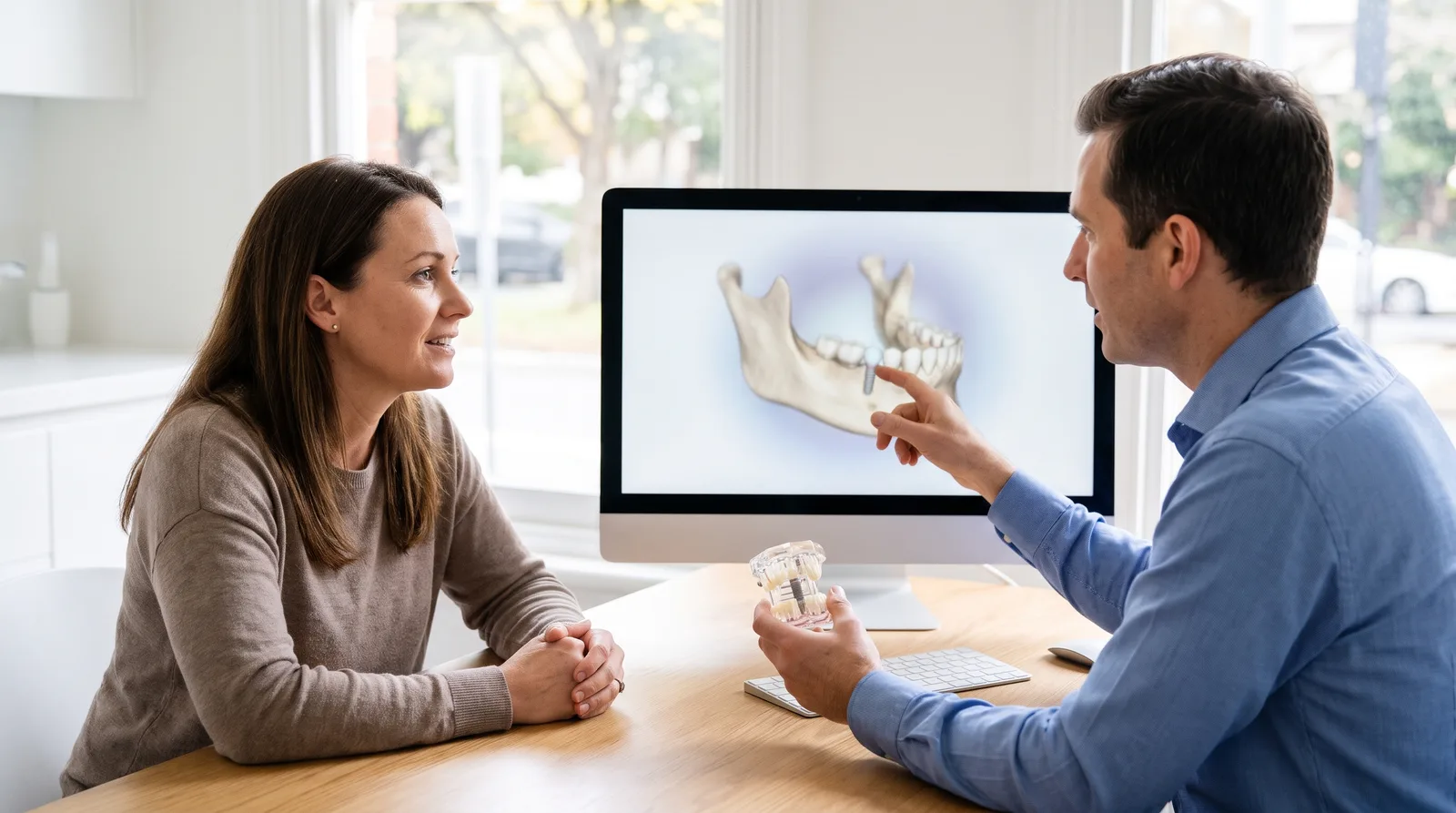
Am I a Candidate for Dental Implants? What Dentists Check
Dr. Muhammad Rahim, DMDNovember 8, 202610 min read
Loading blog post
Dr. Muhammad Rahim, DMDNovember 8, 202610 min readCall and you'll reach a real person on our team: no phone tree, no hold music. We'd genuinely love to help.
(603) 924-3664Rather write to us? Contact us
Being a candidate for dental implants isn't a label you're born with. It's a picture of your gums, jawbone, and health on the day you're examined, and it can change. At Peterborough Family Dental & Implant Center in Peterborough, NH, we place and restore dental implants, and we tell patients early that "not yet" is a common answer. A flat "no" is less common than most people expect.
About 120 million Americans are missing at least one tooth, according to the American College of Prosthodontists. Many assume implants are out of reach because a friend was turned down or a dentist once mentioned bone loss. Sometimes that's true. Often it isn't the full story.
Here's what dentists actually look at, what can be fixed, and what a consultation involves, so you know where you stand before you book.
A good candidate for dental implants has healthy gums, enough jawbone to hold a post, good general health, and a fully developed jaw. Habits like smoking and daily oral hygiene also matter. No single factor decides it, because your dentist weighs them together after an exam and a 3D scan.
Why does that care matter? Success depends partly on choosing the right patients. The Journal of Oral and Maxillofacial Surgery reports implant success rates of 95-98% over 10 years, and careful screening is a big part of that number.
Most people want implants for the same reason. The American Academy of Implant Dentistry reports that implant-supported teeth can restore up to 90% of natural chewing power, which is why patients tell us they stop thinking about their teeth at meals.
Your jawbone matters because an implant needs enough bone, in both height and width, to hold the post steady while it heals. After a tooth is lost, the bone in that spot slowly shrinks, so the longer a gap has been there, the more likely it is that bone needs attention.
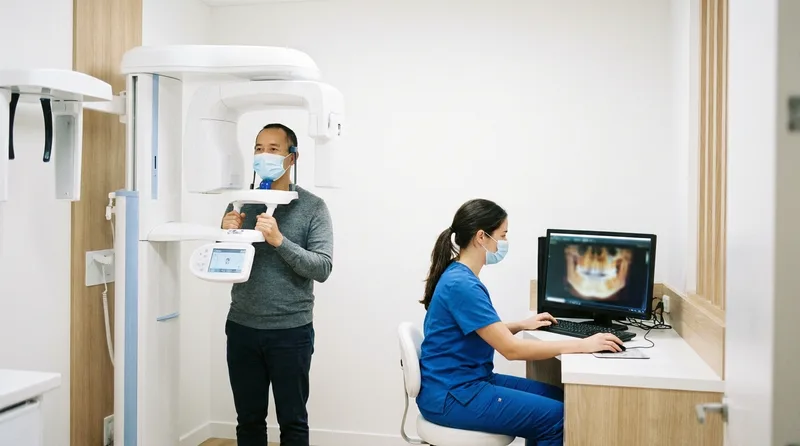
A regular X-ray shows a flat picture. A 3D CBCT scan shows depth. It lets the dentist measure bone volume, find nerves and sinuses, and plan where each post should go. That's why we take one at the consultation, before anyone talks about treatment.
A bone graft adds bone material to a thin area so it can support an implant. Healing usually takes a few months, and then the implant can be planned. Many patients are surprised to learn that a graft can turn a "no" into a "yes."
Often, yes. Years without a tooth usually mean less bone, but not always. Some people keep plenty. Only the scan can tell you which group you're in.
Wondering what your scan would show?
A short exam and 3D scan at our Peterborough office measure your bone and gums. Consultations are free, with no obligation.
Request an Appointment →Yes, but only after the gum disease is treated and under control. Implants need healthy tissue around them, because infection near an implant can damage the bone that holds it. Most patients start with a deep cleaning, then return for implants once their gums have healed.
This comes up often. The CDC reports that 42% of adults aged 30 and older have some form of periodontal disease. The American Academy of Periodontology describes gum disease as a bacterial infection of the tissue and bone that support teeth, and similar infections can affect the tissue around an implant.
Here is the usual path from gum disease to implants.
Keeping up with visits pays off long after the implant is placed. The Journal of Dental Research reports that people who see a dentist regularly are 60% less likely to lose teeth. The ADA adds that regular dental visits can catch 80% of oral health issues before they become serious.
Not automatically. Conditions such as diabetes and habits such as smoking can slow healing, so your dentist reviews them carefully, but many people with well-managed conditions still receive implants. Your medical history shapes the plan rather than closing the door.
Mayo Clinic's overview of implant surgery notes that chronic illnesses and smoking can slow healing, which is why dentists evaluate each person individually. A good consultation treats this as a planning question. It's not a judgment about you.
Your dentist may ask about the following, so it helps to have the answers ready.
Be completely honest here. Leaving something out doesn't protect your chances, and it can affect your healing.
Have a health question before you book?
Send us a note and our team will tell you what to bring and what the dentist will want to know.
Contact Our Office →Dental implants have a minimum age but no real upper limit. Placement waits until the jaw has finished growing, usually in the late teens, while older adults can receive implants if their health and bone allow it. Overall health matters far more than the number on your birthday.
Younger patients who lose a tooth usually wear a temporary replacement until growth is complete. For adults of any age, the questions are the same ones we've covered: gums, bone, health, and habits.
What changes with age is mostly healing speed and the length of your medication list, not eligibility itself. A person in their seventies with healthy gums and steady health often heals well. A person in their forties with untreated gum disease may need more preparation first.
Many of our patients are in their sixties, seventies, and beyond. They often come in after years of denture trouble, ready to eat what they like. If that sounds familiar, our senior dental care guide explains what changes in the mouth over time and why those changes make a careful exam more important.
Yes, your bone and the number of missing teeth shape the design. Single implants replace one tooth, implant bridges replace several in a row, and full-arch designs replace an entire arch. Your scan helps decide which approach fits you.
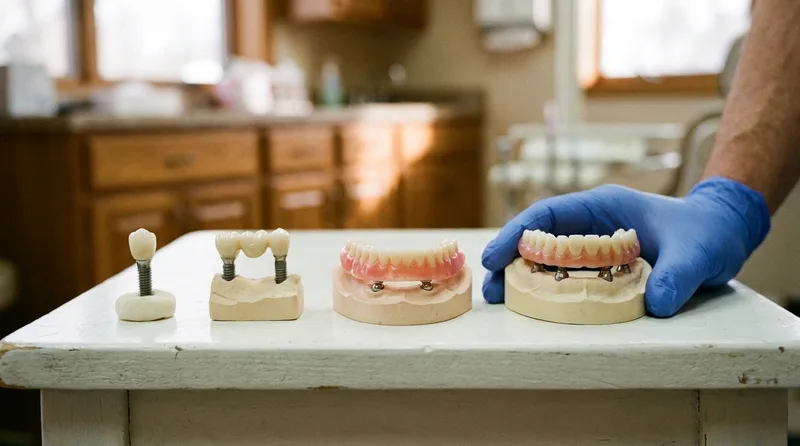
Timing is part of the picture too. Where bone allows, an implant can be placed the same day a tooth is removed. That's a candidacy question as well, since the socket and the bone around it have to be healthy enough to hold the post.
A candidacy consultation reviews your medical history, examines your teeth and gums, and takes a 3D scan of your jaw to measure bone. You leave with a clear answer and a written plan. At our Peterborough office, the consultation is free and carries no obligation.
Nervous? You're far from alone. BMC Oral Health (2024) reports that 36% of Americans have dental anxiety, and the Journal of Dental Anesthesia reports that sedation dentistry has helped 75% of fearful patients keep up with regular visits. We offer nitrous oxide and oral sedation, so you can ask about comfort options at your first visit.
Prefer to talk it through first?
Call our Peterborough office and we'll explain what happens at a consultation.
Call (603) 924-3664 →Being turned down usually means a step comes first, not that implants are off the table for good. Gum treatment, bone grafting, quitting smoking, or better diabetes control can change your answer. If implants truly aren't an option, bridges and dentures are still reliable ways to restore your smile.

That distinction matters. "Not yet" comes with a plan, and you can work toward it.
Some patients start with dentures and add implants later to anchor them. That's a legitimate path, not a consolation prize.
Yes, a second opinion is reasonable, because dentists use different scanning tools, treatment approaches, and levels of comfort with bone grafting. A second look can confirm the first answer or reveal an option that wasn't offered. It costs nothing at our office, and you're under no pressure to switch.
In some cases the second dentist suggests a different order of treatment, such as grafting first. In others, the plan is the same but the timeline or price differs. Either way, you gain clarity before you commit.
Bring whatever you have. Recent X-rays, a written treatment plan, and a list of medications make the visit faster. If it's comparable care, we match the price of your existing quote, so you can compare fairly.
Book a candidacy consultation, because only an exam and a 3D scan can tell you whether you're a candidate for dental implants. Online checklists and friends' stories can't see your bone. A visit takes out the guesswork and gives you facts you can act on.
We see patients from Peterborough, Jaffrey, Dublin, Hancock, and across the Monadnock region, with early-morning hours from 7 AM Monday through Thursday. Bring your questions to Dr. Muhammad Rahim or Dr. Jasper Ainslie.
If you request a time online, a real person from our team replies the same business day to confirm your visit.
Results may vary. Please consult with your dentist at Peterborough Family Dental for personalized treatment recommendations.
Find out where you stand
Request an appointment at Peterborough Family Dental & Implant Center for an exam, a 3D scan, and a clear written plan.
Request an Appointment →Prefer to talk first?
Call (603) 924-3664 →
Dr. Muhammad Rahim, DMD
Dentist · Peterborough Family Dental & Implant Center
Peterborough, NH dentist providing gentle general, cosmetic, restorative, and implant dentistry for the whole family.
Was this article helpful?
Often yes. Many long-term denture wearers qualify, especially with implant-supported dentures or All-on-4. Years in dentures can thin the jawbone, so a 3D scan shows whether you need bone grafting first or can start right away.
Our Peterborough team is happy to answer questions and get you on the calendar.


