
Back to all articlesDental Implants Dr. Muhammad Rahim, DMDNovember 9, 202610 min read
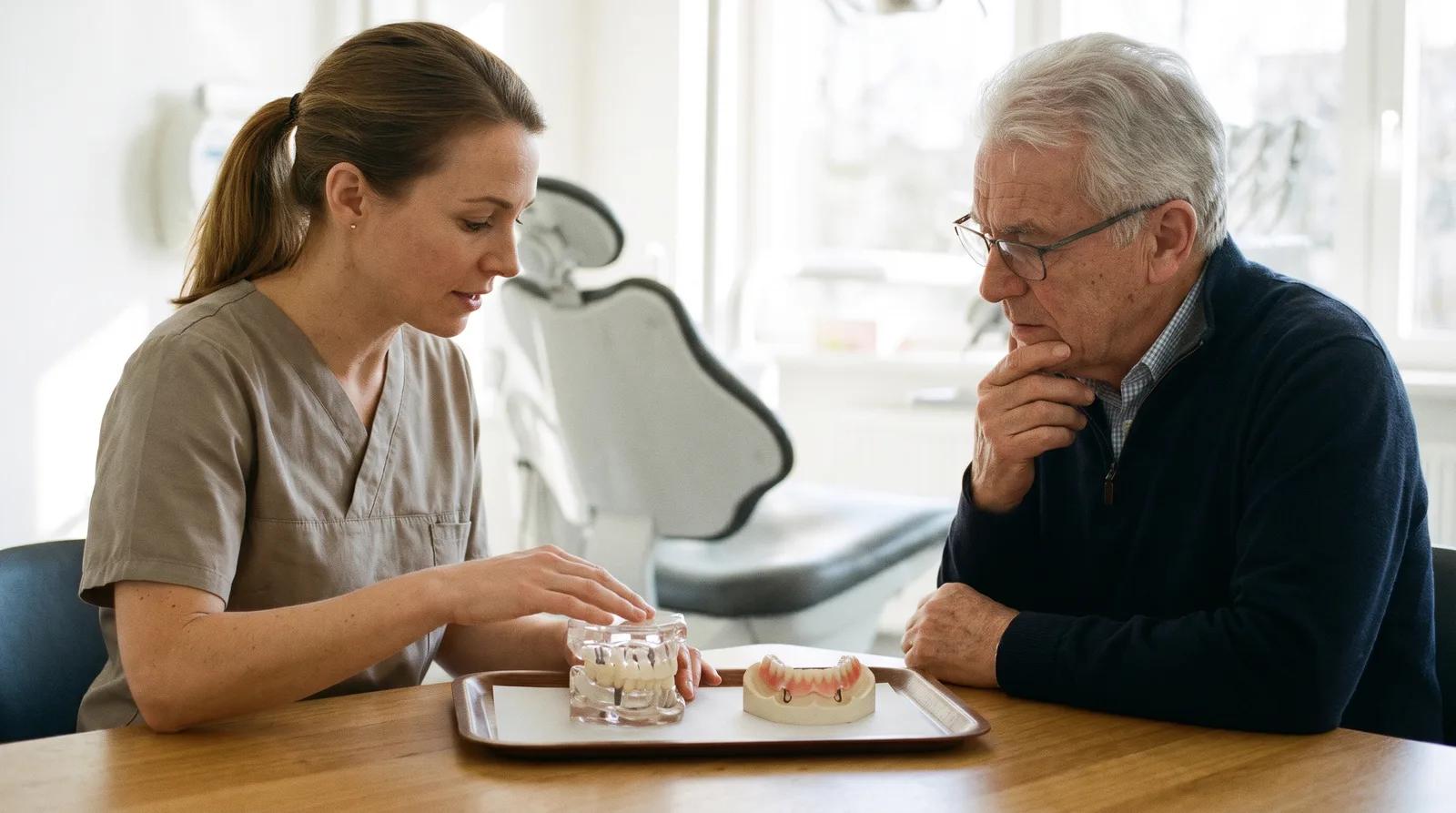
All-on-4 vs Implant-Supported Dentures: Which Fits You?
Dr. Muhammad Rahim, DMDNovember 9, 202610 min read
Loading blog post
Dr. Muhammad Rahim, DMDNovember 9, 202610 min readCall and you'll reach a real person on our team: no phone tree, no hold music. We'd genuinely love to help.
(603) 924-3664Rather write to us? Contact us
Choosing between All-on-4 vs implant-supported dentures is one of the biggest decisions for anyone replacing a full arch of teeth. Both use dental implants to hold your new teeth firmly, and both are a big step up from conventional dentures. The real question is whether you want teeth that stay in or teeth that come out. At Peterborough Family Dental & Implant Center in Peterborough, NH, we offer both, so we can lay out the trade-offs without a sales angle.
About 120 million Americans are missing at least one tooth, according to the American College of Prosthodontists, and many of them are missing most or all of an arch. If that's you, this guide covers how each option feels, how you care for it, how bone loss changes the choice, and how to decide.
If you're still weighing implants against traditional dentures, start with our comparison of implants and traditional dentures, then come back here for the full-arch details.
All-on-4 is a fixed set of teeth held by four implants that stays in your mouth, while an implant-supported denture snaps onto implants and comes out for cleaning. Both replace a full arch with far more stability than conventional dentures. The main trade-off is fixed convenience versus removable simplicity.
All-on-4 places four implants in the jaw and attaches a full arch of teeth to them, often with temporary teeth on the day of surgery. The angled placement of the back implants lets the design work with less bone in many cases, which is why patients who were told they lack bone sometimes still qualify.
Implant-supported dentures work differently. A removable denture clicks onto a small number of implants through attachments. You take it out to clean it and can leave it out at night if you prefer. It sits partly on the gums, but the implants hold it firmly in place.
Mayo Clinic's overview of implant surgery describes implants as a way to anchor replacement teeth in the jawbone, and both options rely on that same principle.
All-on-4 offers fixed teeth that feel closest to natural, while implant-supported dentures offer removable teeth, easier home cleaning, and often a lower starting investment. Neither is better for everyone. The table below shows where each one stands on the points patients ask about most.
| Feature | All-on-4 | Implant-supported denture |
|---|---|---|
| Attachment | Fixed to four implants | Snaps onto a small number of implants |
| Removable at home | No | Yes, for cleaning and at night if you choose |
| Stability | Fully supported by implants, no movement | Very stable, with slight movement possible |
| Feel and chewing | Closest to natural teeth | Much better than conventional dentures |
| Daily cleaning | Brush, then clean under with a water flosser or interdental brushes | Take out, brush, and rinse; clean around the implants |
| Maintenance | Professional checkups and occasional servicing | Replacement of worn attachments and periodic relining |
| Bone and gum fit | Works with reduced bone in many cases | Needs enough bone for the implants, with the gums bearing some load |
| Upfront investment | Typically higher | Often lower |
| Temporary teeth on surgery day |
The pattern is clear. All-on-4 gives you teeth that stay put in daily life and costs more at the start. An implant denture gives you simplicity and flexibility, at the price of a part that comes out and wears over time. Which side of that trade you prefer is a personal call.
Not sure which column sounds like you?
A short exam and 3D scan at our Peterborough office will show which designs your bone and gums can support. Consultations are free.
Request an Appointment →All-on-4 usually feels closest to natural teeth because nothing moves, while an implant denture feels very stable but can shift slightly with sticky or hard foods. Both let you eat far more comfortably than conventional dentures. Speech usually returns to normal quickly with either option.

The American Academy of Implant Dentistry reports that implant-supported teeth can restore up to 90% of natural chewing power. That figure helps explain why patients tell us that foods they gave up, like apples, steak, and crusty bread, come back on the menu. Your dentist will still advise a soft diet during healing.
Speech takes a short adjustment with any new set of teeth. Reading aloud for a few days helps your tongue learn the new shape. If a sound feels off after the first weeks, your dentist can adjust the fit.
All-on-4 stays in place, so you clean around and under it with a soft brush and a water flosser or interdental brushes, while an implant denture comes out so you can brush it and rinse the implants. Both need regular professional checkups to catch gum problems early.
Daily care is where the two options differ most, so here is the routine for each.
Gum health protects both. The CDC reports that 42% of adults aged 30 and older have some form of periodontal disease, and the National Institute of Dental and Craniofacial Research explains how gum infection can affect the tissue and bone that support teeth. The same principle applies around implants, which is why cleanings matter.
Regular visits help. The Journal of Dental Research reports that people who see a dentist regularly are 60% less likely to lose teeth, and the ADA notes that regular visits can catch 80% of oral health issues before they become serious.
All-on-4 typically costs more at the start because it involves more implants and a fixed arch of teeth, while implant-supported dentures often cost less up front. Over time, replacement parts and relines on the denture can narrow the gap. Your written plan shows the full picture for your case.
Look at cost the way you'd look at a car: price today, plus upkeep over the years.
Insurance rarely covers these designs fully, and plans vary. We're in-network with Delta Dental Premier and check your benefits before treatment, so you see written estimates before anything begins. CareCredit financing and a membership plan can also spread out the cost.
Want to see both options priced for your mouth?
Send us a note and we'll explain how a written plan compares fixed and removable options side by side.
Contact Our Office →All-on-4 suits people who want fixed teeth and have healthy gums, while implant-supported dentures suit people who like removable teeth and want a simpler routine. Bone, gum health, general health, and your own preferences all play a part. A 3D scan and exam show what's realistic.
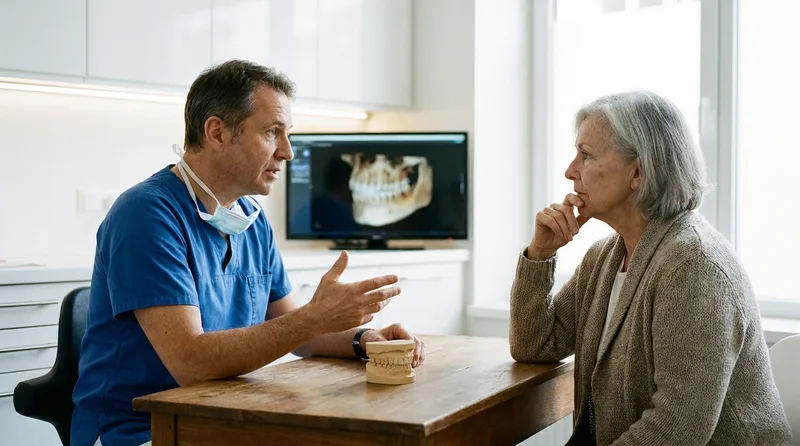
Whichever you choose, healthy gums matter. If you smoke or have diabetes, tell your dentist early, since both can slow healing and need extra planning.
Bone loss narrows your options but rarely closes them. All-on-4 is designed to work with reduced bone in many cases, and bone grafting can rebuild height or width when more is needed. A 3D scan shows how much bone you have and which designs it can support.
Years in a conventional denture usually mean thinner bone, because the jaw shrinks without tooth roots to stimulate it. Many patients assume that rules out implants. It often doesn't.
Don't assume you've been ruled out until you've had a scan. If another dentist said no, a second opinion costs nothing at our office.
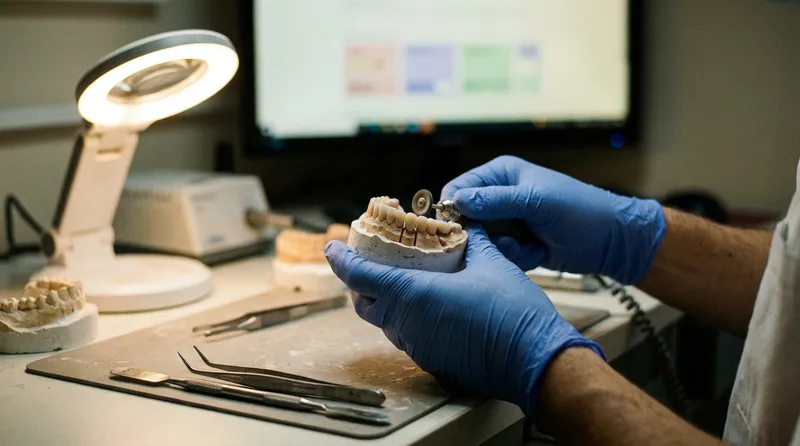
Both follow the same basic path: a scan and plan, implant surgery, healing, and final teeth. The difference is what happens on surgery day and what you wear in between. All-on-4 often includes fixed temporary teeth, while denture plans may use your existing or a temporary denture.
Nerves are normal. BMC Oral Health (2024) reports that 36% of Americans have dental anxiety, and the Journal of Dental Anesthesia reports that sedation dentistry has helped 75% of fearful patients keep up with regular visits. We offer nitrous oxide and oral sedation for longer visits.
Questions about the process?
Call our Peterborough office and we'll walk you through what each option involves.
Call (603) 924-3664 →Decide by asking four questions: how you want to clean your teeth, how much bone you have, what you can invest now, and how you feel about removable teeth. Your answers usually point clearly to one option. A consultation turns those answers into a plan.
The Journal of Oral and Maxillofacial Surgery reports implant success rates of 95-98% over 10 years, and either design benefits from the same careful planning. Your dentist's recommendation should match your scan and your priorities, not a default.
Book a consultation and 3D scan so you can compare both options with real numbers and images. The scan shows what your bone can support, and a written plan shows what each route costs. Either way, you'll leave with a clear plan and no pressure. The All-on-4 vs implant-supported dentures choice is personal, and a scan makes it concrete.
We welcome patients from Peterborough, Jaffrey, Dublin, Hancock, and across the Monadnock region, with early-morning hours from 7 AM Monday through Thursday. Bring your questions to Dr. Muhammad Rahim or Dr. Jasper Ainslie. If you request a time online, a real person from our team replies the same business day to confirm your visit.
Results may vary. Please consult with your dentist at Peterborough Family Dental for personalized treatment recommendations.
Compare both options for your mouth
Request an appointment at Peterborough Family Dental & Implant Center for an exam, a 3D scan, and a written plan.
Request an Appointment →Prefer to talk first?
Call (603) 924-3664 →
Dr. Muhammad Rahim, DMD
Dentist · Peterborough Family Dental & Implant Center
Peterborough, NH dentist providing gentle general, cosmetic, restorative, and implant dentistry for the whole family.
Was this article helpful?
Both are far more stable than conventional dentures. All-on-4 is fully fixed and supported by implants, so it typically feels steadier, while an implant denture can have slight movement because it also rests on the gums. Your bone and design determine the exact feel.
Our Peterborough team is happy to answer questions and get you on the calendar.
| Often, with final teeth after healing |
| Depends on the plan and design |


