Back to all articlesemergency-dentistry Dr. Muhammad Rahim, DMDNovember 12, 202610 min read

Tooth Abscess Symptoms: Signs, Risks, and Why It Can't Wait
Dr. Muhammad Rahim, DMDNovember 12, 202610 min read
Loading blog post
Dr. Muhammad Rahim, DMDNovember 12, 202610 min readCall and you'll reach a real person on our team: no phone tree, no hold music. We'd genuinely love to help.
(603) 924-3664Rather write to us? Contact us
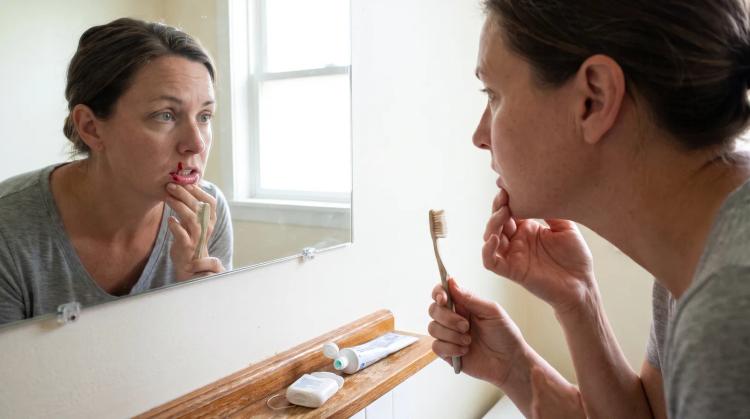
Tooth abscess symptoms can start quietly and escalate fast. A dull ache turns into a throbbing one, a cheek begins to swell, and a bad taste shows up in your mouth. At Peterborough Family Dental & Implant Center in Peterborough, NH, we provide emergency and general dental care, and abscesses are one of the problems we most want patients to catch early.
The reason is simple. An abscess is an infection, and infections don't resolve on their own. Knowing the signs, and why waiting is risky, can save your tooth and sometimes much more.
This guide covers what an abscess is, the symptoms to watch for, why it can't wait, when to head to an emergency room, and how dentists treat it.
A tooth abscess is a pocket of pus caused by a bacterial infection in or around a tooth. It can form at the tip of the root, called a periapical abscess, or in the gum beside the root, called a periodontal abscess. Either type needs a dentist to treat it.
Mayo Clinic's tooth abscess guide explains that a periapical abscess usually follows an untreated cavity, an injury, or earlier dental work. Bacteria enter through a deep cavity or a chip or crack and spread to the root, where swelling and inflammation build up.
The word abscess can sound alarming, and that reaction is reasonable. But it helps to see it as a clear signal. Your body is telling you exactly where the problem is, and a dentist can usually find it quickly once you're in the chair.
Think of it as the end of a chain. A small problem gets ignored, bacteria find a way in, and the body walls off the infection in a pocket. That pocket doesn't drain on its own in any reliable way, and it doesn't go away without treatment.
The most common tooth abscess symptoms are a severe, constant, throbbing toothache, sensitivity to hot, cold, and chewing, facial swelling, fever, and a bad taste or odor. Symptoms can appear together or one at a time. Any combination is a reason to call your dentist promptly.
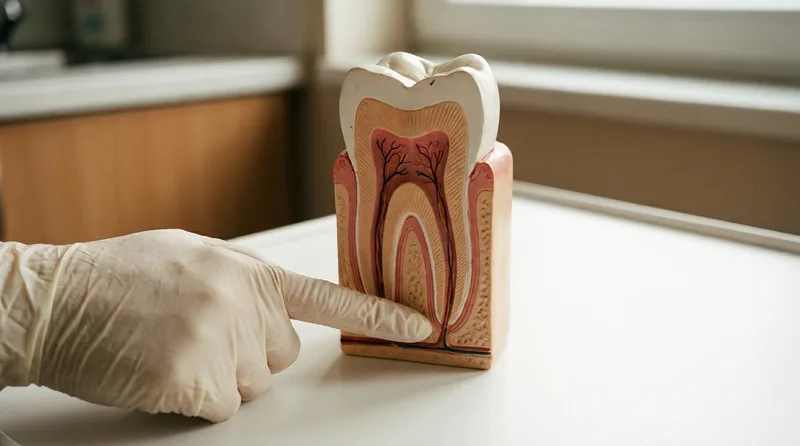
If you notice several of these at once, don't wait to see whether more appear. The combination is what matters, and the sooner the infection is treated, the simpler treatment tends to be.
Not every abscess shows swelling outside. Some stay hidden near the root and only show up as a persistent ache or sensitivity. That's why an exam and X-rays matter, even when nothing looks wrong in the mirror.
A tooth abscess is usually caused by an untreated cavity, a chipped or cracked tooth, earlier dental work, or gum disease that lets bacteria reach the root or the surrounding tissue. Habits and conditions that raise decay risk, such as a high-sugar diet and dry mouth, make an abscess more likely.
The CDC reports that 42% of adults aged 30 and older have some form of periodontal disease, which is one reason gum health matters here. The National Institute of Dental and Craniofacial Research offers patient information on tooth decay, the most common starting point for an abscess.
A tooth abscess can't wait because it won't go away without treatment, and the infection can spread to the jaw and to other areas of your head and neck. In rare cases it can lead to sepsis, a life-threatening infection that spreads through the body. Early treatment is far simpler and safer.
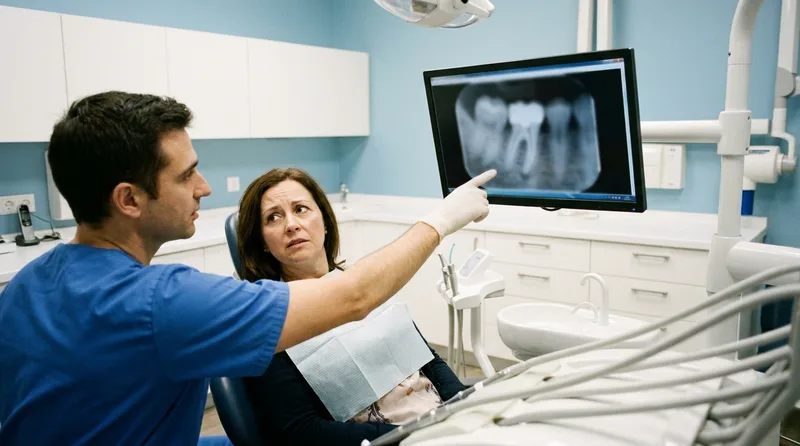
Mayo Clinic notes that if an abscess doesn't drain, the infection may spread to the jaw and to other areas of the head and neck. A tooth near the sinus can also lead to an infection in the sinus cavity. People with weakened immune systems face a higher risk of a spreading infection.
Waiting also costs you the tooth in many cases. An abscess caught early can often be treated with a root canal, while one left for weeks or months may leave too little tooth to save. Time is the one thing you can't get back with an infection.
Think you may have an abscess?
Call our Peterborough office as soon as it opens and ask about the earliest emergency visit.
Call (603) 924-3664 →If an abscess ruptures, you may taste a sudden rush of foul, salty fluid and feel a lot of relief, but the infection is still there. The relief is real, which is what makes it misleading. You still need dental treatment, because the cause hasn't been treated.
Mayo Clinic warns that a rupture can make you think the problem has gone away when it hasn't. Draining relieves the pressure, but the source of the infection remains inside or beside the tooth, and the abscess can form again.
A pimple-like bump on the gum near the tooth that comes and goes is another warning sign. It can mean the infection is draining through the gum. Come in even if the bump disappears, since the cause is still there.
So don't cancel your appointment because you feel better. Treat sudden relief as a signal to call, not as the all-clear. Your dentist can drain and clean the area properly and treat the tooth, so the problem doesn't return.
Go to the emergency room if you have trouble breathing or swallowing, or if you have a fever and facial swelling and can't reach your dentist. Otherwise, call your dentist promptly for any sign of an abscess. These symptoms can mean the infection has spread deeper into the jaw, throat, or neck.
When in doubt, make the call. Our guide to a toothache at night covers what to do until you're seen, and our guide to dental emergencies explains when to call, wait, or go to the ER.
Not sure how urgent it is?
Send us a note or call, and our team will help you decide the next step.
Contact Our Office →Dentists treat a tooth abscess by draining it and clearing the infection, then treating the tooth. They may save the tooth with root canal treatment, but some teeth are too damaged and need to be removed. You'll hear the options and what each involves before anything begins.
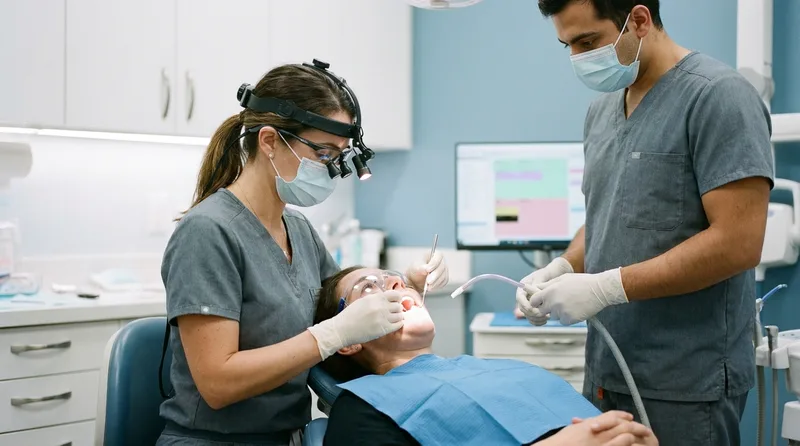
At your visit, the dentist examines the area and takes X-rays to see where the infection is and how much tooth remains. Treatment depends on what they find. Our dental abscess treatment service handles this, and our guide to what a root canal feels like explains what root canal treatment is like.
If a tooth can't be saved, replacing it matters. About 120 million Americans are missing at least one tooth, according to the American College of Prosthodontists. The Journal of Oral and Maxillofacial Surgery reports implant success rates of 95-98% over 10 years, and our guide to same day dental implants explains when an implant can be placed on the day a tooth is removed.
Yes, most abscesses can be prevented by avoiding tooth decay and treating small problems early. Brush for two minutes twice a day with fluoride toothpaste, clean between your teeth daily, limit sugary snacks, and keep regular checkups. These habits stop the chain before it reaches the root.
Regular visits do a lot of the work. The Journal of Dental Research reports that people who see a dentist regularly are 60% less likely to lose teeth, and the ADA notes that regular visits can catch 80% of oral health issues before they become serious. A small cavity treated early never becomes an abscess.
Tell the team you're nervous, ask about comfort options, and describe your symptoms clearly. The area is numbed before treatment, and sedation is available. A good team slows down for anxious patients, and treatment is usually far easier than the days of worry leading up to it.
BMC Oral Health (2024) reports that 36% of Americans have dental anxiety, and the Journal of Dental Anesthesia reports that sedation dentistry has helped 75% of fearful patients keep up with regular visits. We offer nitrous oxide and oral sedation. Our tips for nervous dental patients shares more ways to feel at ease.
Our front desk can also explain what to expect before you arrive, including what to bring and how the visit will run. Knowing the plan ahead of time takes a lot of the fear out of it.
An urgent visit can feel more stressful than a planned one, so say so when you call. The team will do what it can to keep your wait short and your visit calm.
Call your dentist as soon as you notice abscess symptoms, and go to the emergency room if you have trouble breathing or swallowing or facial swelling with a fever you can't get a dentist to see. Don't wait for the ache to fade. Early treatment is simpler, and it can save the tooth.
We welcome patients from Peterborough, Jaffrey, Dublin, Hancock, and across the Monadnock region, with early-morning hours from 7 AM Monday through Thursday. Our team will help you get seen with Dr. Muhammad Rahim or Dr. Jasper Ainslie. If you request a time online, a real person from our team replies the same business day to confirm your visit.
Results may vary. Please consult with your dentist at Peterborough Family Dental for personalized treatment recommendations.
Get a possible abscess checked
Request an appointment at Peterborough Family Dental & Implant Center, or call and ask about the earliest emergency visit.
Request an Appointment →Prefer to talk to someone first?
Call (603) 924-3664 →
Dr. Muhammad Rahim, DMD
Dentist · Peterborough Family Dental & Implant Center
Peterborough, NH dentist providing gentle general, cosmetic, restorative, and implant dentistry for the whole family.
Was this article helpful?
Look for a severe, constant, throbbing toothache that may spread to your jaw, neck, or ear, along with swelling, fever, a bad taste, or sensitivity to hot, cold, and chewing. Only a dentist can confirm it, so call promptly if you notice these signs.
Our Peterborough team is happy to answer questions and get you on the calendar.