
Back to all articlesSedation Dentistry Dr. Muhammad Rahim, DMDOctober 11, 20269 min read
How Long Does Dental Numbing Last? Timing and Tips
Dr. Muhammad Rahim, DMDOctober 11, 20269 min read
Loading blog post
Dr. Muhammad Rahim, DMDOctober 11, 20269 min readCall and you'll reach a real person on our team: no phone tree, no hold music. We'd genuinely love to help.
(603) 924-3664Rather write to us? Contact us
How long does dental numbing last? For most fillings and routine work, the numb feeling in your lip, tongue, and cheek wears off in about two to three hours. The tooth itself usually regains feeling sooner. Timing varies with the type of anesthetic, where it was injected, and how your body processes it.
This guide explains how long numbness lasts after common procedures, why the lower jaw stays numb longer, what's safe to do while you wait, and when lingering numbness is worth a call. You can also browse all of our dental services to see the care we offer.
Questions about numbing before your visit?
Dr. Muhammad Rahim and Dr. Jasper Ainslie are happy to explain exactly what to expect, from the numbing gel to how long you'll feel it afterward.
Request an Appointment →After a filling, the numbness in your lip and tongue typically lasts about two to three hours, while the tooth often wakes up within about an hour. In a 2008 study in The Journal of the American Dental Association, median recovery without a reversal agent took 155 minutes for the lower lip.
That study, led by Elliot Hersh, tracked adults and teens after routine injections of lidocaine with epinephrine, the most common dental anesthetic combination. Without any reversal medication, the median recovery time was 155 minutes for the lower lip, 133 minutes for the upper lip, and 125 minutes for the tongue.
In everyday terms, that's roughly 2 to 2.5 hours for most people. The ADA's guide to anesthesia and sedation explains that local anesthetics are used for fillings, crown preparation, and gum treatment, and that you may need a pain reliever afterward.
155 min
median time for the lower lip to feel normal again
Source: JADA, 2008
125 min
median time for the tongue to recover
Source: JADA, 2008
70 min
lower lip recovery when a reversal agent was used
Source: JADA, 2008
Those are medians, so half of people recovered faster and half took longer. A small filling on an upper tooth may wear off noticeably quicker than a crown preparation on a lower molar.
A good rule of thumb: plan on two to three hours of a numb lip, and don't schedule a lunch meeting right after your appointment.
Numbing often lasts longer for bigger procedures like crowns, root canals, and extractions, because they take more time and may need extra anesthetic. Routine cleanings usually need no injection at all. For most dental work, expect the lip and tongue to stay numb for a few hours rather than all day.
Here's a general picture, though your own experience may differ:
If you're having more than one tooth treated in the same visit, numbness may cover a wider area and last longer. Ask your dentist roughly how long to expect so you can plan meals, work, and school pickups.
It's also worth taking any recommended pain reliever before the numbness wears off after a bigger procedure. That way you're ahead of the soreness instead of chasing it.
The lower jaw usually stays numb longer because lower back teeth often need a nerve block, an injection near the nerve that supplies half of the lower jaw. That numbs a wide area, including the lip, chin, and half the tongue. Upper teeth are usually numbed with a smaller injection right next to the tooth.
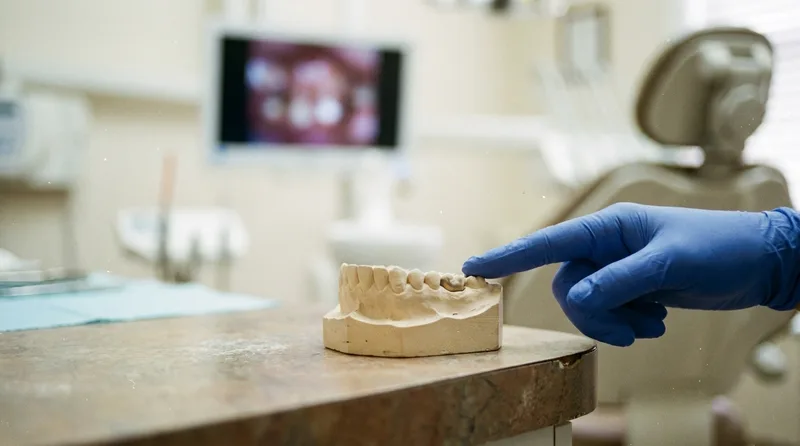
The bone in the lower jaw is thicker and denser than in the upper jaw, so anesthetic can't easily soak through to a single tooth. A block reaches the nerve before it enters the bone, which is very effective, but it also numbs everything that nerve supplies.
That's why a filling on a lower molar can leave half your tongue and lip feeling heavy for hours, while an upper filling might only numb a patch of cheek and gum. Neither means anything went wrong. It's simply how the nerves are laid out.
| Factor | Shorter numbness | Longer numbness |
|---|---|---|
| Location | Upper teeth | Lower back teeth |
| Injection type | Small injection beside the tooth | Nerve block |
| Amount | One small dose | Several doses for longer work |
| Anesthetic | Without epinephrine | With epinephrine |
How long numbness lasts depends on the anesthetic used, whether it contains epinephrine, how much was needed, where it was injected, and your own metabolism. Longer procedures, like crowns or root canals, often need more anesthetic, so numbness can last longer than after a quick filling.
Epinephrine plays a big role. Most dental anesthetics include a small amount of it to narrow nearby blood vessels, which keeps the anesthetic in place longer and reduces bleeding. A 2008 study in Anesthesia Progress by Moore and colleagues explained that reversal medicines work by blocking this vessel-narrowing effect, so the body absorbs the anesthetic faster.
Other factors include:
The ADA explains that local anesthesia works by blocking the nerves that sense or transmit pain, and that dentists often apply a topical numbing gel first so the injection itself is more comfortable.
While you're still numb, avoid chewing food, hot drinks, and biting your lip, cheek, or tongue, since you can injure yourself without feeling it. Stick to cool liquids or very soft foods until normal sensation returns. Keep a close eye on children, who often chew or suck on a numb lip out of curiosity.

A few simple rules keep you safe:
Lip and cheek bites are the most common problem after numbing, especially in children. They usually look like a swollen, white, or raw patch the next day and heal on their own within several days. Call your dentist if one looks infected or doesn't improve.
There's no proven home trick to speed up numbness much, but some dental offices can give a reversal injection after treatment. In the 2008 JADA study, a reversal agent called phentolamine mesylate cut median lower-lip recovery from 155 minutes to 70 minutes, and tongue recovery from 125 to 60 minutes.
You can read the abstract of the 2008 study on reversing dental numbing on PubMed. That's a reduction of about 55% for the lower lip and 52% for the tongue. Upper lip recovery also dropped, from 133 minutes to 50 minutes, a reduction of about 62%. Ask ahead of time whether a reversal option is available if you have a meeting, a presentation, or a child who struggles with numbness.
At home, gentle activity like a short walk may help circulation, and a warm compress on the cheek feels soothing for some people. Neither has strong evidence, but both are harmless. What you shouldn't do is massage hard, bite, or poke at the area.
Mostly, it's a waiting game. Plan something easy for the two or three hours after your visit, and the feeling will come back on its own.
Numbness that lasts beyond the rest of the day is worth a call to your dentist. Rarely, an injection or a procedure near a nerve, such as a lower wisdom tooth removal, can irritate the nerve and cause tingling or numbness that lasts days or longer. Most cases improve over time.
Call your dentist if you notice:
Your dentist will want to know when it started, exactly where you feel it, and whether it's slowly improving. Keeping a quick daily note helps track the change. According to the ADA, regular dental visits catch 80% of oral health issues before they become serious, and the same principle applies here: reporting a problem early makes it easier to manage.
If you have trouble breathing, swallowing, or facial swelling that's spreading quickly, that's an emergency. Call 911 or go to the nearest emergency room.
Remember that some soreness at the injection site for a day or two is normal and different from lasting numbness. An over-the-counter pain reliever usually helps, and the ADA notes non-narcotic pain relievers are the most commonly used after dental treatment.
We start with a topical numbing gel, give the injection slowly, and check that you're fully numb before any work begins. We also tell you what to expect afterward, including roughly how long the numbness should last for your specific procedure, so you can plan the rest of your day.

If needles make you nervous, you're not alone. A 2021 meta-analysis in the Journal of Dentistry estimated about 15% of adults have dental fear and anxiety. Our comfort and sedation options, including nitrous oxide and oral sedation, can help you relax while the numbing does its job.
You can also learn how our sedation dentistry options work alongside numbing for longer or more involved visits.
So, how long does dental numbing last? For most people, two to three hours after a routine filling. Eat carefully, protect your lips and tongue, and call us if anything feels off the next day.
Results may vary. Please consult with your dentist at Peterborough Family Dental for personalized treatment recommendations.
Gentle numbing, honest answers
We'll explain every step and help you plan around your visit. Call (603) 924-3664 or request a visit online.
Request an Appointment →
Dr. Muhammad Rahim, DMD
Dentist · Peterborough Family Dental & Implant Center
Peterborough, NH dentist providing gentle general, cosmetic, restorative, and implant dentistry for the whole family.
Was this article helpful?
Usually about two to three hours, similar to adults, though it varies with the tooth and the amount of anesthetic. Children are more likely to bite or chew a numb lip, so supervise them closely, offer soft foods only after feeling returns, and keep them distracted.
Our Peterborough team is happy to answer questions and get you on the calendar.


