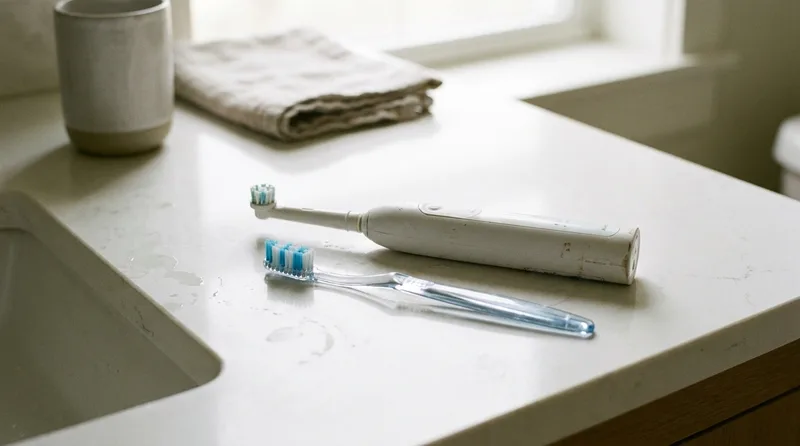
Electric vs Manual Toothbrush: What Dentists Recommend
Dr. Muhammad Rahim, DMDSeptember 6, 20269 min read
The electric vs manual toothbrush debate comes up constantly, and the honest answer is that both can clean teeth effectively when used correctly, though each has real advantages worth understanding before choosing. This guide breaks down what dentists actually consider when making a recommendation, rather than assuming one option is universally superior.
Toothbrush guidance is part of routine preventive dentistry care at Peterborough Family Dental & Implant Center. Most patients are surprised there isn't a single universal answer that applies to everyone, since marketing often suggests otherwise.
Not Sure Which Is Right for You?
Ask at your next checkup for a recommendation based on your specific technique and needs.
Electric vs Manual Toothbrush: Which Actually Cleans Better?
Electric toothbrushes generally remove slightly more plaque than manual brushes over time, largely due to consistent brushing motion and built-in timers, though a manual toothbrush used correctly and thoroughly can still clean effectively.
Roughly 42% of adults aged 30 and older have some form of periodontal disease, according to CDC 2024 data, which underscores how much consistent, effective brushing technique matters regardless of which tool is used. The difference often comes down to technique more than the tool itself.
Electric brushes take some of the technique out of the equation, since the brush head does much of the work through its oscillating or vibrating motion, which helps patients who struggle with proper brushing technique or duration.
A manual toothbrush, in the hands of someone with good technique and a full two minutes of consistent brushing, can achieve very similar results. The real question isn't which tool is objectively better, but which one you'll actually use consistently and correctly.
Consistency, more than the tool itself, tends to be the deciding factor in long-term results, regardless of which option someone chooses.
An exam and cleaning can help identify whether your current technique, with either tool, is actually reaching all the areas it should. According to MouthHealthy, the ADA's patient education site, both electric and manual toothbrushes are effective at removing plaque when used correctly.
Do Different Types of Electric Toothbrushes Matter?
Dentist · Peterborough Family Dental & Implant Center
Peterborough, NH dentist providing gentle general, cosmetic, restorative, and implant dentistry for the whole family.
Was this article helpful?
Frequently asked questions
Electric toothbrushes generally remove slightly more plaque due to consistent motion and timers, but a manual toothbrush used correctly for two full minutes can achieve very similar cleaning results in most everyday cases.
Dentists typically consider a patient's brushing technique, dexterity, and preference when recommending electric or manual, since the right choice varies more by individual than by the toothbrush itself in most situations.
They're worth the investment for patients who struggle with technique, have limited dexterity, or find built-in timers and pressure sensors helpful. For others, a manual brush works just as effectively.
Yes, electric toothbrushes with pressure sensors can help patients who tend to brush too hard, since consistent, gentle pressure matters more for gum health than raw brushing power alone entirely.
Brushing technique, duration, and consistency matter more than toothbrush type, since a poor technique with either tool falls short of a thorough, effective cleaning of all tooth surfaces every time.
Replace your toothbrush or electric brush head every three to four months, regardless of type, since worn bristles clean considerably less effectively than fresh ones over time and use.
Replacing your brush head or toothbrush every three to four months matters regardless of type.
Different types of electric toothbrushes, oscillating-rotating versus sonic, both clean effectively, though the sensation and cost can vary between them. Neither type is universally superior to the other for most patients.
The brush matters less than the technique and the time spent using it.
Oscillating-rotating brushes move in a rotating motion, cleaning one tooth at a time with a small, round brush head, while sonic brushes vibrate at a high frequency across a wider brush head, creating a slightly different sensation and cleaning pattern. Some patients strongly prefer one sensation over the other once they've tried both.
Both have solid evidence behind their effectiveness, and the choice often comes down to personal comfort and preference more than any meaningful difference in results for most patients. Price points vary considerably within each category, from basic models to those with multiple brushing modes and smart features like app connectivity or travel cases.
Trying a specific model, sometimes with a trial period offered by the manufacturer, is a reasonable way to figure out which sensation you actually prefer before committing to a specific brush. Asking Dr. Rahim or Dr. Ainslie for a recommendation based on your specific mouth and habits is another practical option.
What Do Dentists Actually Consider When Recommending One?
Dentists typically consider a patient's current brushing technique, any dexterity limitations, and personal preference when recommending electric or manual, since the right choice varies more by individual than by the toothbrush itself. There's no single universal recommendation that fits everyone, which is part of why the answer often depends on the patient's specific exam findings rather than a general rule.
Whether a patient's technique with a manual brush is already thorough and consistent
Any dexterity or mobility limitations that make a manual brush harder to use well
A patient's personal preference and likelihood of sticking with either option
Specific dental conditions, like braces or gum sensitivity, that might favor one tool
This is why the same dentist might recommend electric to one patient and manual to another, based entirely on their specific situation, rather than a one-size-fits-all rule that ignores individual differences between patients.
Not All Electric Brushes Work the Same Way
Does the Recommendation Change for Kids Versus Adults?
The recommendation can shift somewhat for children, since a fun, engaging electric toothbrush sometimes encourages a reluctant child to brush longer and more thoroughly than they otherwise would with a plain manual brush. For adults, the decision usually comes down more to technique and preference.
Many electric toothbrushes designed for kids include features like timers with music, lights, or characters, which can turn a chore into something a child actually looks forward to.
This engagement factor sometimes matters more for children than the technical cleaning difference between electric and manual, since getting a child to brush consistently and for a full two minutes is often the bigger challenge. For adults, existing habits and technique tend to matter more than novelty or engagement.
A pediatric dental visit is a good opportunity to ask about age-appropriate options, along with general feedback on a child's current brushing habits.
Age-appropriate brush heads and adult supervision remain important regardless of which type of toothbrush a child uses.
Are Electric Toothbrushes Worth the Extra Cost?
Electric toothbrushes are worth the extra investment for many patients, particularly those who struggle with technique, have limited dexterity, or simply find the built-in timer and pressure sensors helpful for maintaining consistent habits. For others, a manual brush works just as well, making the added cost unnecessary for their specific situation and preferences.
Factor
Manual Toothbrush
Electric Toothbrush
Technique dependence
Relies heavily on user technique
Less dependent on technique
Built-in features
None
Timers, pressure sensors, some models
Good for braces or limited dexterity
Can be more difficult
Often easier to maneuver
The investment tends to pay off most for patients who genuinely struggle with manual brushing technique or consistency, and less so for patients already brushing thoroughly with a manual brush, since the added features address a problem they don't have.
Time for Your Next Checkup?
A routine checkup is a great time to get feedback on your brushing technique, whichever tool you use.
Does an Electric Toothbrush Help With Gum Health Specifically?
Yes, electric toothbrushes can help with gum health, particularly for patients who tend to brush too hard, since many models include pressure sensors that alert you when you're pressing too firmly. Consistent, gentle pressure matters more for gum health than raw brushing power, a distinction many patients aren't aware of until it's pointed out during a routine exam.
Brushing too aggressively with a manual toothbrush is a common cause of gum recession over time, since heavy pressure wears away gum tissue gradually without the user necessarily noticing in the moment. Electric brushes with pressure sensors provide direct feedback that helps correct this habit before it causes lasting damage.
For patients who already brush gently and thoroughly, this particular benefit matters less, since the underlying issue it addresses isn't present in their specific case. Identifying whether this applies to you is something Dr. Rahim or Dr. Ainslie can assess during a routine exam, simply by checking your gums and asking about your technique.
If you're unsure whether your brushing pressure is appropriate, mentioning it at your next checkup lets Dr. Rahim or Dr. Ainslie assess your specific technique directly.
Whether the Price Difference Earns Its Keep
When Should You Reassess Your Toothbrush Choice?
It's worth reassessing your toothbrush choice if you notice bleeding gums, ongoing plaque buildup despite regular brushing, or simply find yourself skipping brushing sessions because the current routine feels tedious. These are signs the current tool or technique isn't fully working for you.
Bleeding gums during brushing can sometimes indicate technique issues, whether that's brushing too hard with a manual brush or not holding an electric brush correctly against the gumline. Persistent plaque buildup despite regular brushing, noticeable as a rough or fuzzy feeling on teeth, suggests the current approach isn't reaching everywhere it should.
Regular dental visits catch roughly 80% of oral health issues before they become serious, according to the ADA, and a checkup is a reliable way to find out whether your current toothbrush and technique are working as well as they should.
If brushing has started to feel like a chore you avoid, switching tools, whether to add convenience or simply for a change, might make the habit easier to maintain consistently.
Notice whether your gums bleed during or after brushing, with either tool.
Ask Dr. Rahim or Dr. Ainslie to observe your technique at a checkup.
Try a different toothbrush type if consistency has been a struggle.
Replace your toothbrush or brush head every three to four months.
Bringing any of these signs to a routine checkup gives Dr. Rahim or Dr. Ainslie a chance to observe your technique directly and offer specific feedback.
What Actually Matters More Than Electric vs Manual?
Brushing technique, duration, and consistency matter more than which type of toothbrush you use, since a poor technique with an electric brush and a poor technique with a manual brush both fall short of a thorough cleaning. The tool matters less than how it's used.
Two minutes, twice a day, with the right angle beats any hardware upgrade.
Brushing for a full two minutes, twice daily, reaching all surfaces including the back molars and along the gumline, produces better results than an expensive electric brush used carelessly for thirty seconds. Flossing daily matters just as much as the brushing method itself, since neither electric nor manual brushes clean effectively between teeth.
Replacing your brush head or toothbrush every three to four months, regardless of type, also plays a meaningful role in maintaining effective cleaning. Worn bristles clean considerably less effectively than fresh ones, whichever type you use, and frayed bristles are a clear visual sign it's time for a replacement.
Focusing on these fundamentals first, then choosing the tool that helps you stick with them, tends to produce better results than fixating on the electric versus manual question alone. CDC oral health data notes that consistent daily brushing and flossing remain the foundation of good oral health regardless of tool choice.
Electric vs manual toothbrush ultimately comes down to which tool helps you brush consistently and thoroughly, not which one is universally superior. Both can be effective when used correctly, and the right choice depends on your specific technique, dexterity, and preference more than any marketing claim. Peterborough Family Dental & Implant Center can help assess your current routine and make a recommendation suited to your specific needs, whichever tool you currently prefer.
Results may vary. Please consult with your dentist at Peterborough Family Dental for personalized treatment recommendations.
If you're unsure which option fits your routine, bringing it up at your next checkup is a simple way to get a recommendation tailored to you, without any pressure to switch from whatever you currently use.
Ready for Your Next Checkup?
Request an appointment with Peterborough Family Dental & Implant Center and get personalized brushing guidance.


 Dr. Muhammad Rahim, DMDSeptember 6, 20269 min read