
Back to all articlesCosmetic Dentistry Dr. Muhammad Rahim, DMDOctober 12, 20269 min read
Composite Bonding for Teeth: A Quick Fix for Chips and Gaps
Dr. Muhammad Rahim, DMDOctober 12, 20269 min read
Loading blog post
Dr. Muhammad Rahim, DMDOctober 12, 20269 min readCall and you'll reach a real person on our team: no phone tree, no hold music. We'd genuinely love to help.
(603) 924-3664Rather write to us? Contact us
Composite bonding is one of the simplest ways to fix a chipped, gapped, or uneven tooth. Tooth-colored resin is shaped directly onto the tooth, hardened with a light, and polished. Most repairs take one visit, often with no numbing and no drilling.
For many people, it's the right starting point before considering veneers. This guide explains what bonding can and can't fix, how long it lasts, and how it compares with porcelain. Dental bonding is one of the quickest dental services at Peterborough Family Dental & Implant Center.
At Peterborough Family Dental, Dr. Muhammad Rahim, DMD, uses bonding as both a standalone cosmetic treatment and as part of broader smile improvement plans, depending on the degree of change a patient is looking for.
Composite bonding is a single-appointment cosmetic procedure using tooth-colored resin to repair chips, close gaps, reshape teeth, and cover minor discoloration. It requires little or no tooth removal and is the most conservative, accessible entry point in cosmetic dentistry.
The resin is the same tooth-colored material used for fillings. It's applied in thin layers, each shaped and hardened, until the tooth has the form you want. A final polish blends it in.
A skilled dentist can match the shade very closely, so the repair is hard to spot at normal talking distance. Up close or in certain light, resin looks a little different from enamel or porcelain. That's one of the trade-offs.
Bonding is considered additive, meaning it typically adds to the tooth surface rather than removing from it. In some cases, a small amount of etching is done to help the resin bond firmly to the tooth surface, but this step is minimal compared to the preparation required for veneers.
99.7%
of Americans believe a smile is an important social asset, which is why small chips and gaps bother people so much
Source: American Academy of Cosmetic Dentistry
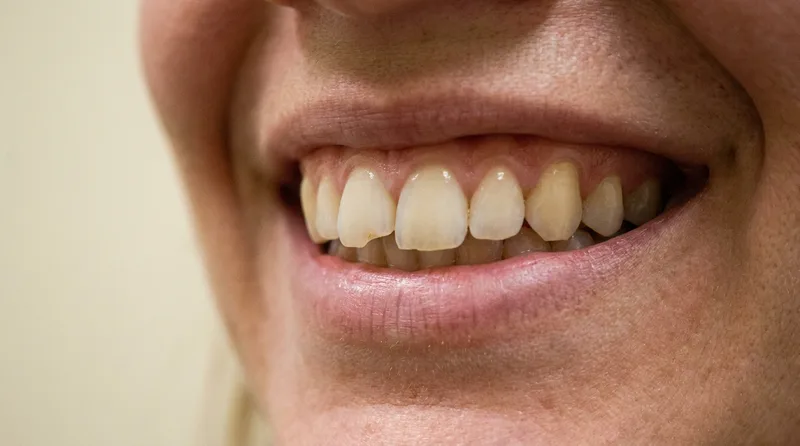
Bonding works well for chipped or broken tooth edges, small gaps between teeth, slightly short or uneven teeth, minor discoloration on a single tooth, and rough or irregular surfaces. It is most effective for localized, relatively minor cosmetic issues where the amount of change needed is modest.
Common situations where bonding is a good fit:
Bonding is less well-suited for significant color changes across multiple teeth, which respond better to whitening or veneers. It is also not the best choice for large structural repairs or for teeth that already have extensive restorations, where a crown may be more appropriate.
One tip before bonding: if you're thinking about whitening, do it first. Resin is matched to your current shade and won't lighten with bleach later. The ADA's guide to teeth whitening explains what professional whitening can and can't change.
Often, yes. Chipped front teeth are common in active kids, especially from sports, falls, and bikes. Because bonding adds material instead of removing healthy tooth, it's a gentle way to restore a young tooth's shape while the mouth is still growing.
Teens who are close to finishing braces or aligners may want to wait until the teeth are in their final position, since the shape of the bonding is planned around the bite. A dentist can also suggest a custom mouthguard to protect the repair during contact sports. Many parents like that a small chip can be fixed in a single after-school visit. It's quick, comfortable, and easy to update later.
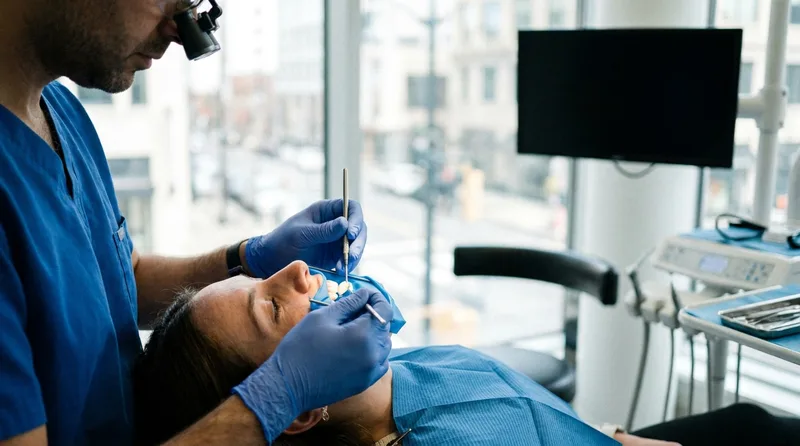
A bonding appointment usually takes 30 to 60 minutes per tooth. Most people don't need numbing unless the repair is near a cavity or a sensitive area. That makes bonding a good fit for nervous patients, since about 36% of Americans have some level of dental anxiety, according to a 2024 study in BMC Oral Health.
The sequence of steps:
The result is immediate. Patients leave with the repair or improvement complete, with no temporary restorations or waiting period involved. Some minor bite sensitivity can occur in the first day or two if the bite needed adjusting, but this resolves quickly.

Bonding commonly lasts several years, often up to ten, before it needs a touch-up or replacement. How long depends on where it is, your bite, and your habits. Edge repairs on front teeth that take regular biting tend to chip or wear sooner than bonding on a side surface.
WebMD's overview of dental bonding notes the same trade-off: bonding costs less and takes less time than veneers, but it's less stain-resistant and more prone to chipping.
Composite can be repaired relatively easily if a chip occurs, and it can be added to or repolished without replacing the entire restoration, which is an advantage over the more permanent veneer approach.
Patients who grind are at higher risk of chipping bonded teeth and should discuss whether a night guard is appropriate before undergoing bonding. The forces involved in grinding can significantly shorten the lifespan of any composite restoration on the front teeth.
Composite bonding and porcelain veneers both improve the appearance of front teeth, but they differ in durability, reversibility, aesthetics, and investment level. Bonding is the more conservative, accessible, and reversible option; veneers offer a more durable, stain-resistant, and aesthetically precise result at a higher investment and with an irreversible preparation step.
| Factor | Composite Bonding | Porcelain Veneers |
|---|---|---|
| Visits needed | Usually one | Two or more |
| Enamel removed | Little to none | A thin layer |
| Stain resistance | Lower, picks up color over time | Higher, porcelain resists staining |
| Repairability | Can be patched chairside | Usually replaced rather than repaired |
A practical approach for many patients is to start with bonding on one or two teeth, see how they respond to the result, and upgrade to veneers later if they want greater durability and precision. Bonding also serves as a preview of sorts, letting a patient live with a changed tooth shape before committing to the permanent preparation involved in veneers.
Related: Leaning toward porcelain? Here's what veneers cost, how they're placed, and how long they last. Porcelain veneers: cost and process →
Bonded teeth are cared for with the same daily habits as natural teeth, with a few added considerations to protect the composite surface and extend its lifespan. Composite is somewhat more vulnerable than enamel to staining and physical stress, so habits that are generally recommended for teeth are especially important when bonding is involved.
Keeping bonded teeth looking fresh
Routine visits matter for bonding just as they do for natural teeth. Regular dental visits catch roughly 80% of oral health issues before they become serious, according to the ADA. For bonding, that means small chips or stains get fixed with a quick touch-up instead of a full redo.
Bonding is one of the most affordable cosmetic treatments, usually far less per tooth than a porcelain veneer. When it repairs damage, like a chipped or broken tooth, insurance often covers part of the cost. When it's purely cosmetic, such as closing a small gap, coverage is less likely.
The price depends on how many teeth are treated and how much resin each one needs. A single small chip takes a few minutes. Reshaping several front teeth takes longer and costs more. Either way, you get a written estimate before any work starts.
For patients spreading out cosmetic work, CareCredit financing can turn the cost into monthly payments. And because bonding can be touched up rather than redone, the long-term cost stays modest as long as you look after it.
Composite bonding suits patients who want a conservative, single-appointment fix for one or a few teeth and prefer to avoid the irreversible preparation of veneers. It is an excellent entry point for patients who want to address a specific issue without committing to a full cosmetic plan.
It is particularly well-suited as an entry point to cosmetic dentistry for patients who are unsure whether they want a more extensive treatment or who want to address a specific tooth without committing to a full smile plan.
The best next step is a short consultation. Dr. Rahim can look at the specific teeth, explain what bonding would realistically achieve, and walk through any alternatives. To book, call (603) 924-3664.
Keep reading
Results may vary. Please consult with your dentist at Peterborough Family Dental for personalized treatment recommendations.
Interested in bonding?
Book a free cosmetic consultation and get an honest look at what bonding can do for your smile.
Book a Free Consultation →
Dr. Muhammad Rahim, DMD
Dentist · Peterborough Family Dental & Implant Center
Peterborough, NH dentist providing gentle general, cosmetic, restorative, and implant dentistry for the whole family.
Was this article helpful?
Composite bonding is a cosmetic dental procedure in which tooth-colored resin is sculpted directly onto the tooth surface, then hardened and polished in a single appointment. It is used to repair chips, close small gaps, reshape teeth, and cover minor discoloration.
Our Peterborough team is happy to answer questions and get you on the calendar.


