
Back to all articlesPeriodontal Care Dr. Muhammad Rahim, DMDNovember 12, 202611 min read

Bleeding Gums When You Brush: Causes and How to Fix Them
Dr. Muhammad Rahim, DMDNovember 12, 202611 min read
Loading blog post
Dr. Muhammad Rahim, DMDNovember 12, 202611 min readCall and you'll reach a real person on our team: no phone tree, no hold music. We'd genuinely love to help.
(603) 924-3664Rather write to us? Contact us
Seeing pink in the sink is alarming, and bleeding gums when you brush are one of the most common reasons people call a dentist. The good news is that the most common cause is also the most fixable. At Peterborough Family Dental & Implant Center in Peterborough, NH, we provide preventive and gum care, and early gum problems are what we most like to catch.
The key point is that healthy gums usually don't bleed. When they do, your body is signaling irritation, and acting early can keep a small problem small.
This guide covers why gums bleed, what you can do at home, how gingivitis differs from gum disease, and when it's time to book a visit.
Bleeding gums when you brush are most often a sign of plaque buildup and gingivitis, the mildest form of gum disease. Plaque is a sticky film of bacteria that irritates the gum tissue and makes it swollen and fragile. Gentle brushing then makes irritated gums bleed.
Mayo Clinic's guide to periodontitis explains the chain. Plaque forms on your teeth, and if it stays, it can harden under the gumline into tartar, which brushing and flossing can't remove. Plaque can cause gingivitis, which is irritation and swelling of the gum tissue around the base of your teeth.
Many people assume bleeding means they brushed too hard, so they ease up and the plaque stays. In most cases the gums are reacting to what's on the teeth, not to the brush.
The encouraging part is that gingivitis can be reversed with professional treatment and good home care, as long as it's treated early, before bone loss. That's why it's worth acting on bleeding rather than waiting to see if it passes.
The most common causes are plaque and tartar buildup, but brushing too hard, a new flossing routine, hormonal changes, certain medicines, smoking, and poor nutrition can also play a part. Most causes are easy to address once you know which one applies. A dentist can tell by examining your gums.
If your gums bleed in only one spot, a rough filling edge or a piece of trapped food may be the cause, which a quick visit can solve.
Often several causes overlap. A little plaque, a stiff brush, and a stressful month can all add up to gums that bleed.
A little bleeding in the first days of a new flossing routine is common, and it should ease as your gums get healthier. If bleeding continues after a couple of weeks of gentle daily flossing, plaque or gum disease is more likely, and a dentist should take a look.
Many people stop flossing because it bleeds, which makes the problem worse. The bleeding is a sign that plaque has been sitting along the gumline, so cleaning there is exactly what the gums need. Be gentle, use a clean section of floss for each tooth, and curve it against each tooth rather than snapping it down.
Mayo Clinic recommends flossing at least once a day, and it notes that flossing before you brush helps clear loosened food and bacteria. If bleeding stops when you floss gently but returns when you skip a few days, that's a useful clue. It means plaque is building up quickly between your teeth, and keeping the habit going usually settles the gums. If you find regular floss hard to use, ask your dentist or hygienist about interdental brushes or a water flosser.
Brush for two minutes twice a day with a soft toothbrush and fluoride toothpaste, floss daily, and keep your technique gentle. These habits remove the plaque that irritates your gums. Most people notice less bleeding within a couple of weeks if plaque is the cause.

A timer, or an electric brush with a built-in two-minute timer, can help you brush long enough. Many people stop well short without realizing it.
Home care is the first step, not the last. If tartar has already formed under the gumline, no brushing technique will remove it. That takes a professional cleaning.
Gingivitis is early gum irritation that can be reversed, while periodontitis is a deeper infection that damages the bone supporting your teeth. Bleeding can appear in both, so you can't tell them apart at home. A dentist measures the spaces around your teeth and checks X-rays to see which one you have.
| Feature | Gingivitis (early) | Periodontitis (advanced) |
|---|---|---|
| What you notice | Red, swollen gums that bleed when you brush or floss | Bleeding, tender or puffy gums, bad breath that won't go away, and sometimes pus |
| What's happening | Plaque irritates the gum tissue around the base of the teeth | Infection has moved below the gumline and is damaging tissue and bone |
| Can it be reversed? | Yes, with professional treatment and good home care, if caught early | It can be treated and controlled, but lost bone doesn't fully return |
| Teeth | Firmly in place | May loosen, shift, or develop new gaps |
| What to do | Better brushing and flossing, and a professional cleaning | A dental exam, a deep cleaning, and ongoing maintenance visits |
The National Institute of Dental and Craniofacial Research describes gum disease as an infection that causes inflammation of the tissues that hold your teeth in place. Left untreated, it can spread to the bones supporting the teeth. That's why bleeding that doesn't improve deserves attention.
The CDC reports that 42% of adults aged 30 and older have some form of periodontal disease, and many don't know it, because early gum problems often don't cause discomfort.
Gums that keep bleeding?
Request an appointment at our Peterborough office and we'll check your gums and show you where you stand.
Request an Appointment →See a dentist if your gums bleed regularly, bleeding continues after a couple of weeks of gentle care, or you notice swelling, lasting bad breath, loose teeth, or receding gums. Mayo Clinic advises making an appointment as soon as possible, because earlier care gives better odds of reversing damage.
Don't wait for discomfort. Gum disease is often silent in the early stages, which is why many people lose bone before they notice anything. Bleeding is the early signal, and it's worth taking seriously.
Not sure if your bleeding is normal?
Send us a note or call and our team will tell you whether it's time for a visit.
Contact Our Office →A dentist examines your gums, measures the spaces around each tooth, takes X-rays if needed, and removes plaque and tartar with a professional cleaning. If the infection has reached below the gumline, a deeper cleaning called scaling and root planing may be needed. You then follow a maintenance schedule to keep your gums healthy.
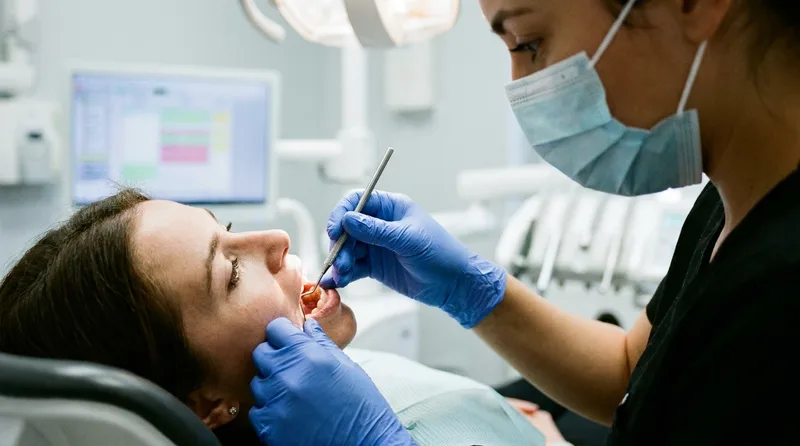
Our gum disease treatment service covers each of these steps, and our guide to scaling and root planing explains what a deep cleaning involves. Treatment is usually far simpler than people fear.
Nervous? BMC Oral Health (2024) reports that 36% of Americans have dental anxiety, and the Journal of Dental Anesthesia reports that sedation dentistry has helped 75% of fearful patients keep up with regular visits. We offer nitrous oxide and oral sedation, and our tips for nervous dental patients share more ways to feel at ease.
Persistent bleeding gums can signal gum disease, and Mayo Clinic notes that the bacteria involved can enter the bloodstream through gum tissue. Periodontitis is linked with respiratory disease, rheumatoid arthritis, coronary artery disease, preterm birth, and problems controlling blood sugar in diabetes. Linked doesn't mean caused, but it's a good reason to treat your gums.
The link with diabetes runs both ways. Diabetes raises the risk of gum disease, and gum infection can make blood sugar harder to control. Our guide to implants for smokers and people with diabetes explains how these conditions affect healing and treatment.
Untreated gum disease can eventually loosen teeth or lead to tooth loss. About 120 million Americans are missing at least one tooth, according to the American College of Prosthodontists. If a tooth is lost, replacement options exist. The Journal of Oral and Maxillofacial Surgery reports implant success rates of 95-98% over 10 years, and the American Academy of Implant Dentistry reports that implant-supported teeth can restore up to 90% of natural chewing power. Healthy gums come first.
Prevent bleeding gums by brushing for two minutes twice a day, flossing daily, eating less sugar, avoiding tobacco, and seeing your dentist regularly. Mayo Clinic notes that most people have cleanings every 6 to 12 months, and people with risk factors may need them more often. Consistency matters more than intensity.

Small routines stick better than big resolutions. Keep floss next to your toothbrush, set a reminder on your phone, and pair flossing with something you already do every night.
Regular visits make a big difference. The Journal of Dental Research reports that people who see a dentist regularly are 60% less likely to lose teeth, and the ADA notes that regular visits can catch 80% of oral health issues before they become serious. Our guide on how often to see the dentist explains how risk sets your schedule.
Switch to a soft brush and gentle daily flossing, and book a visit if your gums haven't improved in a couple of weeks or you notice swelling, bad breath, or loose teeth. Early gum problems are easy to treat, and a short visit shows where you stand. Waiting only lets plaque harden and the infection deepen.
Bring a list of your medicines and any health conditions, since both can affect your gums. That helps your dentist look for the cause rather than just the symptom.
We welcome patients from Peterborough, Jaffrey, Dublin, Hancock, and across the Monadnock region, with early-morning hours from 7 AM Monday through Thursday. Bring your questions to Dr. Muhammad Rahim or Dr. Jasper Ainslie. If you request a time online, a real person from our team replies the same business day to confirm your visit.
Results may vary. Please consult with your dentist at Peterborough Family Dental for personalized treatment recommendations.
Get your gums checked
Request an appointment at Peterborough Family Dental & Implant Center for an exam and a clear plan for healthier gums.
Request an Appointment →Prefer to talk to someone first?
Call (603) 924-3664 →
Dr. Muhammad Rahim, DMD
Dentist · Peterborough Family Dental & Implant Center
Peterborough, NH dentist providing gentle general, cosmetic, restorative, and implant dentistry for the whole family.
Was this article helpful?
Occasional light bleeding can happen when you're starting a new routine, but it's not something to ignore. Healthy gums usually don't bleed, so bleeding that continues beyond a week or two points to irritation that needs a closer look.
Our Peterborough team is happy to answer questions and get you on the calendar.