Back to all articlesCosmetic Dentistry Dr. Muhammad Rahim, DMDNovember 12, 202611 min read

Why Are My Teeth Yellow? Causes and What Actually Helps
Dr. Muhammad Rahim, DMDNovember 12, 202611 min read
Loading blog post
Dr. Muhammad Rahim, DMDNovember 12, 202611 min readCall and you'll reach a real person on our team: no phone tree, no hold music. We'd genuinely love to help.
(603) 924-3664Rather write to us? Contact us
Why are my teeth yellow? It's one of the most common questions patients ask, and it's rarely a sign that you did something wrong. Teeth change color for several reasons, and some are easy to reverse while others need a different fix. At Peterborough Family Dental & Implant Center in Peterborough, NH, we provide cosmetic and preventive dental care, and we start by figuring out which kind of yellow you have.
The American Academy of Cosmetic Dentistry reports that 99.7% of Americans believe a smile is an important social asset, so it makes sense that color matters. Knowing the cause helps you pick a fix that works instead of spending money on one that doesn't.
This guide explains the main causes, what helps at home, what a dentist can do, and when yellow teeth are a signal to get checked.
Teeth look yellow because of surface stains from food, drink, and tobacco, because aging enamel has thinned so yellowish dentin shows through, or because of discoloration from medicines or injury. Often more than one cause is at work. The cause decides which fix will help.
A tooth has two main layers. The outer layer is hard, white enamel. Under it sits dentin, a softer layer that's naturally yellowish. The American Dental Association's teeth whitening guide explains that your teeth can go from white to not-so-bright for a number of reasons, including food and drink, tobacco, age, trauma, and medications.
In other words, yellow isn't one condition. A tooth with a coffee stain, a tooth with thin enamel, and a tooth that darkened after an injury can all look the same in the mirror and need three different fixes.
Some yellowing sits on the surface and can be removed. Other yellowing comes from inside the tooth and needs a different approach. Figuring out which one you have is the most important step.
Yes. Coffee, tea, and red wine contain intense pigments called chromogens that attach to the enamel, and tobacco leaves tar and nicotine stains. These surface stains build up gradually and are among the most common reasons for yellow or brown teeth. They also respond well to professional cleaning and whitening.

The ADA notes that tar is naturally dark, and that nicotine is colorless until it mixes with oxygen, when it turns into a yellowish, surface-staining substance. That's why tobacco stains can be so stubborn.
Frequency matters more than quantity. Sipping coffee all morning exposes enamel to pigment for hours, while finishing a cup and rinsing with water limits the contact time.
You don't need to give up coffee. Rinsing with water afterward, drinking through a straw when it makes sense, and keeping up with cleanings all slow staining down.
Yes. Over time the outer enamel layer thins from brushing and everyday wear, so more of the yellowish dentin underneath shows through. This kind of yellowing is gradual and normal. It's also why teeth can look darker even when you clean them well.
The ADA describes this directly: below the hard, white shell of your teeth is the softer dentin, and as enamel gets thinner, more of that yellowish layer shows through. Surface stains add to the effect, which is why older teeth often look more yellow than young ones.
Genetics play a role too. Some people have thicker or thinner enamel, or naturally yellower dentin, so two people with identical habits can have different shades.
The good news is that this type of yellowing often responds to whitening. A dentist can tell you how much improvement to expect, and whether a cosmetic option like bonding or veneers makes sense if you want a bigger change.
Yes, some can. The ADA lists certain antihistamines, antipsychotics, and high blood pressure medicines as possible causes of tooth darkening, and antibiotics such as tetracycline and doxycycline taken while teeth are forming can discolor adult teeth later. Chemotherapy and head and neck radiation can also darken teeth.
Don't stop taking a prescribed medicine because of how it affects your teeth. Talk to your doctor or pharmacist first, and tell your dentist what you take. Medication-related discoloration often comes from inside the tooth, so it may not respond to ordinary whitening.
Discoloration from childhood antibiotics is usually a lifelong pattern rather than something you caused, and cosmetic options exist if you want a more even look.
Ask your dentist whether your own medicines might be a factor, and keep a list of what you take. It helps in choosing a treatment that will actually work.
If this describes your teeth, the answer may be cosmetic rather than whitening: bonding, veneers, or crowns that cover the discolored surface. A dentist can explain which fits.
Yes. After a hit to the mouth, a tooth may change color because it reacts to the injury by laying down more dentin, a darker layer under the enamel. A single tooth that turns yellow, gray, or dark compared with its neighbors may also signal a nerve problem, so it's worth having it checked.
Don't wait for the color to settle on its own. A tooth that has changed after an injury should be looked at, because the change can reflect what's happening inside it, and early care gives more options.
Look for one tooth that doesn't match the rest, especially after a knock, a chip, or earlier dental work. Color change can appear weeks or months after the injury.
Whitening usually won't fix this type of discoloration, according to the ADA, which says whitening won't be effective if discoloration is caused by medications or a tooth injury. If one tooth is changing, call your dentist rather than reaching for a whitening kit.
One tooth looking different from the rest?
Request an appointment at our Peterborough office and we'll find out why, and what can be done.
Request an Appointment →Yes. Plaque is a sticky film of bacteria that can look yellowish, and when it hardens under the gumline it becomes tartar, which brushing can't remove. Tartar and plaque make teeth look dull and yellow, and they also irritate your gums. A professional teeth cleaning removes them.
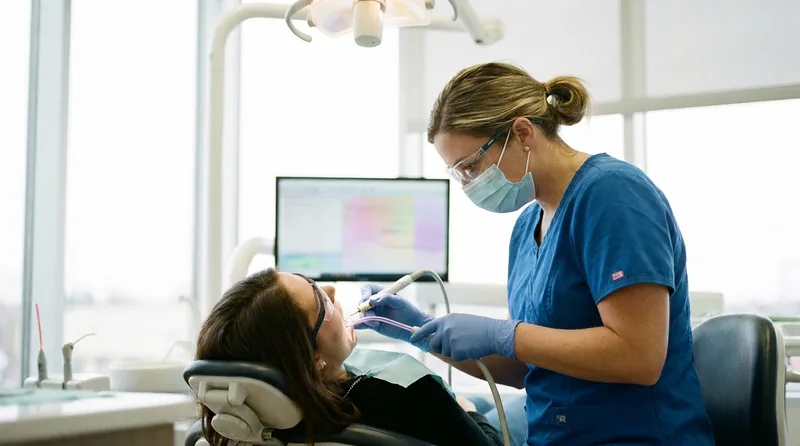
Mayo Clinic's guide to periodontitis explains that plaque can harden into tartar if it stays on your teeth, and that you need a professional dental cleaning to remove tartar. The longer plaque and tartar stay, the more damage they can do.
Ask your hygienist to point out where buildup collects in your mouth. It often clusters behind the lower front teeth and along the gumline, where brushing is easiest to miss.
That's why a cleaning is the right first step for many yellow teeth. It removes buildup and surface stain, and it shows you what your natural color looks like. The CDC reports that 42% of adults aged 30 and older have some form of periodontal disease, so treating buildup protects your gums as well as your smile.
Brush twice a day, floss daily, rinse after staining drinks, limit tobacco, and use a stain-removal toothpaste with the ADA Seal of Acceptance. These habits prevent new stains and lift surface stain. They won't change the natural color of the tooth itself.
The ADA notes that stain removal toothpastes with the Seal of Acceptance use mild abrasives and polishing agents to remove surface stain, but unlike bleaches they don't change the color of teeth. Be wary of harsh DIY remedies. Scrubbing with abrasive homemade mixtures can wear down enamel and make teeth look more yellow over time.
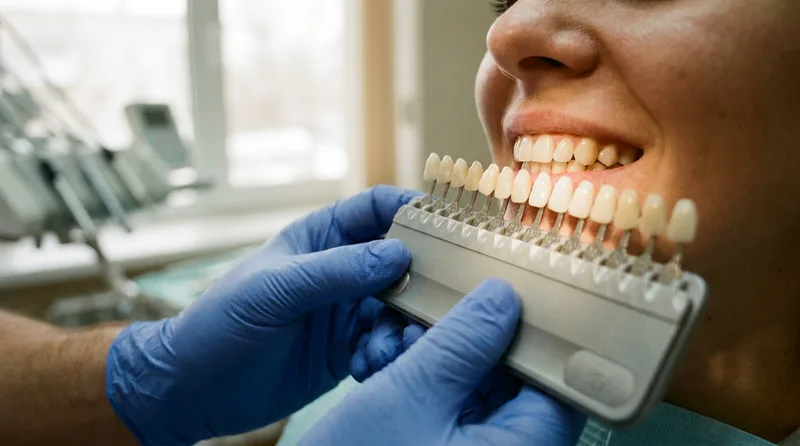
Professional options include a cleaning, in-office whitening, take-home whitening from your dentist, bonding, veneers, and crowns. Cleaning and whitening suit stain and age-related yellowing, while bonding, veneers, and crowns suit discoloration that whitening can't reach. Your dentist matches the treatment to the cause.
| Treatment | What it does | Suits |
|---|---|---|
| Professional cleaning | Removes plaque, tartar, and surface stain | Yellowing from buildup and light staining |
| Stain-removal toothpaste | Mild abrasives lift surface stain but don't change tooth color | Light stain between visits |
| In-office whitening | Peroxide gel lightens stains, often in one visit | Yellow teeth from stain and age |
| Take-home whitening from your dentist | Custom trays and gel lighten teeth gradually at home | Even, gradual lightening |
| Bonding | Tooth-colored resin covers a stained area | One or two discolored teeth |
| Veneers or crowns | A custom covering hides the discoloration | Medicine or injury stains, and old restorations |
According to the ADA, whitening products use hydrogen peroxide or carbamide peroxide to break stains into smaller pieces, which makes the color less concentrated and your teeth brighter. In-office whitening usually requires only one visit, and your dentist can also provide custom trays for use at home. Our comparison of in-office and at-home whitening explains the trade-offs, and our professional teeth whitening service covers both approaches.
If whitening isn't the right fit, cosmetic options can help. Our guide to composite bonding and porcelain veneers guide explain what each involves. The Journal of Prosthetic Dentistry reports that porcelain veneers can last 10 to 15 years with proper care.
No. The ADA advises talking to your dentist before whitening, because whiteners may not correct all types of discoloration. Yellow teeth usually bleach well, brown teeth may not respond as well, and teeth with gray tones may not bleach at all. Whitening also doesn't change crowns, veneers, or fillings.
That last point matters if you have dental work in front. A whitened natural tooth next to an old crown or filling can look mismatched, so your dentist may suggest replacing the older work after whitening. Decay and gum problems should be treated first, since whitening over unhealthy teeth can cause problems.
If you're pregnant or have very sensitive teeth, ask your dentist what timing and method suit you before you start.
Nerves about even simple dental visits are common. BMC Oral Health (2024) reports that 36% of Americans have dental anxiety and 12% have extreme dental fear, and the Journal of Dental Anesthesia reports that sedation dentistry has helped 75% of fearful patients keep up with regular visits. We offer nitrous oxide and oral sedation when it's needed.
Curious whether whitening would work for you?
Send us a note and our team will explain what to expect for your teeth.
Contact Our Office →Book a cleaning and exam so your dentist can tell which kind of yellow you have. A short visit shows whether you need a cleaning, whitening, or a cosmetic fix, and you'll leave with a clear plan. Guessing with store kits can waste money and sometimes causes sensitivity.
Keeping teeth bright takes upkeep, so keep your cleanings on schedule and ask your dentist about touch-ups if you whiten. The Journal of Dental Research reports that people who see a dentist regularly are 60% less likely to lose teeth, and the ADA notes that regular visits can catch 80% of oral health issues before they become serious. A bright smile is a healthy one, and checkups protect both.
We welcome patients from Peterborough, Jaffrey, Dublin, Hancock, and across the Monadnock region, with early-morning hours from 7 AM Monday through Thursday. Bring your questions to Dr. Muhammad Rahim or Dr. Jasper Ainslie. If you request a time online, a real person from our team replies the same business day to confirm your visit.
Results may vary. Please consult with your dentist at Peterborough Family Dental for personalized treatment recommendations.
Find out why your teeth look yellow
Request an appointment at Peterborough Family Dental & Implant Center for an exam and a clear plan for a brighter smile.
Request an Appointment →Prefer to talk to someone first?
Call (603) 924-3664 →
Dr. Muhammad Rahim, DMD
Dentist · Peterborough Family Dental & Implant Center
Peterborough, NH dentist providing gentle general, cosmetic, restorative, and implant dentistry for the whole family.
Was this article helpful?
Brushing removes surface plaque, but it can't remove hardened tartar or change the natural yellowish dentin beneath thinning enamel. Stains from coffee, tea, wine, or tobacco also build up over time. A professional cleaning and an exam show which cause applies.
Our Peterborough team is happy to answer questions and get you on the calendar.