Back to all articlesemergency-dentistry Dr. Muhammad Rahim, DMDNovember 12, 202610 min read

Chipped Tooth Repair: Bonding, Veneer, or Crown Explained
Dr. Muhammad Rahim, DMDNovember 12, 202610 min read
Loading blog post
Dr. Muhammad Rahim, DMDNovember 12, 202610 min readCall and you'll reach a real person on our team: no phone tree, no hold music. We'd genuinely love to help.
(603) 924-3664Rather write to us? Contact us
A chipped tooth feels bigger than it looks, and chipped tooth repair is usually quicker than people expect. Most chips can be fixed in one or two visits, with bonding for small chips and a veneer or crown for larger breaks. At Peterborough Family Dental & Implant Center in Peterborough, NH, we provide restorative and emergency dental care, so we can help you get seen fast.
The good news is that almost every chip can be repaired, and the right repair depends mostly on how big the chip is and where it sits. This guide covers what to do in the first hours and how your repair options compare.
You'll also see when a chip is urgent, how to choose between bonding, a veneer, and a crown, and how to avoid the next one.
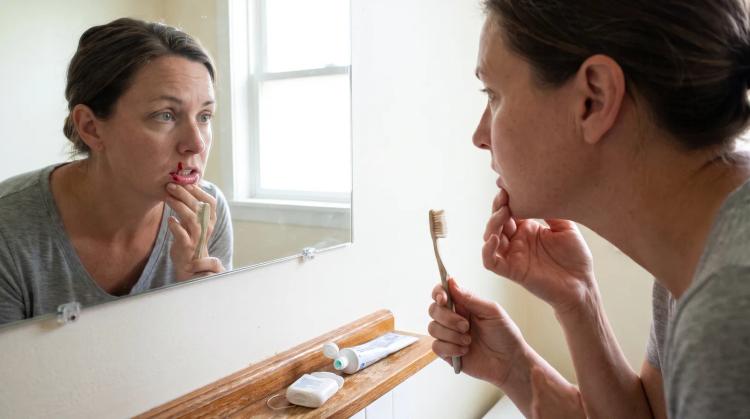
Rinse your mouth with warm water, apply a cold compress for any swelling, cover a sharp edge with dental wax or sugar-free gum, avoid chewing on that side, and call your dentist the same day. Save any piece you can find. These steps protect your mouth until the tooth can be repaired.

The American Dental Association's emergency guide advises rinsing with warm water to clean a cracked tooth and using cold compresses on the face to keep swelling down. It also stresses visiting your dentist or an emergency room as soon as possible when something serious happens.
Our chipped and broken tooth care service is built for exactly this situation, and we'll help you get seen as soon as we can.
A chipped tooth is an emergency if it bleeds, causes severe sensitivity or ache, shows a pink or red center, or comes with swelling or a loosened tooth. A small chip without discomfort is less urgent, but you should still call the same day. Chips don't heal, and sharp edges can cut your tongue.
Enamel contains no nerves, so a small chip can seem harmless. But the exposed surface is rougher and holds plaque, and deeper layers can be affected. The National Institute of Dental and Craniofacial Research offers patient information on tooth decay, and a chipped surface is a place where decay can start if left alone.
Chipped tooth repair options include smoothing, composite bonding, veneers, crowns, root canal treatment with a crown, and replacement if the tooth can't be saved. The right one depends on the size of the chip, its location, and whether the nerve is involved. A dentist decides after an exam and X-rays.
| Repair | Suits | What to expect |
|---|---|---|
| Smoothing and reshaping | Tiny chips on the edge of a tooth | A quick visit, with a small amount of enamel polished |
| Composite bonding | Small to moderate chips | Tooth-colored resin is shaped and hardened, often in one visit |
| Veneer | Visible chips or wear on a front tooth | A thin custom shell covers the front of the tooth over more than one visit |
| Crown | Large chips, cracks, or weakened teeth | A cap covers the whole tooth, and some crowns can be made the same day |
| Root canal and crown | A chip that reaches the nerve | The nerve is treated, then the tooth is protected with a crown |
| Removal and replacement | A tooth too damaged to save | The tooth is removed, then replaced with an implant, bridge, or denture |
Think of it as a ladder. The smaller the chip, the less you need to do. The larger or deeper the break, the more of the tooth the repair has to protect. A good dentist starts with the simplest option that will last and moves up only when the tooth needs more.
Dental bonding is a good choice for small to moderate chips, especially on teeth that don't bear heavy chewing force. A dentist shapes tooth-colored resin onto the chip and hardens it, often in one visit and with little or no removal of healthy tooth. It's one of the quickest ways to restore a chipped tooth.
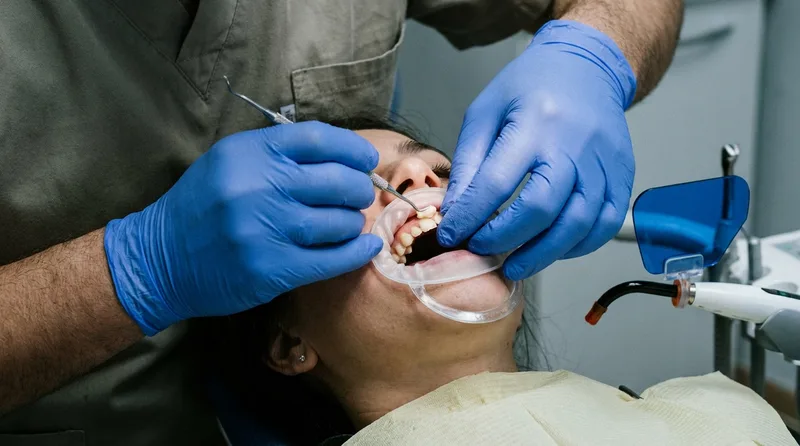
Bonding has trade-offs. The resin can stain or chip over time, and it isn't as strong as porcelain. For a small chip on a front tooth, though, it's often all that's needed. Our guide to composite bonding explains the process, the lifespan, and how to care for it.
Many people choose bonding because it's conservative. It usually needs little or no removal of healthy tooth, and it can be redone or replaced later if needed.
A veneer is often the better choice for a visible front tooth with a larger chip, wear, or other cosmetic concerns. It covers the front surface of the tooth with a custom shell, so it improves color and shape as well as the chip. The ADA notes that veneers can improve teeth that are chipped or broken.
The ADA also explains that veneers cover only the front surface of the tooth, unlike a crown, and that treatment isn't reversible because enamel is removed to place one. People who clench or grind their teeth may not be good candidates, and veneers are considered cosmetic, so insurance may not cover them.
Our porcelain veneers guide walks through the process, who it suits, and what to ask. Veneers make the most sense when you want a lasting cosmetic result and the tooth is otherwise healthy.
Chipped front tooth you want fixed?
Request an appointment at our Peterborough office and we'll show you which repair fits your chip.
Request an Appointment →You need a crown when a chip is large, the tooth is cracked or weakened, or a big filling can no longer support it. A crown covers the whole tooth and protects it from splitting. It's the strongest repair, and it suits back teeth that handle heavy chewing.
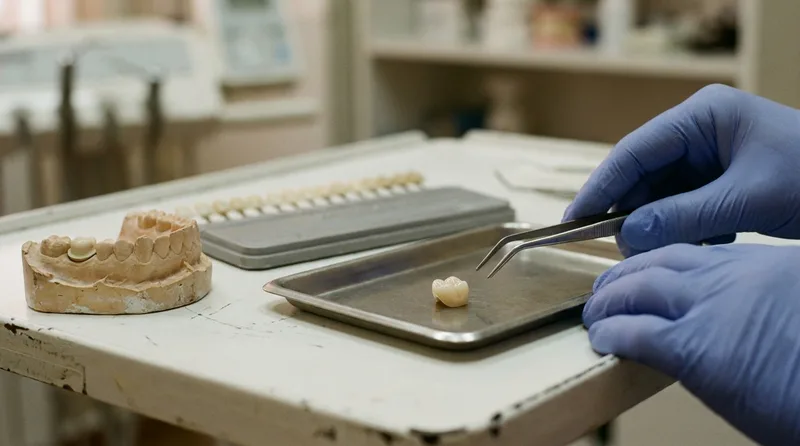
A crown is also the usual finish after root canal treatment, since a treated tooth is more fragile. Many patients prefer to avoid waiting weeks for a crown. Our guide to same day crowns explains how some crowns can be designed and placed in a single visit.
Ask your dentist about the material, too. Porcelain and zirconia crowns blend with natural teeth, while metal options can suit hidden back teeth that take a lot of force.
If a chip reaches the nerve, you'll likely notice sensitivity, discomfort, or a pink or red spot in the tooth, and you need prompt care. A nerve that's exposed to bacteria can become infected. Your dentist may recommend root canal treatment followed by a crown to save the tooth.
An infected tooth can develop an abscess, which won't go away without treatment, so don't wait on this one. If swelling, fever, or a bad taste appears, call right away and go to an emergency room for trouble breathing or swallowing.
If a tooth can't be saved, replacing it matters. About 120 million Americans are missing at least one tooth, according to the American College of Prosthodontists. The Journal of Oral and Maxillofacial Surgery reports implant success rates of 95-98% over 10 years, and the American Academy of Implant Dentistry reports that implant-supported teeth can restore up to 90% of natural chewing power.
Choose by chip size, tooth location, and how much healthy tooth remains. Bonding fits small chips, a veneer fits visible front-tooth damage, and a crown fits large or weakened teeth. Your dentist confirms the choice with an exam and X-rays, since what you can see isn't the whole story.
We're in-network with Delta Dental Premier and check your benefits before treatment. Nerves about the visit are common. BMC Oral Health (2024) reports that 36% of Americans have dental anxiety, and the Journal of Dental Anesthesia reports that sedation dentistry has helped 75% of fearful patients keep up with regular visits. We offer nitrous oxide and oral sedation.
Not sure which repair you need?
Send us a note with a photo or a description, and our team will point you to the right next step.
Contact Our Office →Wear a mouthguard for sports, avoid chewing ice, popcorn kernels, and hard candy, and use scissors rather than your teeth to open or cut things. If you grind your teeth, ask about a night guard. Regular checkups also catch weak spots before they chip.
The ADA lists the same precautions: wear a mouthguard during sports or recreational activities, avoid chewing ice, popcorn kernels, and hard candy, and never use your teeth to cut things. Our guide to night guards explains who needs one.
Checkups help here too. The Journal of Dental Research reports that people who see a dentist regularly are 60% less likely to lose teeth, and the ADA notes that regular visits can catch 80% of oral health issues before they become serious. The CDC reports that 42% of adults aged 30 and older have some form of periodontal disease, and healthy gums and bone support every tooth.
Call us the same day you chip a tooth and ask for the earliest visit. A short exam shows how deep the chip goes and which repair fits, and most chips can be repaired in one or two visits. Waiting only gives the chip time to grow or the tooth time to decay.
We welcome patients from Peterborough, Jaffrey, Dublin, Hancock, and across the Monadnock region, with early-morning hours from 7 AM Monday through Thursday. Bring your questions to Dr. Muhammad Rahim or Dr. Jasper Ainslie. If you request a time online, a real person from our team replies the same business day to confirm your visit.
Results may vary. Please consult with your dentist at Peterborough Family Dental for personalized treatment recommendations.
Get your chipped tooth repaired
Request an appointment at Peterborough Family Dental & Implant Center, or call and ask about the earliest visit.
Request an Appointment →Prefer to talk to someone first?
Call (603) 924-3664 →
Dr. Muhammad Rahim, DMD
Dentist · Peterborough Family Dental & Implant Center
Peterborough, NH dentist providing gentle general, cosmetic, restorative, and implant dentistry for the whole family.
Was this article helpful?
No. Enamel doesn't grow back, so a chip stays until a dentist repairs it. Small chips may cause no discomfort, but sharp edges can cut your tongue and exposed areas can decay, so it's worth having it checked.
Our Peterborough team is happy to answer questions and get you on the calendar.